Category Archives: VanRamblings

Stories of a Life | Redux | Raymond | Late No More

In the early 1980s, I was perpetually late on almost every occasion where I was depended upon to be on time. At the time, being on time was not a priority for me.

Now, as  has been suggested by psychologists, lateness may be interpreted as a sign of passive-aggressive behaviour, a faithless statement to those who are waiting for you to arrive, that your time is more valuable than theirs.

Most people won’t bear a grudge if you’re five minutes late — but to be more than five minutes late, when people might start getting annoyed with you is a whole different kettle of fish. Let’s face it, to mature adults lateness betrays a lack of respect and consideration for those who you are inconveniencing with your lateness.

In the inverse, although being late may well be considered as an insult to others, it also serves to undermine the person who is late.

Psychologists suggest that lateness betrays a lack of emotional intelligence on the part of the person who is consciously or unconsciously “choosing” to be late, as an indication of a distinct lack of self-knowledge, will power, or empathy.

Or, it may be that the person who is late has set unrealistic goals, or underestimated the time that it takes to travel from one place to another.

There may even be a more perfidious reason for being late, than mere mediocrity. Sometimes it involve anger and aggression, and at other times self-deception. Lateness may be interpreted as treacherous anger expressed as passive-aggressive behaviour, a vigorous means of expressing aggression covertly, and doing so without incurring the full emotional and social costs of a more overt aggression.

It may be, too, that the person who is late feels inferior or unimportant, being late a way to impose themselves on a situation by attracting attention, if even it is negative attention, even going so far as to “overtake” an event, situation or proceeding.

Sometimes, being late is your unconscious (intuition) telling you that you don’t actually want to be there, or that it would be better for you not to be there — for instance, it could be that a meeting (or even a job) is not the best use of your time, or that arriving at your destination on time will work against your best interests.

Still, there are few habits as infuriating as someone making us wait.

Despite what may be running through your mind as you’re kept waiting again, it’s unlikely your friends or colleagues who are persistently late are just being selfish.

“Lateness is really a commonly misunderstood problem,” says Diana DeLonzor, author of Never Be Late Again, who has conducted research on the perpetually tardy. “Yes, it’s a rude act, but I’ve interviewed hundreds of people and the vast majority of late people really dislike being late, they try to be on time, but this is something that has plagued them throughout their lives.”

In 1982, an event occurred in my life that ended my lateness forever.

Now, in my contemporary life and with rare exception, I always arrive on time — or, more often than not, early. When I arrive early, I tend to hold back on knocking on the door or depressing the buzzer, until the exact minute of my proposed arrival time occurs — and over the course of the past 42 years, I’ve felt all the better for it.
In the autumn of 1982, having finished work on my Masters, I found myself employed in a suburban Metro Vancouver school district as a secondary school English and Drama teacher.

When I’d visited my mother one mid-autumn weekend, she invited me for dinner in her North Vancouver condominium apartment, in the coming week. “Arrive at 5pm, Raymond,” she said to me. “You know I like to eat dinner early.”
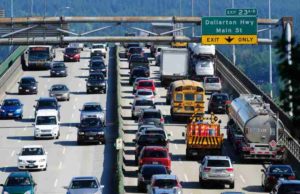
On the mid-week day of the appointed dinner date, I skeddaddled out of the school at 3:45pm, a little later than I’d planned, but I figured that seventy-five minutes to travel from the Tri-Cities to North Vancouver should get me to my mother’s house in good time. Such, however, proved not to be the case. Traffic was particularly bad on Highway One that day — there was an accident on the Ironworkers Memorial Bridge that slowed my travels, as traffic moved along at a crawl.

Note should be made, the event being related occurred in pre-cell phone days.

So, there I was stuck in traffic with no way to contact my mother to let her know I’d likely be a few minutes late.

Long story short, I arrived at my mother’s door at 5:20pm — late for sure, but I had a good reason, or so I thought. I knocked on the door.

My mother’s newest boyfriend, a tall, clearly fit, imposing man used to getting his own way — a retired commander in the Canadian Armed Forces Navy, as it happens — glowered at me standing in the hallway as I made my way into my mother’s home, whereupon he grabbed me, shoved me up against a wall and lifted me off the ground, my feet dangling below me, and set about to lecture me on how rude I’d been in arriving late, that on behalf of my mother, he wasn’t having any of it.

“This is the last time you’ll be late for any event, ever, for any reason,” he roared at me, my feet still dangling below me. “From here on in, not only will you arrive on time, you will arrive early — but wait until the appointed time to make contact with those with whom you are to meet. You will plan all of your excursions and travels, and in so doing will always leave more than enough time in order that you might arrive at your destination not just on time, but early. Do I make myself clear to you?”

I nodded my head meekly, and said quietly, “Yes sir, I do.”

And, you know what?


Visiting the Grandview-Woodland neighbourhood of my youth, where I have many friends

From that day to this, I have always made a point of leaving early, allowing myself at least an extra half hour of traveling time, often more — as when I’m traveling to Vancouver’s east side from my Kitsilano home to visit a friend for lunch or dinner,  or a couple of beers,  or a saunter through the Grandview Woodland neighbourhood, or for any other reason when I’m meeting with a valued acquaintance.

Music Sundays | Heartbreak Songs Rekindle Phil Collins’ Life

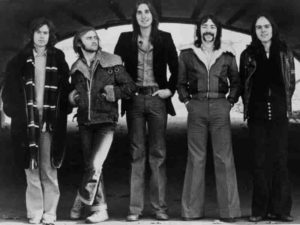
In the first part of the 1980s, life was not well for Genesis drummer Phil Collins.


Genesis, 1971. Members: Tony Banks, Phil Collins , Mike Rutherford, Anthony Phillips and Peter Gabriel

Hired as the drummer for Genesis in 1970, at age 19, Phil Collins assumed the role of lead singer for Genesis in 1975, following the departure of Peter Gabriel.

Where the music critics of the day loved Gabriel, the Brit award-winning progressive, singer-songwriter and his extended length prog-rock jams, as well as Gabriel’s all around genius musicianship, influential music critics were less than thrilled with the contribution made by Phil Collins after Gabriel’s departure.

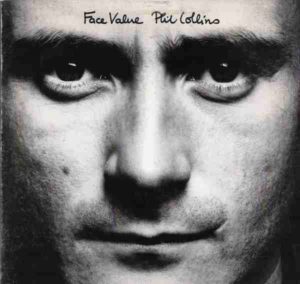
Collins’ career went from bad to worse after he became Genesis’ lead singer, but it was in the pain of the break-up with his Canadian-born wife Andrea Bertorelli — who returned to her home in Vancouver in 1979 with their two children, Joely and Simon Collins — that provided the therapeutic impetus for the creation of Face Value, a break-up-and-divorce album the likes of which had never been heard.

Finding inspiration in the pain caused by his divorce, and craving artistic independence after years of collaboration, hiding away in the studio, Collins produced Face Value himself, playing keyboards and drums, and despite vehement opposition by his manager, Collins called in Earth, Wind & Fire who provided the horns and back up vocals necessary to fill out the songs Collins heard in his head.

The rest is rock ‘n roll history.

With the release of Face Value, Collins went on to become a massive star, Face Value topping the charts across the globe for 16 consecutive weeks, going on to become the top-selling album of 1981, in the process winning Collins a raft of awards, including the Grammy for Best Rock Album of 1981, Song of the Year for In the Air Tonight, and Best Male Pop Vocalist at the 1981 Grammy’s show that year.

Kicking off with the bitter anthem In the Air Tonight, rightly considered one of the great heartbreak songs of all time, the album alternates between moody ballads and bouncily soulful tracks that try to put a smile on the pain.

On the quieter songs like If Leaving Me Is Easy, Collins’ wracked vocals leave no doubt that he’s not sugarcoating his emotional devastation as he sorts through the wreckage of his life.

The impossibly hooky I Missed Again, meanwhile, displayed Collins’ skills as a hitmaker and vocalist.

The gently sung, sweet-as-punch This Must Be Love, which was written post-divorce about a new love, also gives an early respite after the lurching, bruising In the Air Tonight. This range of sound and emotion is part of what helped the album to succeed as much as it did, as did the feeling that Collins felt driven to make this album to help him heal.

Face Value was not a career move or a cash grab, but rather the album was a transmission from a wounded soul delivered with a soft touch and sensitivity.

As such, Face Value is Collins’ most honest, most compelling work.

Face Value stands as Collins’ masterpiece, one of the finest moments of the ’80s musical landscape, and one of the best début albums of the past 60 years.

Stories of a Life | Redux | Serendipity, Kismet, Love

Lori and her son Darren, August of 1998, at our Chesterman Beach cabin near Tofino

The woman you see pictured above is the love of my life.

In the summer of 1988, Lori and her son Darren, and my two children, 11-year-old Megan and 13-year-old Jude, travelled over to the west coast of Vancouver Island, where we rented a cabin near Tofino, and where we enjoyed the time of our lives, a memory that resides deep in me still.

Megan Tomlin, age 11, photo taken at the cabin where she, her brother Jude, and Lori (and her son, Darren) stayed in August, 1988
Photo of Megan Tomlin, taken at the cabin near Tofino where we stayed in August 1988

As the children were growing up, given that (for the most part) during the first few years of their lives I was the sole custodial parent —  sharing custody with Cathy as the children grew older — my relationship with my children was close.

Jude and Megan and I talked about everything, and as far as was possible I answered every question put by them to me, as honestly and as fully as I could.

While Jude was an energetic boy of the world, making friends with anyone and everyone, full of joy and laughter, out and about in the neighbourhood and across the city, skateboarding and skiing and as athletic as he could possibly be, Megan was a much quieter child, no more reflective than Jude, just more prone to staying close, wanting always to converse on the broadest range of topics, and anxious to learn as much about the world (and all its complexities) as she could.

Megan, in particular, was curious about the state and nature of the world, about politics and political structures, about the nature of governmental decision-making, both children attending the peace marches with me each year, as well as meetings of the progressive, left-of-centre Coalition of Progressive Electors Vancouver civic party, as well as at various federal and provincial New Democratic Party meetings, with Megan as engaged as she could be as a budding young feminist and community activist.

Megan, as with my mother, was also possessed of a preternatural ability.

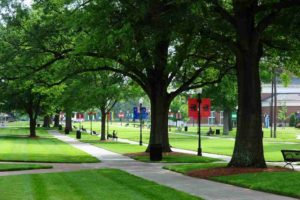
Vancouver Community College, East Broadway campus, photo taken from the park
Photo, Broadway campus, Vancouver Community College, taken from Chinacreek Park

Over the years, as we shared our lives with one another, both Jude and Megan were curious about my “work”, what I was up to when I wasn’t with them.

Arising from that interest on their part, I always sought to make them a part of my work life, taking them to the places of my employments, to my office in SFU’s Faculty of Education when I was working on my Masters, to attend in the elementary school classes where I taught (when they were on a ProD day), at Vancouver Community College, and later in my work at Pacific Press (which paid phenomenally well for very little work, allowing me to continue work as an arts and entertainment editor, and later, Director of Special Projects at Vancouver Magazine).

Early in the 1988 summer semester at Vancouver Community College, Megan attended my Monday evening English Literature class, sitting quietly near the back, erudite and well-read as always (better read than me, true then, true still), interjecting occasionally to clarify some bit of information, for me or for one of the students in my English Literature class, unassuming, friendly, and clearly informed.

Midway through the three-hour class, we took a 15-minute break, most of the students leaving the classroom, with Megan standing with me outside my office, opposite the classroom, when the following occurred …

“Daddy,” said Megan, “do you see that woman standing just on the other side of the glass doors, the blonde-haired woman leaning on the railing?” Then a pause and the proffering of a question, “What day of the week is it?”

“Monday,” I replied.

“Hmmm,” she said, looking somewhat quizzical. “Monday, huh?”

At which point, she seemed to find herself lost in thought for a moment, then turned to me to say, “By Thursday, the two of you will be living together.”

“Megan,” I protested, “I don’t even know who that woman is. And besides, she seems much younger than me.”

And with that, we dropped the subject, shortly after returning to the classroom, where she set about to correct me on aspects of my teaching presentation style, and information that I had imparted that she felt was not clear enough, and should have been better clarified by me, telling me during the break …

“Given who these students are, you seem not to be taking into consideration that they’ve been out of school for awhile. Your use of language, the words you choose could be better chosen to impart your message. And, oh yeah, you were telling the students that they would be expected to write papers during the semester. I want to be present when you’re grading those papers, and I want to read the papers you’re unsure as to what grade you will give. Overall, I trust your judgement — I’m just not sure I feel all that confident that your command of what constitutes good essay writing is as well-developed as it could be.”

The class was over at 9pm, I met with a handful of my students, some in the classroom, others in the hallway, and a couple in my office (with Megan waiting outside in the hallway, engaging with some of my students).

When the class had come to an end, I reminded the students Tuesday’s class would take place downtown, at a venue where a play I’d be teaching was currently being performed; student attendance was mandatory.

Megan and I left the campus around 9:30pm, stopping off at Mike and Edith’s (friends of ours) Cheesecake, Etc. on Granville Street, near the south end of the Granville Street bridge, where Megan enjoyed a piece of cheesecake topped with fresh, organic strawberries, and I had my usual fresh-baked, and toasted, baguette with butter and jam.

Both VCC Broadway campus English Literature classes attended the performance of the play, which took place upstairs from what is now part of the Vancouver Film School. My class sat close by me, while students who were taking my colleague Peter’s English Lit class sat nearby him, except …

When the lights went down, and the play began, I felt a warm hand move over my right hand, and looked over to see an absolutely radiant, beautiful young blonde woman, with her arm rubbing up against mine. I thought to myself, as I am wont to do in similar situations (which always come as a surprise to me, having occurred quite frequently throughout my life) …

“Raymond, it’s a figment of your imagination. There’s no one sitting next to you, and most certainly, no one has their hand on top of yours.”

I didn’t give it another thought, returning my attention to the play.

On the Wednesday, I taught my Writing class (grammar! … I am the last person you would want to have teach you grammar … I am capable of doing it … grammar just seems so restrictive to me … but I suppose you need to know the rules, before you can break them).

Thursday I returned to teach my English Literature class.

After class was over, and after meeting with a few of my students, a blonde-haired woman walked up to me — who I may, or may not, have been made aware of earlier in the week — saying to me …

“I’m working on a paper on apartheid, and have been told you might be of assistance in helping point me in the right direction to research the paper, and provide me as well with how I might best formulate my argument.

I’ve heard that you like to walk, particularly along the stretch of beach over by Spanish Banks. I was wondering if we might walk and talk, which would afford you an opportunity for some fresh air after three hours in a stuffy classroom? It is, after all, a lovely full moon night, don’t you think?”

I thought the idea of the walk was a good idea, and (as anyone who knows me soon realizes, I am more than voluble about conversing on issues of interest to me). I grabbed my coat out of my instructor’s office, and the two of us headed off in the direction of my car.

But I was famished.

I asked her if we might stop in for a brief moment at Cheesecake, Etc. on the way to the beach — we could discuss her paper over a bite to eat.

When we arrived at Cheesecake, Etc., after consulting with her, when Mike came up to take our order, I requested two orders of the toasted baguette with jam. “Oh, you mean the usual,” said Mike. Both Mike and Edith flitted around this woman and I for the half hour we were in the restaurant, with Mike taking a break to begin singing at his piano, his songs seemingly directed at this young woman and I.

Just before 10pm, this young woman and I left the restaurant, climbed back into my car, and headed towards the beach, traveling down West Broadway, during which glide along the street, she turned to me to say, “You live near here, don’t you? I noticed it’s getting kind of chilly. I was wondering if you might have a sweater I could wear?”

Within a couple of minutes, I pulled up in front of my housing co-op, turning to her saying, “I’ll grab you a sweater and be right down,” with her responding, “I’ll come up with you, if that’s alright, to find the sweater best to my liking.”

Upon entering my apartment, while she stood in my living room, I entered my bedroom to look on the shelving where I kept my two dozen sweaters (what can I say, I’m a sweater person). Upon returning to the living room, holding up a warm, late spring appropriate sweater I thought she would like, standing opposite her, she approached me, and standing on her tippy-toes, she kissed me.

Once again, I thought to myself, “Raymond, she didn’t kiss you. That’s just a false projection. You just better give her the sweater, and head off to the beach.”

While I was having this inner dialogue with myself, she once again stood on her tippy toes, pulling my face closer to hers, and kissed me again, a long, luxurious kiss, a kiss unlike any other I’d ever experienced.

Lori and I moved into together that night.

Coda

Four years from the date of the story above, Lori — who, as has been the case in my life these 50 years and more with all of the women who have shared their lives with me was / is / and remains brilliant, gifted and contributory — completed an honours Bachelor Degree at a Metro Vancouver institution of higher learning, which she then followed up with a Masters degree in Counselling Psychology.

After graduating with her Masters degree, Lori was hired by Corrections Canada to work — in a secure group setting, within various prisons — with sexual offenders who had offended against children. All but a very, very few of the men she worked with truly regretted their offense(s), of that she felt quite sure after spending weeks and months in session with them, and one on one with each one, as well — the recidivism rate among those with whom she had worked well below five per cent.


Shaun Joshua Deacon, 57, has a lengthy criminal history that includes convictions for sexual offenses against children in 1988, 1996 and 1998. (Not referenced in the paragraph directly below)

Except, Lori says, there were the “monsters” who found their way into her group, from time to time, irredeemable, violent sexual offenders who presented a palpable risk to re-offend, and hurt children in ways monstrous and despicable. Those few sexual predators scared the daylights out of her, and as far as she was able Lori did everything in her power to ensure these predators serve out their full sentences, requiring they be supervised in the community upon mandatory release.

Lori went on to complete a PhD. While working on her PhD, Lori was hired as a university instructor, and upon graduation was hired at the university as an assistant professor, working her way through the ranks over the years, publishing as is required, relatively high profile, and a credit to the university and her profession.

While working as a university teacher, Lori was hired as a psychologist within the university’s clinical psychology centre where she treated clients. Over time, Lori opened up a private psychology practice — a very successful practice, as proved to be the case over the years — working, mostly, with women survivors of abuse.

#SaveOurParkBoard | Tender Moments of Change at Park Board, Pt 1


The mandate of the elected Vancouver Park Board: building a bridge to a better tomorrow

As the last bastion for civic democracy in our city, the Vancouver Park Board has played a vital role in serving the best environmental, recreational and family interests of the community for more than 133 years, since its founding in 1889.

For many years, members of the community who attended Park Board meetings to address an issue or a “cause” sat at the same table as the elected Park Board Commissioners while addressing their concern, and were successful in having a direct impact on the livability and humanity of our beloved home by the ocean.

Today on VanRamblings, the first of two “stories” revolving around humanity at the Park Board table, specifically involving past Park Board Chairperson John Coupar, as well as Park Board Commissioners Trevor Loke and Constance Barnes, who sat on the 2014  Vancouver Park Board with Commissioners Sarah Blyth, Melissa De Genova and current British Columbia Attorney General, Niki Sharma.

Vancouver Park Board Adopts an Inclusive Trans & Gender-Variant Policy


Trevor Loke, Vision Vancouver Park Board Commissioner

At the  May 12, 2013 meeting of Park Board, Commissioner Trevor Loke moved a motion to establish a trans and gender-variant working group, aimed at creating more inclusive spaces for members of the trans and gender-variant communities.

The Park Board Commissioners unanimously supported the motion, drawing a standing ovation from the dozens of supporters of the motion, present in the Park Board meeting room that night, many of the attendees sharing trenchant stories with the Commissioners about their experiences of feeling unwelcome in city facilities, such as recreation centres, swimming pools, and washrooms.

“There are days when with the best intents I’m off to the gym or off to the pool, and I turn around and I go back,” said Drew Dennis, a member of the City of Vancouver’s LGBTQ advisory committee.

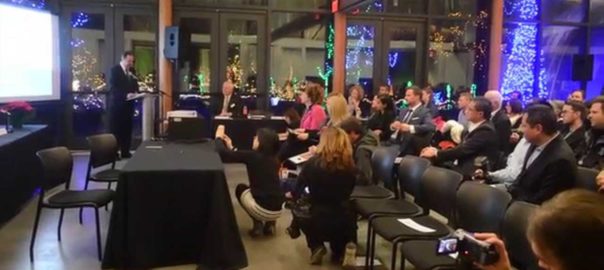
One year later, on Monday, April 28, 2014, the Vancouver Park Board’s Trans* and Gender-Variant Inclusion Working Group reported back to the seven Park Board Commissioners gathered at the table, on their engagement findings and priority recommendations, aimed at enhancing service quality and access to facilities.

On that warm, early spring evening, 150 members of the trans and gender-variant community were present in the Park Board meeting room to address the recommendations of the working group, a good number of whom who would come to sit at the Park Board table while speaking to the Commissioners: incredibly articulate physicians employed by Vancouver Coastal who identified themselves as gender-variant persons on the spectrum, who spoke movingly and with spirit.

Young persons, high school students, members of the business community, teachers, lawyers, construction workers, actors and entertainers, seniors, a broad and representative spectrum of members of the cultural and ethnic mosaic communities that comprise and have long defined the Vancouver we know and love.


Constance Barnes, elected Chairperson of the Vancouver Park Board, on December 5, 2011

When it came time for the Commissioners to vote to adopt and establish a 2SLGBTQIA+ policy, the first Commissioner to speak was Vision Vancouver Park Board Commissioner Constance Barnes, who spoke with eloquence in her support of each of the members of the 2SLGBTQIA+ who were present in the room, down the long hallway outside the meeting room, and who had been standing outside the office listening to the speakers, now ready to hear Ms. Barnes’ words.

Constance Barnes’ address to the community gathered in the room, and to her fellow Commissioners, was heartbreakingly poignant, as she spoke of “righting an historical wrong”, of how — as a member of a minority community — she had often found herself excluded and even demeaned, and of how important it was to her that the Board unanimously adopt the motion to establish a 2SLGBTQIA+ policy that, among other initiatives, would construct all new change rooms, including three separate change rooms: Universal (U), Women (W) and Men (M).


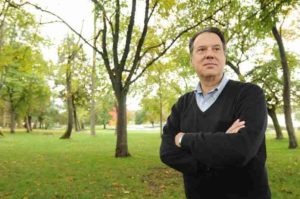
John Coupar, long-serving Non-Partisan Association Vancouver Park Board Commissioner

Next to speak: Non-Partisan Association Park Board Commissioner, John Coupar.

“Sitting at the Park Board table this quite wondrous evening, as was clearly the case with my fellow Commissioners, I was heartened and stirred by all that I heard, of the grace and vivid evocation of spirit of all the speakers, your pointed, poignant and potent argumentation for necessary change to establish a fairer and more inclusive society, and the role that the Vancouver Park Board has to play in realizing a more inclusive community for all.

Listening to the speakers who sat at the Park Board table this evening, I was moved. I am changed, forever. For me, the best part of being a Park Board Commissioner is how I am afforded the opportunity to learn about aspects of life about which I was not fully aware. I want to thank you for helping to make me a better, a more whole person, and for working with us to help create a fairer and more inclusive city for all.

2014 is an election year. If I should be so fortunate to  be re-elected to Park Board this autumn, and should I become the Chairperson of the Board, I commit to you tonight, that my first priority will include the construction of the new change rooms that Commissioner Barnes spoke about, but more: I will establish, as was requested this evening, a gender variant swim at the Templeton and Lord Byng pools, and during my next term in office, I will work with the 2SLGBTQIA+ community to create a welcoming environment in our community and aquatic centres, to work with you towards the creation of a fairer community for all.”

Indeed, John Coupar was re-elected as a Park Board Commissioner on Saturday, November 15, 2014, and was soon after inaugurated as Chairperson of the Board at a ceremony held at the VanDusen Botanical Gardens, on December 1, 2014.

Park Board Chairperson John Coupar’s first priority?

Establish a gender-variant swim at each of the Templeton and Lord Byng pools.

Next, Chairperson Coupar instructed Park Board General Manager Malcolm Bromley to begin work on the construction of inclusive change rooms and washroom facilities for members of the trans and gender variant communities.

In the 50+ years VanRamblings has covered the work that takes place at the Vancouver Park Board table, never have we been more moved than was the case this hallowed evening of change for the better, never before or since have we experienced as moving and eloquent a speaker than was the case with Constance Barnes on that particular late evening of April, 2014, and never, ever have we been more proud of an elected official than was the case that halcyon evening, and since, in the person of John Coupar, a true hero in our fair city by the sea.


Click / tap on the graphic above to sign  the Save Our Park Board Petition started by Sarah Blyth