Category Archives: Vancouver

Saving the Environment | Fast Fashion vs the ‘Thrift’ Economy

Consignment clothes shopping as a thrifty means to save the environment

Fashion is today the second most polluting industry in the world, following only the oil business.
For altruistic and ecological reasons, the shopping attitude of Canadians towards second-hand clothes has been changing, and consignment stores are bustling with their newfound clientele, and consequent increased sales.
What was once a $12 billion North American market only a few short years ago is now a thriving $24 billion consignment clothing market, with the marketplace expected to top $50 billion by the middle of the next decade.
In other words, the ‘second hand economy’ is thriving.

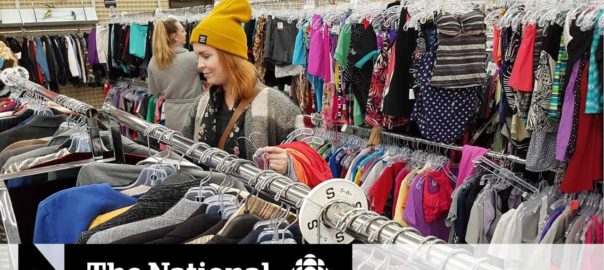
A consignment clothing shop

Consignment stores are not what they used to be, offering quality like never before, carefully curated collections, and an elevated shopping experience for their burgeoning customer base.
A recent published study shows that in 2018, 64% of women and men were willing to buy pre-owned consignment store clothing — clothing which often has never been worn, and acquired from businesses which have gone bankrupt — up from 45% in 2016. The clothing retail industry believes that by 2028, up to half of the clothes in women’s and men’s wardrobes are likely to be ‘secondhand’. Fashion circularity, a new term referring to the recycled life of a garment, as indicated above is projected to reach $51 billion in five years, up from the current $24 billion.
In discussion with consignment store operators across Vancouver, proprietors told VanRamblings that where there was once “a stigma attached” to purchasing consignment store clothing — conjuring images of the yellow sweat patches, clothes strewn casually and confusingly hung (if at all) and emotional baggage people often associate with used clothing …
“Now, thankfully, purchasing clothing from consignment stores is not just acceptable — it’s cool and has completely captured the fashion zeitgeist,” one consignment clothing proprietor recently told us.
A recent study published by the Raymond James Financial Centre reports that 56% of women and men aged 18-29 prefer the consignment second hand market over conventional retailers of new clothing. Shopping in a thrifty manner guarantees shoppers the uniqueness of their own style. Most of the pieces in a consignment clothing shop are one of a kind, and allow endless possibilities of matching and styling in a creative and unique way.
All of which is to say, no longer is there a taboo about consignment clothes shopping. The rise of the sharing economy has also helped — it’s taken the stigma out of resale and removed the need to own something forever.

Forever 21 fashion retailer closes its doors

In September, fast fashion chain Forever 21 announced it was closing all its international locations, including 44 stores in Canada, amid flagging sales.
According to a recent interview conducted with the CBC finance guru Diane Buckner, British Columbia retail consultant Bruce Winder told her fast fashion’s target market — young, style-conscious shoppers on a budget — are also among those most concerned about the health of the planet.

“The younger millennial specifically, along with Gen Z, are incredibly environmentally conscious,” he said. “And they look at every brand and every product in terms of what is the impact on society, but also what is the impact on the employees and the environment.”

Not only do consignment stores benefit from the fact that the city’s stylish set are clearing out their closets like never before, a return to quality over quantity in the minds of most shoppers means visits to consignment stores for quality designer goods that will last (i.e. not end up in a landfill) and not break the bank will only continue to rise.

One third of millennials do the vast majority of the clothes shopping at thrift and consignment shops

How does consignment clothing store shopping save the environment while also saving you money? Thrift shopping at consignment stores offers a viable solution for anyone looking to help out the environment.

  • Saving Money. Thrifted clothing is far more affordable than new clothes of comparable quality.

  • Smarter Buys. You tend to spend more time looking over each item instead of buying it outright.
  • Unique Finds. It’s highly unlikely that anyone else is walking around in the same clothes as you.
  • Creative Potential. You might be inspired to try new combinations, or even some DIY reconstruction!

If that isn’t enough incentive, as promised above, here are seven ways Erich Lawson writes thrifting helps the environment …

1. Consignment clothing shopping lowers your carbon footprint. A great deal of energy goes into clothing manufacture, right from the transportation of raw materials to the production process. Then, there’s the energy required to transport clothing to stores, and dispose of unwanted pieces. When shoppers buy from consignment stores, we prevent wastage of energy & resources on production of new clothes.

2. Aiding in Water Preservation. In addition to energy, water consumption is extremely high at every stage of clothing production. For instance, growing one kilogram of cotton requires 5,300 gallons of water, while wet processing and printing use 18 and 21.6 gallons respectively, per pound of cotton. Manufacturing, packaging and transportation processes add to this cost as well.

3. Reducing Chemical Pollution. The production of cotton is highly pesticide-intensive, causing soil acidification and water contamination. Textile manufacturing processes also involve the use of harmful dyes, caustic soda and crude oil by-products. These chemicals are generally dumped into areas around manufacturing units, contaminating surface and ground water through soil runoff.

4. North Americans throw out anywhere from 60 to over 80 pounds of textile waste annually, and only about 10% of this makes it to consignment stores. If more people start shopping for consignment clothes, less fabric ends up being dumped in landfills. That’s not all. Packaging material is also reduced, keeping plastic, paper and metal out of the waste stream.

5. Inspiring Green Living. Thrifting is an essential part of green living, in more ways than one. When you buy consignment clothing, you keep them from being sent to a landfill and reduce manufacturing demand as well. Also, by donating consigning clothes you no longer wish to wear, you encourage others simply by giving them something they can use.

6. Boosting Community Development. Shopping at consignment stores means support for local business instead of multinational corporations. Consignment stores provide employment in retail outlets, creating more jobs and boosting the local economy. Many hire disabled workers and support local community programming projects as well.

7. Encourages Recycling. Did you know that recycled cotton clothing uses less than 3% of the energy that would have gone into producing new clothes? When you reuse or recycle clothes, you’re decreasing the demand for production & encouraging sustainabity. It may not seem like much, but every item that doesn’t end up in a landfill counts as a win!

In the 1990s, when VanRamblings was charged with training Statistics Canada employees on how to conduct the annual Survey of Household Spending, during the role play portion of the training exercise, in answer to the question as to how much we spent on clothing and shoes each year, we responded with: $500. Senior staff at Statistics Canada guffawed loudly when VanRamblings offered this bit of information, saying to us at days’ end, “Raymond, suggesting that you spend only $500 a year on clothing and shoes is the funniest thing I think I’ll ever hear. How clever of you. Good for you. It brought lightness to the day’s proceedings.”

Men's jackets to be found at a consignment clothing shop

Little did senior staff know that, in fact, VanRamblings was acquiring most of our clothing from Arthur’s for Men on West 1st Avenue just west of Burrard Street, where fashionable wool sweaters could be had for $15, shirts and pants for $10, and jackets and shoes for $25, or less.
VanRamblings’ children had long encouraged shopping at consignment stores.

“Dad, not only are you colour blind, you have no fashion sense. In the past, you’ve bought your clothing at The Bay, and you’ve tended to shop for the store brands. You are much better off shopping for name label clothing at a consignment store: those clothing items are priced less expensively than what you’re buying now, the clothes are of invariably better quality — and will hold their nap in a way your current shirts, sweaters and pants will never do, meaning the clothing will last longer.”

“Buying name label consignment clothing assures quality, assures — at least in most cases — proper colour and design that will match the remaining items in your wardrobe, and as long as you shop at Arthur’s for Men, the owners will know what clothing items you have in your wardrobe at home, because they have a list of what you’ve purchased, so will be able to recommend complementary items.”

And now to the present.
Recently, we purchased an Italian suede jacket we’d seen at a neighbourhood Italian clothing boutique that had now gone out of business.
The jacket was retailing for $380.
When Turnabout (our consignment clothing shop of choice, these days) purchased almost the entire stock of the bankrupt Italian clothing boutique, that $380 suede jacket was put on sale for $40!

Turnabout Luxury Clothes Consignment Shop on West Broadway in Vancouve

When walking into the store the morning the jacket was put on sale, staff approached me to say, “Mr. Tomlin, we’ve just put a jacket out on the floor that we think you’ll love,” directing me to the suede jacket. “You’d better buy it now, or it’ll be gone by noon.”
So, we did — and enjoy wearing it today!

One third of millennials do the vast majority of the clothes shopping at thrift and consignment shops

Now, it may be a lark that our former employers at Statistics Canada thought our voiced annual clothing expenditure to be a laugh, but in our current scarce and uncertain economy, if sales at the consignment store we most often attend is any indication — where only a decade ago, we could wait for an item to drop 80% in price were we to wait six to eight weeks — when an item we like now appears in the shop, we purchase it immediately, because if we don’t, it’s almost a certainty that it’ll be gone the next day.

Holiday Season Gift Giving | Hacking Amazon to Save Big Bucks

Amazon Prime delivery boxes

With the holiday season coming up, gift giving is on the minds of a great many people, gifts for family, friends and colleagues, and gifts for oneself.

Given the uncertain nature of the economy and the scarce dollars available to most folks, a bargain is always appreciated — and make no mistake, with Black Friday coming up on November 29th and Christmas sales at the ready across our land to entice you to spend, there’ll be plenty of bargains to rein in whatever disposable income you’ve set aside for gift acquisition.

Retail online sales, if projections are correct, will top $40 billion Canadian this holiday season, with total world sales expected to exceed $3.5 trillion for 2019 — most of which monies will be spent acquiring products made available on the Amazon website (or app, as the case may be). Latest figures published by Statistics Canada indicate that 3 out of 5 Canadians do most of their non-food shopping on the Amazon.ca website — cuz it’s less expensive than the retail stores as well as reliable, and if you’ve acquired an Amazon Prime membership, goods delivery is free within 12 – 36 hours.

Amazon Warehouse categories

If you’re not in the market for anything in particular — say you’re just looking for gift ideas or killing time during your lunch break — you can get to the Amazon Warehouse Deals landing page by heading to Amazon.ca and search for “Amazon Warehouse” or “Warehouse Deals.” From there you can browse the categorized listings just as you would at any online retailer.

Amazon Warehouse Deals

Most people who shop on Amazon, though, know exactly what they’re looking for. If you already have something specific in mind but want to see if there’s a discounted Amazon Warehouse option available, this is where your sleuthing, money-saving skills come into play, saving you up to 50%.

The bottom line: why pay full retail when there’s a perfectly fine — and much cheaper — alternative?

In much the same way that VanRamblings does most of our clothes and shoe shopping at consignment stores (Turnabout is our current favourite, where we save up to 80% on new sweaters and jackets), the Amazon Warehouse has perfectly fine ‘used’ goods at 50% off or better savings.

Dash Compact 1.2 Litre (2 Quart) Air Fryer

For instance, we recently acquired a Dash 1.2 L Compact Electric Air Fryer (which we’ll write about later in the month) for $42, when the retail price on Amazon.ca and at Walmart was a much steeper $101.67, plus tax. The Dash Air Fryer arrived in the original box, in pristine condition, in 48 hours.

All we did when arriving on the Amazon web page for the Dash Air Fryer was scour the page, keeping our eyes peeled for words like “New & Used,” “Buy Used,” “New & Used Offers” or just plain “Used” — and with the click of a couple of buttons, our ‘new’ Dash 1.2 Litre Compact Air Fryer was on its way, at a cost saving of pretty darn close to 60 per cent.

Why’s Amazon Warehouse stuff so cheap? Just like other major retailers such as Walmart or Costco, Amazon takes in a lot of customer returns, which it can no longer sell as new-in-box, regardless of why the buyer sent the item back or whether it’s even been opened.

That’s why everything Amazon Warehouse sells is listed as used, even if the product itself has never been touched. Regardless of its condition, used stuff is just worth less — sometimes a lot less. And that, most often, is very good for you.

Amazon delivery box

Amazon has five different grades it assigns to items it resells. Here they are with brief explanations of what Amazon means by them.

Renewed: This is the highest grade an Amazon Warehouse item can receive and is on par with what other companies might call “refurbished.” Renewed items have been closely inspected and tested and determined to look and function like new and come with a 90-day replacement or refund guarantee.

Used, Like New: No noticeable blemishes or marks on the item itself, although the packaging may be damaged, incomplete or missing all together. All accessories are included, and any damage to the package will be described in the listing.

Used, Very Good: Item has been lightly used, with minor visible indications of wear and tear, but otherwise in good working order. Packaging might be damaged, incomplete or the item repackaged. Any missing accessories will be detailed on the listing.

Used, Good: Item shows moderate signs of use, packaging may be damaged or the item repackaged and could be missing accessories, instructions or assembly tools.

Used, Acceptable: Very well worn, but still fully functional. Major cosmetic defects, packaging issues and/or missing parts, accessories, instructions or tools.

How to choose the right grade? If there are multiple listings with different grades available for the product you want to buy, think about what you’re going to use it for. If it were something purely functional and you couldn’t care less about its cosmetic condition, like hair clippers or a cordless drill, our suggestion: go with the cheapest option, period.

Honestly, a low enough price on just about anything can woo most folks into dealing with some scratches or scuffs. Not to mention, Amazon tends to err on the side of caution, marking items as Good or Acceptable that the average person would consider Very Good or Like New. One of the benefits of purchases made through Amazon Warehouse is that

Amazon’s standard 30-day replacement or refund return policy applies, which comes in handy if you wind up with a lemon. Amazon does caution that because these products are considered used they don’t come with the manufacturer’s original warranty — but you can, in fact, register the product online with the manufacturer for the full two year, or better, warranty.

And remember: Amazon Prime members still get free shipping. Subscribing to Amazon Prime won’t get you a bigger discount on Amazon Warehouse Deals, but you’ll get free shipping just as you would for any other Prime-eligible item, which is why it remains a good deal, at $90 Canadian a year to sign up for Amazon Prime (which also gives you access to Amazon Prime TV, for most folks a pretty good deal when you get right down to it, and applicable to all Amazon Warehouse purchases, as well).

As above, most stuff you buy through Amazon Warehouse ships and arrives within the same one- to two-day window you get with new items, although some orders do take longer to fulfill. If that’s the case, the extra handling time is usually indicated on the listing, so you know what to expect.

Of course, Amazon will be participating in this year’s big Black Friday and Cyber Monday sales too, with some deals starting as early as Nov. 22nd, with all current Amazon.ca Black Friday deals available here.

Decision Canada 2019 | Reflections on a Shit Election, Part 1

Decision Canada | CBC Poll Tracker | October 14, 2019

The term “shit election” was coined by Liberal Party apparatchiks Scott Reid and David Herle, and Conservative Party eminence gris Jenny Byrne (no mean feat being an eminence gris at only 42 years of age), although, for the sake of propriety, the title of that particular episode of The Herle Burly podcast — where for the past month and more all three have weighed in on the current federal election —&#32eventually was titled The Seinfeld Election, “where the various political parties offering candidates in the 43rd Canadian federal general election are throwing the kitchen sink at the public and at each other, effectively turning the race into an episode of Seinfeld: an election about nothing.” And so this election has proven to be.

If you look at CBC’s poll tracker above, the intentions of the electorate have barely shifted since the writ was dropped on Wednesday, September 11th. The two leading parties have been stuck at 33% for the past five weeks, while the NDP have inched up a couple of points, as have the fortunes of the Bloc Québécois. Elizabeth May’s Green Party has failed to move the needle at all, as is the case with Maxime Bernier’s People’s Party of Canada.
Chances are that for the first time in a decade, Canadians face the prospect of a hung Parliament, with no Canadian federal party emerging with enough seats to form anything other than a precarious minority government. If, as the poll above suggests, the Liberals garner 140 seats, the NDP 25 and the Greens 4, together the three parties would not have enough votes to pass a budget or any legislation in the Parliament of Canada. If the Bloc outdoes expectations and garners 40 seats, Bloc leader Yves-François Blanchet could effectively align himself with Andrew Scheer and the Conservatives, for a non-coalition / “working agreement” majority — a very real prospect.
Up until a week ago, it looked as if Justin Trudeau would be able to form a government of around 154 seats (170 seats constitutes a majority) with the support of Jagmeet Singh’s NDP and Elizabeth May’s Green Party — and all would be right with the world. Canada would continue to have progressive government, both domestically and on the world stage.
One week ago, the Liberals were leading in all provinces across Canada, except on the Prairies (the base of support for the Conservatives), with 40% of the vote wrapped up in the three largest, and most seat rich, provinces: British Columbia, Ontario and Québec, and the prospect of 154 to 164 seats in Parliament. But, alas, no more. Bloc leader Yves-François Blanchet — with his message of “Québec for Québecers, we’re not interested in federal politics, we’re interested only in representing the interests of Québec” — has decimated prospects in Québec for both the Liberals and, more particularly for, the Conservatives.

Decision Canada | CBC Poll Tracker | Quebec | October 14, 2019

In Québec, Liberal support has dropped 6 points to 33.1%, the Conservatives dropping from 23% to 16%, the NDP on the rise at 12.8% (up 3 points), and the Greens a non-factor (again, as is the case with the People’s Party of Canada). Only a week ago, the Liberals were looking to win between 50 and 60 seats in Québec (out of 78 seats). But no more. The Liberals will hold on to only 30 – 33 of their current 40 seats, the Conservatives will be decimated, winning maybe 2 seats (down from 11 in the last Parliament), the NDP could hold on to a half dozen Québec seats, while the Bloc Québécois will pick up the rest, with 40 seats or more.
In 2019, no federal party policy platform, no issue, and no federal party leader has fired the imagination across a cross-section of the electorate.
In 2015, cannabis legalization brought out hundreds of thousands of new voters, Canadians who would otherwise have stayed home, a commitment by the Liberals to raise minimum pension payments for seniors to $2000 a month by 2024 (more on that tomorrow), a return to sanity in Ottawa — with Justin Trudeau committed to holding regular press conferences, as well as regular town halls across the country, in contrast to a secretive and elitist Stephen Harper government, which hadn’t had a press conference since 2006 — a commitment to a child tax credit for families that would make life easier and more affordable for young families, a commitment to proportional representation, to building transit infrastructure and affordable housing across Canada, allowing scientists to speak freely and openly on issues respecting the environment, and the introduction of assisted dying legislation saw a record number of Canadians going to the polls.
In 2019: nada, nothing, zilch — aside from a commitment from Andrew Scheer to gut infrastructure spending, gut foreign aid, and a commitment to do nothing on the climate change file. And the electorate yawns.
As we write above: a “shit election” — when there is so much on the line.

VIFF 2019 | Best International Film Oscar Contenders at VIFF

VIFF 2019 | Best International Film Oscar Contenders at the 2019 Vancouver International Film Festival

For the 2020 Oscars, the Academy of Motion Picture Arts and Sciences earlier this year voted to change the name of the Oscar award traditionally known as Best Foreign Film to Best International Feature Film, because as Larry Karaszewski and Diane Weyermann, co-chairs of the International Feature Film Committee told the press: “We have noted that the reference to ‘foreign’ is outdated within the global filmmaking community.”
In 2019, countries across the globe had until October 1st to submit a film for Best International Feature Film Oscar consideration. In 2018, 87 films were brought forward for adjudication. In 2019, a record of 93 films from countries across the globe were submitted to the Academy of Motion Picture Arts and Sciences, a list that will be winnowed down throughout November and December — until 5 am Monday, January 13th, 2020, when the Academy will make its annual Oscar announcement, leaving five nominated films remaining in the Best International Feature Film category.
Below, a list of all the international films submitted to the Academy for consideration, and on the screening schedule of VIFF 2019.

2020 Best International Film Oscar contenders screening at the 2019 Vancouver International Film Festival


The Invisible Life Of Eurídice Gusmão | Brazil | Karim Aînouz

This year’s Cannes’ prestigious Un Certain Regard winner, here’s what VIFF 2019’s programme has to say about The Invisible Life of Eurídice Gusmão:

Karim Aïnouz’s (Madame Satã) stylish, colour-saturated “tropical melodrama” tells the story of two sisters, proper EurÍdice (Carol Duarte) and freedom-loving Guida (Julia Stockler), in 1950s Rio de Janeiro who are divided by their father’s duplicitous misogyny. Pure pleasure for the eyes and told from a decidedly feminist slant, this is a tale of “high emotion articulated with utmost sincerity and heady stylistic excess, all in the perspiring environs of midcentury Rio de Janeiro.”

This is Brazil’s 49th submission with four previous nominations; Keeper of Promises in 1962, 1995’s O Quatrilho, 1997’s Four Days In September and Central Station in 1998.
Screens at 9pm, on Monday, October 7th, at The Centre, and again the next day, Tuesday, October 8th, 2:45pm, at the Vancouver Playhouse.
Spider | Chile | Andrés Wood

From the VIFF online description of Chile’s official Oscar entry …

Andrés Wood, director of Machuca, one of VIFF’s biggest ever hits, returns to the defining event in modern Chile’s political history — Pinochet’s 1973 coup d’état — but this time in a dark thriller mode. In 1973, Inés (María Valverde), her husband Justo (Gabriel Urzúa), and her lover Gerardo (Pedro Fontaine), all members of a violent right-wing group, pull off a political crime that changes the course of history. Forty-odd years later, Inés (now played by Argentinean legend Mercedes Morán) is a successful businesswoman, but Gerardo (now Marcelo Alonso), motivated by revenge and obsession, wants to restart the nationalist movement of their collective past, a past that Inés and Justo (now Felipe Armas) are desperate to keep hidden …

One might think Chile is long past Pinochet, but Woods puts paid to that romantic notion. Through his depiction of a love triangle gone bad, the entitlement of the privileged, the perverse idealism of the right, and the cruelty and greed fuelling so much of Chile today, he fashions a painfully twisted tale that suggests that although Pinochet is gone, his shadow lingers on …”

Screens at 9pm, on Monday, October 7th, at The Centre, and again the next day, Tuesday, October 8th, 2:45pm at the Vancouver Playhouse.
The Painted Bird | Czech Republic | Václav Marhoul
Václav Marhoul’s “stunning adaptation of Jerzy Kosiński’s controversial 1965 novel/memoir” caused mass walkouts when it screened at the Venice Film Festival, and more than a few walkouts at TIFF, for this blistering, bracingly defiant and emotionally plangent film that is rife with uncompromising, unvarnished brutality (murder, rape, torture, bestiality) that, as Deborah Young writes in her THR review of the film, “doesn’t begin to convey the emotional scope of this tender, bruising, exuberant film.”
Stayed tuned. According to VIFF, there are no further events scheduled at this time. Perhaps Tom Charity will bring it back to the Vancity Theatre.
Queen of Hearts | Denmark | May el-Toukhy

Director and co-writer May el-Toukhy offers a master class in how to shoot a blossoming physical attraction. From shy touching while trying to find the perfect spot for the “world’s smallest tattoo”, to the frankly explicit sex that actually seems sexy … to confuse matters, though, Queen of Hearts explores the inappropriate relationship involving a middle-aged lawyer’s twisting, highly-charged sexual tryst with her troubled teenage stepson, the film on the one hand an impossibly glamorous, sexually charged and immoral melodrama and on the other a subtle Sirkian, almost Hitchcockian tragedy that explores the wages of familial sin and deceit, all while peeling back the veneer of ultra-civilized Scandinavian society. Not to be missed.
Screens at 9:15pm on Monday, October 7th, at the Vancouver Playhouse.
Les Misérables | France | Ladj Ly

Winner of the Jury Prize at Cannes this year, Ladj Ly’s Les Misérables — débuting at VIFF 2019 as part of the Spotlight on France series — emerged as one of Jeff Wells’ (Hollywood Elsewhere) favourite films at Cannes this year, a film he describes as “explosive, urgent, furious, riveting, breathless and impactful,” and about which VIFF’s festival guide says …

Set in the same suburban Paris neighbourhood, Montfermeil, used by Victor Hugo as the location for the Thénardiers’ Inn in his Les Misérables, débuting director Ladj Ly’s gripping, incendiary police-thriller gives us a young cop, Stéphane (Damien Bonnard), who joins an Anti-Crime Squad team led by loose cannon Chris (co-writer Alexis Manenti, superb) and is soon immersed in a world of poverty and internecine power struggles. When images of police brutality start circulating, the shit hits the fan…

Quite simply, Ladj Ly’s Les Misérables is not to be missed.
Screens at 6:30pm (today), Wednesday, October 2nd, at the Vancouver Playhouse, and for a final time at VIFF 2019, next week, on Thursday, October 10th, 4pm, at International Village 9.
Those Who Remained | Hungary | Barnabás Tóth

A smash hit at Telluride, director Barnabás Tóth’s lyrical story of the healing power of love in the midst of national conflict, lost and trauma, Those Who Remained reveals the healing process of Holocaust survivors through the eyes of a young girl in post-World War II Hungary.
After an extensive shorts career, Tóth’s feature début focuses on 42-year-old doctor and concentration camp survivor Aldo, his new friendship with 16-year-old Klara, and the suspicion it brings in Soviet Hungary. The country recently won the foreign-language award for Lázló Nemes’ Son Of Saul in 2016, with one other win for Istaván Szabó’s Mephisto in 1982.
Those Who Remained will screen two more times at VIFF 2019: on Saturday, October 5th at 7pm, at SFU Goldcorp; and for a final time, on Thursday, October 10th at 11:15am, at the home of the festival, the Vancity Theatre.
A White White Day | Iceland | Hlynur Pálmason

Rigorously charting the fracturing of a grieving former police detective’s world as he comes to suspect that his late wife, who died in a strange car accident, was having an affair with a younger colleague, this deeply unsettling and grimly hypnotic second feature by Icelandic writer-director Hlynur Palmason, A White White Day won both the Louis Roederer Foundation Rising Star Award and Critics’ Week prize at Cannes 2019.
As Lisa Nesselson writes in her review of the film in Screen Daily

A White White Day is an exquisite, complex, visually arresting and emotionally rewarding film, the tug of the splendidly varied landscape in this film both internal and external in a manner that would be hard to pull off in a dense urban setting, the pleasingly off-kilter string score a plus, and the trajectory of the film percolating from tender — the protagonist’s relationship with his granddaughter — to robustly no-nonsense, offering the viewer throughout with a flesh and blood catalogue of ways to be masculine, to be human, and how to grieve.

The film’s title refers to an Icelandic proverb suggesting that on days so “white” that the earth meets the sky, the dead can communicate with those still living.

Screens at 4pm on Monday, October 7th, at International Village 9.
Adam | Morocco | Maryam Touzani

Adam is a deceptively small story about elemental themes, most specifically the beauty and mystery of motherhood. First-time feature filmmaker Maryam Touzani has dedicated the movie to her own mother, and indeed this is a kind, resonant portrait of two women — one who is a mother and one who is reluctantly about to become one. Deft performances from Lubna Azabal and Nisrin Erradi add heart and soul to this slender chronicle of a de facto family learning to rely on one another.
Screening in Un Certain Regard at Cannes this year to much deserved acclaim, One of Adam’s central pleasures is its calm arrival at fundamental truths about how women nurture and provide — even when they themselves receive little of the same.
Screens today, Wednesday, October 2nd, at 8:30pm, at the Vancouver Playhouse (remember: Les Misérables screens at The Playhouse at 6:30pm — kinda makes for a perfect Wednesday night double bill, don’tcha think?).
It Must Be Heaven | Palestine | Elia Suleiman

This is Suleiman’s second submission for this award; he also directed Palestine’s first-ever entry, 2003’s Divine Intervention. Starring the director himself alongside Ali Suliman, François Girard, and Gael Garcia Bernal, It Must Be Heaven tells the story of a man who escapes his native Palestine for a new life only to face the same challenges. It played in Competition at Cannes this year. This is Palestine’s twelfth submission for the award, having been nominated twice in 2006 for Paradise Now and 2014 for Omar.
It Must Be Heaven screens twice at VIFF 2019, both times at Cinema 10, International Village, on Saturday, October 5th 9:30pm, and Monday, October 7th at 1:45pm.
The Whistlers | Romania | Corneliu Porumboiu

Cannes 2019 Competition title The Whistlers follows Cristi, a corrupt police officer and whistle blower for mafia, who flies to the Canary Islands to free Zsolt, a crooked businessman. Under police surveillance, Cristi sets about to encourage Zsolt to reveal where he’s hidden 30 million euros.
Ready to give festival audiences a taste of his brand of bone-dry black comedy satirizing bureaucracy and corruption in post-Ceauçescu Romania, Corneliu previously won the Palme d’Or for 12:08 East Of Bucharest in 2006. This is Romania’s 25th submission, with no previous Oscar nods.
The Whistlers will screen three times at VIFF 2019: at 2pm on Friday, October 4th at Cinema 10, International Village; on Monday, October 7th at 6:45pm at the Rio Theatre; and for a final time on Wednesday, October 9th at 4pm, again at Cinema 10, International Village.
Beanpole | Russia | Kantemir Balagov

In this richly burnished, occasionally harrowing rendering of the persistent scars of war, two women, Iya and Masha (astonishing newcomers Viktoria Miroshnichenko and Vasilisa Perelygina), attempt to readjust to a haunted post-WWII Leningrad.
And, according to the VIFF 2019 programme guide …

An unforgettable take on war’s human costs, Russian wunderkind and former student of Alexander Sokurov Kantemir Balagov’s visually poetic and beautifully photographed drama is set in a Leningrad of near-intolerable privation in the aftermath of Russia’s WWII “victory.” Lanky nurse Iya (Miroshnichenko), nicknamed “Beanpole” for her tall, thin body, works in a hospital and suffers PTSD-related seizures that leave her unconscious. When fiery Masha (Perelygina), the woman soldier Iya worships, returns from the frontlines, their intense relationship — tinged by a tragedy that occurs during one of Iya’s episodes and subject to the many horrors both of them have lived through – takes centre stage. As the desperate citizenry scrambles to survive, can the women return to a life even resembling normalcy?

Balagov elicits amazing performances from Miroshnichenko and Perelygina, both newcomers to the screen, and elevates Nobel laureate Svetlana Alexeievich’s stories of Russian women’s experiences during WWII – his inspiration for the film – to understandably harsh and yet ethereally beautiful heights. Beanpole is a remarkable work for anyone to have made, let alone for someone only 28 years old.

“Exceptionally crafted, devastating… ferocious, and extraordinary… [It] marks the undeniable arrival of Kantemir Balagov as a major talent…” — Jessica Kiang, Variety

FIPRESCI Prize, Un Certain Regard, Cannes 19

Screens twice next week, on Wednesday, October 9th at 6:15pm, International Village 10, and on the final day of VIFF 2019, on Friday, October 11th, 12:45pm, at the Vancity Theatre.
Atlantics | Senegal | Mati Diop

Most films that chronicle the plight of Africans undertaking the treacherous traversing of the Atlantic in search of better lives tend to be male-centric and grounded in stark realism. Mati Diop’s “Atlantics” upends that archetype, and harnesses fantasy and social relevance to tell a haunting story that focuses on the women who are often left behind. It’s one of the most original films of the year, and should continue to generate intrigue at both NYFF and VIFF en route to its Netflix launch.
Along the Atlantic coast, a soon-to-be-inaugurated futuristic tower looms over a suburb of Dakar, Senegal, but the construction workers haven’t been paid for months. Seventeen-year-old Ada (Mama Sané) is in love with Souleiman (Ibrahima Traoré), one of the construction workers, but has been promised to another man by her family. One night, the workers (including Souleiman) decide to leave the country by sea, in search of brighter futures. Whether they make it is a mystery.
Several days later, a fire ruins Ada’s wedding. Meanwhile, a mysterious fever starts to spread with incalculable ramifications. The strange, poetic circumstances keep piling up. “Atlantics” is a fantastical blend of romance and socio-political commentary at once, laced together by a surreal dreamscape.
But above all, this is a story about an impossible love, destroyed by injustice. Not since Diop’s own uncle, director Djibril Diop Mambety, made the seminal “Touki Bouki” has cinema seen an African couple worthy of the tragedy that is “Romeo and Juliet.” Diop made history when the film premiered at Cannes earlier this year — becoming the first black woman to direct a film featured in the festival’s Competition section. It won the Grand Prix, kicking off a festival run that will come to a head when it arrives at NYFF and VIFF with much-deserved hype.
Screens at 9:15pm, Wednesday, October 7th, Rio Theatre.
Parasite | South Korea | Bong Joon-ho

The 2019 Palme d’Or-winning Parasite chronicles the relationship between the wealthy Park family and the impoverished Kim family and the influence of greed and discrimination on it. The film stars Song Kang-ho, Lee Sun-kyun, and Cho Yeo-jeong. This marks the 31st submission from South Korea with no nominations yet; Bong was the first Korean director to receive the top Cannes prize earlier this year.
Parasite will screen once more at VIFF 2019, on Sunday, October 6th, 9pm at The Centre.
Pain and Glory | Spain | Pedro Almodóvar

With his seventh time representing Spain in the international feature category, Almodóvar sets a new record for the country, ahead of José Luis Garci’s six occasions. Cannes 2019 Competition title Pain and Glory reunites him with regular collaborators Antonio Banderas (who won Best Actor on the Croisette) and Penélope Cruz for the autobiographical story of a director looking back at his life and career. Spain has four wins and 15 nominations for the international award, including Almodóvar’s All About My Mother win in 2000, and Alejandro Amenábar’s nomination for The Sea Inside in 2005.
Pain and Glory will screen at 6pm, Wednesday, October 9th at The Centre.
And Then We Danced | Sweden | Levan Akin

In this Cannes Directors’ Fortnight 2019 title, a dancer’s training at the National Georgian Ensemble with his partner Mary is disturbed by the arrival of Irakli. Lead actor Levan Gelbakhiani won the Best Actor prize at the Sarajevo Film Festival. Ana Javakishvili and Anano Makharadze co-star. Sweden has been nominated for this award 16 times, with Ingmar Bergman winning their three awards for The Virgin Spring in 1961, Through a Glass Darkly in 1962 and Fanny and Alexander in 1984. This is Akin’s second feature film after the 2015 film The Circle.
No further VIFF 2019 screenings are scheduled at this time.


Click here for more VanRamblings coverage of the 2019 Vancouver International Film Festival

Well, that’s it for now for our full weekend coverage of the probable Oscar contenders that are set to screen this year at the 38th annual Vancouver International Film Festival. All VanRamblings’ VIFF 2019 columns may be accessed by clicking on the graphic above.