Category Archives: Vancouver

VIFF 2013: Miles to Go, Films To See, Tears To Shed

viff-header-oct-9-2013.jpg

In the middle of last week, VanRamblings was having a conversation with VIFF programmer extraordinaire, PoChu AuYeung, when we suggested to PoChu that there were some very good films at VIFF 2013, but perhaps the this year the quality of films was not quite up to the standard of previous years. PoChu’s reply: “You’re less than a week into the Festival. There are a great many wonderful films that you’ll love that are still to come.”
And as PoChu had predicted, so has it come to pass.

I Belong (Grade: A+). The Patience Stone, The Great Passage and I Belong exist in a category all their own at the 32nd annual Vancouver International Film Festival, cinematic experiences of transcendent and remarkable beauty, narrative erudition and artful craft, films that are so well realized as to make one weep with joy at the transformative experience the filmmakers have allowed us to feel, ground-breaking, truth-telling cinema of the first order, each film ranking among the most important films of the new millennium.
I Belong (the Norwegian title translates as “As You See Me”) is a film possessed of uncommon insight into human existence, but for all that there is a welcoming, almost absurdist, comedic element within the film’s narrative that serves, thankfully throughout, to temper the onslaught of painful realizations that the casual unintended cruelty of others serves too often to rent the fabric of our soul, or as the VIFF programme suggests …

I Belong explores the complexity of communication and mutual understanding, the film illustrating time and again how an incidence of seeming relative insignificance to one person takes on an aspect of grande disaster for another. I Belong relates a series of stories about people who mean well, but without malice of intent cause grievous pain to another. The film also explores the notion that those possessed of humanity and integrity of action and intent are too often viewed as troublesome malefactors, in a society where the ideal is to behave rationally rather than humanely. Although I Belong alternates between the playful and pointedly poignant, director Dag Johan Haugerud’s début feature film reveals a remarkable understanding of our human frailties, and the daily dilemmas that can cause us irreparable damage and pain.

Altogether, a shattering, ruminative, and magical film of uncommon import, as remarkable and exceptional as any film you’ll see at VIFF 2013, or in any other forum this or any other year. I Belong is a wise and humane film of uncommon craft, and altogether a transformative cinematic experience. Let’s hope VIFF brings back I Belong for the post-Fest week of screenings, and that Tom Charity, VIFF’s erudite Vancity programmer, finds a place of prominence for I Belong in his calendar of transcendently lovely films.

star.jpg star.jpg star.jpg

VanRamblings intends to continue posting til the end of the Festival on Friday, and beyond, and will likely take in one or more of the post-Fest screenings of VIFF films that, this year, will screen evenings at the Vancity, SFU Woodwards and The Rio — such decision to employ multiple post-Fest venues resulting in the effect of seeming to extend our much beloved Festival, allowing us in the process to catch for a first time (or perhaps a second), films of consequence that we just couldn’t quite manage to squeeze into our VIFF programming schedule, due to one conflict, or another, but felt were deserving of our attention and attendance.
Oscars: Academy announces Best Foreign Language Film shortlist
Best Foreign Language Film Oscar

At the request of readers, please find below the Academy of Motion Picture Arts and Sciences shortlist for the 2014 Foreign Language Film Oscar — totaling 76 submitted films.
The shortlist created some controversy — Japan nominating Ishii Yuya’s The Great Passage over Like Father, Like Son, created quite some consternation among film’s cognoscenti, but of course none of those who were kvetching have yet to see The Great Passage, a masterwork, and perhaps this year’s best foreign language film.
That Afghanistan’s The Patience Stone did not receive a nomination is, perhaps, this year’s biggest oversight. But, as a British, French, German, Afghani co-production, and given the film’s subject matter, The Patience Stone was an unlikely Best Foreign Language nomination for any of the countries associated with the production of this year’s most important film. Correction: Mathew Englander sends along the following information …

“A small correction: Afghanistan did, in fact, submit The Patience Stone to the Academy — last year, when it was eligible. It is a 2012 film.”

VanRamblings’ position: The Patience Stone should have won the Best Foreign Language pic last year. Thank you for the correction, Mathew.
The number, up from 71 films last year, sets a new record for the category and includes apparent frontrunners such as Asghar Farhadi’s The Past from Iran, Thomas Vinterberg’s The Hunt from Denmark, and Wong Kar-Wai’s The Grandmaster from Hong Kong. Abdellatif Kechiche’s festival favourite lesbian drama Blue is the Warmest Colour from France, however, failed to make the cut-off date for eligibility, while India controversially submitted Gyan Correa’s The Good Road over Ritesh Batra’s The Lunchbox.
Check out the full list of submissions below:
Afghanistan, “Wajma — An Afghan Love Story,” Barmak Akram, director
Albania, “Agon,” Robert Budina, director
Argentina, “The German Doctor,” Lucía Puenzo, director
Australia, The Rocket, Kim Mordaunt, director
Austria, “The Wall,” Julian Pölsler, director
Azerbaijan, “Steppe Man,” Shamil Aliyev, director
Bangladesh, “Television,” Mostofa Sarwar Farooki, director
Belgium, The Broken Circle Breakdown, Felix van Groeningen, director
Bosnia and Herzegovina, “An Episode in the Life of an Iron Picker,” Danis Tanovic, director
Brazil, Neighbouring Sounds, Kleber Mendonça Filho, director
Bulgaria, “The Color of the Chameleon,” Emil Hristov, director
Cambodia, The Missing Picture, Rithy Panh, director
Canada, Gabrielle, Louise Archambault, director
Chad, “GriGris,” Mahamat-Saleh Haroun, director
Chile, “Gloria, Sebastián Lelio, director
China, “Back to 1942,” Feng Xiaogang, director
Colombia, “La Playa DC,” Juan Andrés Arango, director
Croatia, “Halima’s Path,” Arsen Anton Ostojic, director
Czech Republic, “The Don Juans,” Jiri Menzel, director
Denmark, “The Hunt,” Thomas Vinterberg, director
Dominican Republic, “Quien Manda?” Ronni Castillo, director
Ecuador, “The Porcelain Horse,” Javier Andrade, director
Egypt, “Winter of Discontent,” Ibrahim El Batout, director
Estonia, “Free Range,” Veiko Ounpuu, director
Finland, “Disciple,” Ulrika Bengts, director
France, “Renoir,” Gilles Bourdos, director
Georgia, In Bloom, Nana Ekvtimishvili and Simon Gross, directors
Germany, “Two Lives,” Georg Maas, director
Greece, “Boy Eating the Bird’s Food,” Ektoras Lygizos, director
Hong Kong, “The Grandmaster,” Wong Kar-wai, director
Hungary, “The Notebook,” Janos Szasz, director
Iceland, “Of Horses and Men,” Benedikt Erlingsson, director
India, “The Good Road,” Gyan Correa, director
Indonesia, “Sang Kiai,” Rako Prijanto, director
Iran, The Past, Asghar Farhadi, director
Israel, “Bethlehem,” Yuval Adler, director
Italy, The Great Beauty, Paolo Sorrentino, director
Japan, The Great Passage, Ishii Yuya, director
Kazakhstan, “Shal,” Yermek Tursunov, director
Latvia, “Mother, I Love You,” Janis Nords, director
Lebanon, “Blind Intersections,” Lara Saba, director
Lithuania, “Conversations on Serious Topics,” Giedre Beinoriute, director
Luxembourg, “Blind Spot,” Christophe Wagner, director
Mexico, Heli, Amat Escalante, director
Moldova, “All God’s Children,” Adrian Popovici, director
Montenegro, “Ace of Spades – Bad Destiny,” Drasko Djurovic, director
Morocco, “Horses of God,” Nabil Ayouch, director
Nepal, “Soongava: Dance of the Orchids,” Subarna Thapa, director
Netherlands, Borgman, Alex van Warmerdam, director
New Zealand, “White Lies,” Dana Rotberg, director
Norway, “I Am Yours,” Iram Haq, director
Pakistan, “Zinda Bhaag,” Meenu Gaur and Farjad Nabi, directors
Palestine, “Omar,” Hany Abu-Assad, director
Peru, “The Cleaner,” Adrian Saba, director
Philippines, “Transit,” Hannah Espia, director
Poland, “Walesa. Man of Hope,” Andrzej Wajda, director
Portugal, “Lines of Wellington,” Valeria Sarmiento, director
Romania, “Child’s Pose,” Calin Peter Netzer, director
Russia, “Stalingrad,” Fedor Bondarchuk, director
Saudi Arabia, Wadjda, Haifaa Al Mansour, director
Serbia, “Circles,” Srdan Golubovic, director
Singapore, Ilo Ilo, Anthony Chen, director
Slovak Republic, “My Dog Killer,” Mira Fornay, director
Slovenia, “Class Enemy,” Rok Bicek, director
South Africa, “Four Corners,” Ian Gabriel, director
South Korea, “Juvenile Offender,” Kang Yi-kwan, director
Spain, “15 Years Plus a Day,” Gracia Querejeta, director
Sweden, “Eat Sleep Die,” Gabriela Pichler, director
Switzerland, “More than Honey,” Markus Imhoof, director
Taiwan, Soul, Chung Mong-Hong, director
Thailand, “Countdown,” Nattawut Poonpiriya, director
Turkey, “The Butterfly’s Dream,” Yilmaz Erdogan, director
Ukraine, “Paradjanov,” Serge Avedikian and Olena Fetisova, directors
United Kingdom, “Metro Manila,” Sean Ellis, director
Uruguay, “Anina,” Alfredo Soderguit, director
Venezuela, Breach in the Silence, Luis Alejandro Rodríguez and Andrés Eduardo Rodríguez, directors

The nominees will be announced January 16th.

VIFF 2013: As Our Little Festival By the Sea Wends to a Close

Vancouver International Film Festival

That’s it this year for the Vancouver International Film Festival site at Cineplex International Village — no more comfy and inviting Cinemas 8, 9 and 10, no more transcendently lovely Iulia Manolescu and Jelena Popowich (wondrous women of much wit, warmth and intelligence) at Tinseltown.
The film festival continues on through Friday. There are miles to go and films to see, tears to shed and friends to make before the 32nd annual Vancouver International Film Festival draws to a close on October 11th.
Felix Now An All-Ages Screening at VIFF 2013

The first week of the Festival, several parents of school-age children approached VanRamblings to express a concern that all three screenings of the feel-good film of the Festival, the G-rated and most transcendently wonderful family film on screen at this year’s Fest, had been booked into the age-restricted Rio Theatre for all three screenings. Continuing in our unofficial ombudsperson’s role with VIFF, on Friday we approached Festival Director Alan Franey, who told us …

VIFF understood when negotiating for The Rio to become a Festival site this year that the venue possessed an age-restricted license — due to the fact that their license allows them to serve alcohol – might prove problematical for screenings of family-oriented film fare like Felix, which, as you’re aware, is very much the feel good film at this year’s Festival.

With that thought in mind, early on in the process to bring The Rio into the VIFF fold, we sought to have the age restriction for entrance into The Rio lifted for the duration of the Festival, and I believe we achieved that goal. The Rio will not be an age-restricted venue for VIFF in 2013.

All of us within VIFF administration and on the Board are fully cognizant that an important part of our mission in presenting a film festival of world cinema is to continue to grow the audience for our Festival. Providing parents with the opportunity to attend VIFF screenings with their children fits very much within the realization of that mission goal.

Earlier in the day, we had left a message for VIFF administrator Mickey Brazeau — one of the strongest, most welcoming, truth-telling, feminist, tough-minded VIFF staff we’ve encountered (VanRamblings loves straight-talking feminist women) — who, after we’d spoken with Alan — indicated that she felt, in practice, The Rio might not fully adhere to the “contractual arrangement” that VIFF had sought to establish. Mickey did say that she understood that the 6:30pm Saturday screening of Felix would allow children accompanied by parents entrance into The Rio, but to the balcony area only, in order that The Rio might continue to sell alcohol — within the terms of their hard-fought-for venue liquor license — on the main floor.
On Saturday night, VanRamblings made a point of speaking with VIFF Rio Theatre manager, Nancy Kurek (one of our favourite venue managers, and an incredibly wonderful human being) who told us the 6:30pm screening of Felix had sold out, and as Mickey had earlier informed us, had allowed children accompanied by parents entrance to The Rio’s balcony. Nancy further confirmed — this after VanRamblings had gone on and on and on about the emotionally wrenching day we were having, the topic the very same as the previous year at VIFF, almost a carbon copy of our VIFF 2012 conversation with Nancy — that at Tuesday’s 1:30pm screening of Felix there will be no age restriction in place at The Rio, children and parents may sit anywhere in the theatre they choose. On Sunday, in conversation with Mickey Brazeau, she confirmed the information presented by Nancy Kurek.

star.jpg star.jpg star.jpg

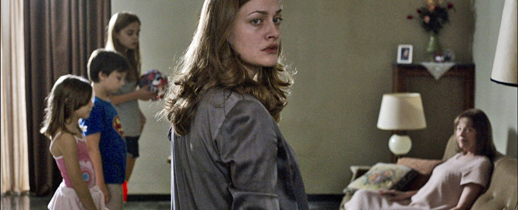
Miss Violence, one of VIFF 2013's very best feature films

Miss Violence, re-inventing Greek “weird wave”, a journey deep into the heart of darkness

To some degree this year, VanRamblings has failed our readers. For the most part, we’ve sought to publish 1500 – 2000 words a day (save Saturday, when a post we’d worked on for 6 hours simply disappeared into the ether, gone forever, when we attempted to publish it), and have sought each day to point readers / VIFF patrons in the direction of the very finest films that the film festival has on offer this year.
What VanRamblings has not done this year, as we have done in years previous, is write five 150-to-200-word capsule reviews each day of VIFF fare that has moved us. We had sought in our Saturday post to address this oversight, and had in fact written Part 2 of what would be a 4000+ word piece on the best films on offer in the final week. But as we say, that VanRamblings post — with all of its complex html coding, and much uploading of photos to accompany the post — simply disappeared.

star.jpg star.jpg star.jpg

[Note: titles of films below that are linkable to the VIFF website are screening this week, and well worth taking in the final week of VIFF. Simply click on the link for showtime information, and ticket purchase]

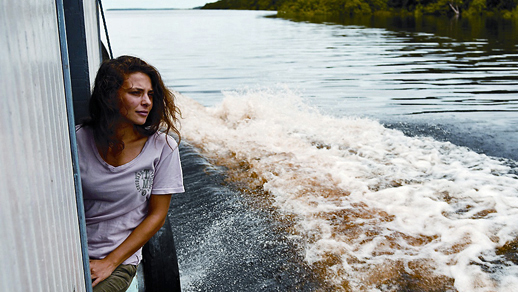
There Will Come a Day

Although we’ve written about our very favourite films at VIFF this year, in the end, in practice or from a reader’s perspective, we’ve not written one-fifth enough reviews of our very favourite films. We will say that Miss Violence will find a place in our top five feature favourites at VIFF 2013, after The Great Passage and The Patience Stone (which we’ll screen for a second time at The Playhouse, at 4pm on Tuesday), and I Belong.
That Harmony Lessons will make our Top 20 (out of the 80 that we’ve seen), as will the two stunningly well-realized Latin American films, La jaula de oro, and Field of Amapolas; and that, most probably, Matterhorn, Bends, Our Sunhi, Felix, Like Father, Like Son, Blue is the Warmest Colour, and Grand Central will make our list, as will Stand Clear of the Closing Doors, The Strange Little Cat (VanRamblings would award the film an “A” grade, but consensus on this film was far from in accord with that of VanRamblings, although there were many who loved the film as much as we did), There Will Come a Day (a meditation on the existential personal crisis of a woman who has lost her child, the film screening for a final time today, 6:15pm at The Centrenot-to-be-missed), The Invisible Woman, and A Bag of Flour. We’d also suggest you take in a screening of Wadjda.

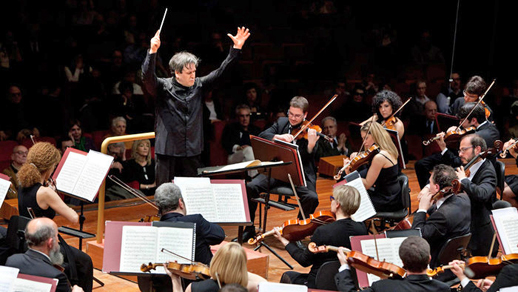
The Italian Character: The Story of a Great Italian Orchestra

For the most part, readers will have to wait til next week for a post on our favourite docs at VIFF 2013, which for now looks something like this …

At some point next week, we’ll publish our favourite VIFF features column, offering explicative insight into our very favourite feature film fare at the 32nd annual Vancouver International Film Festival.

VIFF 2013: Spiritual Connection in a Time of Anomie

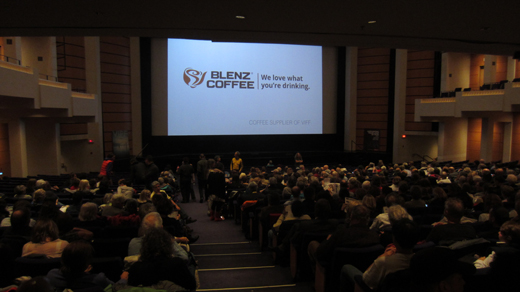
The Church of Cinema, at The Centre

Given the general consensus among Vancouver International Film Festival cognoscenti that audiences in attendance at this year’s Festival are noisier, more talkative, and almost as prone, as in years past, to use their phones while the narrative of a film is unfolding before our eyes, VanRamblings feels that it is necessary for all concerned that we “revive” our annual column on why it is that the cinephiles who each year attend 50+ VIFF films (and there are a whole bunch of us) feel so passionate about wanting to hear every sound, burrow into every picture, experience the every emotion of the characters on screen before us — and why it is that the Festival is a ‘no go zone’ for talking, whispering, and the rattling of candy wrappers for those in attendance at VIFF who would wish for nothing more than to experience Vancouver’s splendid and enchanting little film festival by the sea.
Worshipping at the Church of Cinema
Imagine yourself on a Sunday morning at the 32nd annual Vancouver International Film Festival. You’ve just walked into The Centre, where you’ve been greeted by one of the volunteers, and are then ushered into a dark room with seats all facing forward. You feel reverent.
You are about to worship at the ‘church of cinema‘.
One hundred years on, global cinema has arrived as a form of transcendence, for many replacing the once venerated position held by the institutional church. Think about the similarities: churches and the cinema are both large buildings built in the public space. Both have signage out front indicating what is about to occur inside.
As physical structures, the church and the cinema create a sense of sacred space with their high ceilings, long aisles running the length of the darkened rooms inside, the use of dim lighting, the sweeping curvature of the walls, and the use of curtains to enhance the sacredness of the experience.
In the church of cinema we take communion not with bread and wine, but with the ritualistic consumption of our favourite snack.
Consider if you will, the memorable moment when you enter the auditorium to find your perfect viewing angle, allowing you to sit back, relax and enjoy. Although you may not receive absolution at the cinema, there is the two-hour reprieve from the burden of your daily life.
As the lights are dimmed, the service begins: The seating, and the opening introduction constitute a liturgy for one and all, not dissimilar to the welcoming ritual that occurs in a church service prior to the sermon. If you are like most people, you obey an unwritten rule that requires you to be in place in time for either the singing (if you’re in church) or the introduction of a film by a Vancouver Film Festival theatre manager. And, you remain silent while in the theatre, focused on all that unfolds before you.
There is, too, the notion that as the film limns your unconscious mind you are being transported, elevated in some meaningful way, left in awe in the presence of a work of film art.
What we want from church is often, these days, more of what we receive from the cinema on offer at the Vancouver International Film Festival: the vague, unshakable notion that the eternal and invisible world is all around us, transporting us as we sit in rapt attention. We experience the progress and acceleration of time, as we see life begin, progress, and find redemption. All within two hours. The films at the Vancouver International Film Festival constitute much more than entertainment; each film is a thoughtful meditation on our place in society and our purpose in life.
As a film draws to a close, just as is the case following a sermon we might hear in church, our desire is to set about to discuss with friends that which we have just experienced. Phrases and moments, transcending current frustrations with a new resolve, all in response to a line of dialogue or an image on the screen that we have now incorporated into how we will lead our life going forward.
In the holy trinity of meaning, cinema reigns supreme, the personal altar of our home theatres placing a distant second place, the city providing the physical proof of the reality the other two point to, oriented towards the satisfaction of the devout cinemagoer’s theology.
Throughout the centuries we have sought to find meaning through manifest ritual and symbolism. If, as in the scene from American Beauty - a plastic bag sailing in the breeze as an intimation of immortality - then there is, perhaps, something for us to consider respecting the difference between art as diversion and art in our lives as a symbolic representation of an awakened mindfulness, allowing us to transcend the troubles of our lives.
For those who attend the Vancouver International Film Festival, cinema has emerged as that place where we might experience life in the form of parable, within a safe and welcoming environment, that place where we are able to become vulnerable and open, hungry to make sense of our lives. Cinema delivers for many of us access to the new spiritualism, the place where we experience not merely film, but language, memory, art, love, death and, perhaps even, spiritual transcendence.

VIFF 2013: A Guide to Weekend VIFF Films of Note, Part 1

NaHTaK transforming the environment between VIFF screenings, Thursday afternoon

Part 1, Saturday, October 5th, VIFF screenings not-to-be-missed
Here’s the latest update of VanRamblings’ programme schedule, for the final week of the 32nd annual Vancouver International Film Festival.
Based on general buzz from VIFF crowds, a surfeit of enthusiastic reviews from friends and colleagues, or simply because we loved a film the first time we saw it, and now must take in a second screening of our VIFF favourite — what we’ll attempt to do in this post is explain our choices, and use that explanation to point you in the direction of worthy films we insist you programme into your own VIFF schedule (we’re kidding about the insist part … well, kinda) over the course of the final seven days of VIFF 2013.
Don’t forget, Sunday is the last day for VIFF screenings at the Cineplex International Village site. As of Monday, VIFF cinephiles will have to make do with only 5 sites: The Centre (a gorgeous venue that may be lost in 2014), The Playhouse, SFU Woodwards, The Cinematheque, and the Vancity.
Here’s how today’s VanRamblings post is gonna work: we’ll write about worthy films deserving of your attention and attendance. Over the weekend, we’ll add material to today’s column — including later tonight — in order that we might turn the post into a helpful and expansive 3,000+ word guide on what’s worth seeing over the final seven days of VIFF 2013. So c’mon back later tonight, tomorrow and again on Sunday for updates of our “what’s hot, what’s the buzz” VanRamblings’ post extraordinaire.
The VIFF 2013 Must-Sees to Screen Today, and Over The Weekend
Alexandros Avranas' Miss Violence, a must-see at VIFF 2013
Miss Violence. Screens today at 10:30am, Cineplex 9, for the last time.

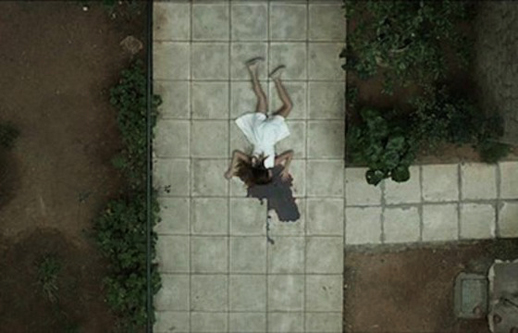
Alexandros Avranas’ airless but accomplished sophomore feature is another one of the new Greek cinema’s nightmare narratives. Before the opening credits are up, the 13-year-old birthday girl has plunged to her death from a fourth-story balcony, while her family’s strangely stilted response to the suicide suggests she had her reasons. Avranas’ film employs an irony-free meter that distinguishes his work from that of other Greek “weird wave” directors, lending the film’s most explicitly severe sequences of domestic and sexual abuse a kind of cumulative numbing power. The truth is unspeakable, the family’s interactions unnatural and violent, the narrative serving to confirm our worst fears.

Catch it if you can. One of VIFF 2013’s very hottest buzz films.

You’re going to want to re-read yesterday’s post, for insight into why you must take in a screening of the entirely magnificent La jaula de oro Saturday at 1pm at VIFF Cineplex, Cinema 9; as well as for insight into why you must take in a screening of one of VIFF’s most magnificent features, The Patience Stone, 4pm at The Playhouse next Tuesday, October 8th, and follow it up with an evening screening at The Rio, of Field of Amapolas, an important and affecting film, and a must-see VIFF film, which screens for a final time on Tuesday, 7pm, at The Rio.
Over the course of the weekend, you must, must, must take in a screening of the very best film at VIFF this year, The Great Passage. Click here to read our review of this masterwork from acclaimed Japanese director Ishii Yuya, as accomplished and moving a film as you’ll see this year or any other year. VIFF has added a screening of The Great Passage on Saturday morning at 11:30am, at The Cinematheque. There’s an all-but-sold-out screening of The Great Passage (which VanRamblings will attend, lining up an hour early) Sunday afternoon, at 2pm, at The Cinematheque.

star.jpg star.jpg star.jpg

If you’re going to line up early on Sunday at The Cinematheque for The Great Passage, rather than take in the Saturday morning screening at The Cinematheque, you’ll have freed up time to catch the second week, late-
breaking buzz doc of the Festival, The Kill Team, which screens Saturday morning, 11am, at SFU Woodwards (there’s another screening of The Kill Team on Tuesday, October 8th, at 12:15pm at The Cinematheque).

star.jpg star.jpg star.jpg

On Saturday, you might want to consider taking in a screening of …

  • Like Father Like Son. Saturday, 1pm, The Playhouse (screens again Tuesday, October 8th, at The Centre). The “switched at birth” urban legend and the Nature-vs.-Nurture debate provide Hirokazu Kore-eda with a fresh opportunity to revisit his ongoing preoccupation with family dynamics and parent-child relationships in contemporary Japan. The life of go-getting workaholic architect Ryota (Masaharu Fukuyama) — one of comfort and quietly ordered affluence with his wife Midori (Ono Machiko) and son Keita (Keita Ninomiya) — is violently overturned when hospital administrators reveal the unthinkable: Keita is not his biological son. Due to a mistake made by a negligent nurse, his “true” son has been raised in the dishevelled but warm-hearted home of working-class shopkeeper Yudai (Lily Franky) and his wife (Yôko Maki). The different approaches of both couples to their excruciating dilemma and the gradual emotional awakening of the all-too-rational Ryota are at the core of this sensitive drama of family feeling, which showcases Kore-eda’s rich sense of humanity.
  • Blue is the Warmest Colour. Abdellatif Kechiche’s newest film, based on Julie Maroh’s graphic novel, was the sensation of this year’s Cannes Film Festival even before it was awarded the Palme d’Or. Adèle Exarchopoulos is Adèle, a young woman whose longings and ecstasies and losses are charted across a span of several years. Léa Seydoux (Midnight in Paris) is the older woman who excites her desire and becomes the love of her life. Kechiche’s movie is, like the films of John Cassavetes, an epic of emotional transformation. Blue pulses with gestures, embraces, furtive exchanges, and arias of joy and devastation, some verbal and some physical (including the film’s now celebrated sexual encounters between the two actresses). Screens Saturday, at noon, at The Rio. Not-to-be-missed. A must-see.
  • Ilo Ilo. Saturday, 1:30pm, Cineplex, Cinema 10 (screens again on Wednesday, October 9th, 4pm, at The Centre. Anthony Chen’s subtle snapshot of family life in 1990s Singapore, the Camera d’Or winner at Cannes, and a film that, according to Variety film critic Maggie Lee, “brims with love, humour and heartbreak.”
  • A Story of Children and Film. Screens at 4:45pm on Saturday, at The Cinematheque, and for a final time next Wednesday, October 9th, 7pm at The Cinematheque. You’ll want to read our at length review of one of our very favourite VIFF documentaries.
  • Felix. * Update * Spoke with Festival Director Alan Franey about the fact that the feel-good film of the Festival, a magnificent family affair, has been booked exclusively into the age-restricted Rio Theatre, where those under 19 will not be admitted. Alan told VanRamblings that an arrangement had been made with The Rio’s Corinne Lea to allow children, accompanied by their parents, into The Rio’s balcony, for the two upcoming screenings of Felix. Not so, says senior VIFF administrator Mickey Brazeau — there’ll be no admission of children at Saturday’s 6:30pm screening at The Rio, and she wasn’t entirely sure if Tuesday’s 1:30pm screening of Felix, again at The Rio, would be admitting children. Alan fully understands that building a new VIFF audience is important, and allowing children to accompany their parents to screenings builds on VIFF’s future, but … suffice to say that the screening development involving Felix is regrettable, indeed. For those of you without children, VanRamblings would suggest to you that Felix is an absolute must-see, a humble, deeply affecting, cross-cultural coming-of-age story set in South Africa that left the audience at an earlier screening of the film verklempt but heartened, with nary a dry eye in the house. Everything in Felix works: the cinematography, the production values, performances, screenwriting, and directorial ambition. Quite simply, a moving and accomplished film that is not-to-be-missed at VIFF 2013.
  • Anatomy of a Paperclip. You’re going to want to place this winner of this year’s Dragons and Tiger award, which will screen at a special time on Saturday, 4pm, Cineplex, Cinema 8. Vancity programmer Tom Charity told the audience in attendance for the awards ceremony on Thursday evening that he and the awards jury loved the film. Tom loves a film? VanRamblings is there.
  • Finding Vivian Maier. The buzz on this film has been nothing short of through the roof — we’ve scheduled it for next Wednesday, 10am, at SFU, but there’s a screening on Saturday, 9:30pm, SFU Woodwards.
  • Grand Central. Also arriving at VIFF with good buzz. Scott Foundas, chief film critic for Variety, and until recently the chief programming of the New York Film Festival loved it. Screens for a final time on Saturday, 9:15pm, at The Rio. VanRamblings will be there.

Check out Part 2 of our Weekend Special, the films screening on Sunday that are not-to-be-missed at the 32nd annual Vancouver International Film Festival. C’mon back early on Saturday for our Sunday films of note.