Category Archives: Stories of a Life

Stories of a Life | The Disgusting Men’s Group & Fallout Therein

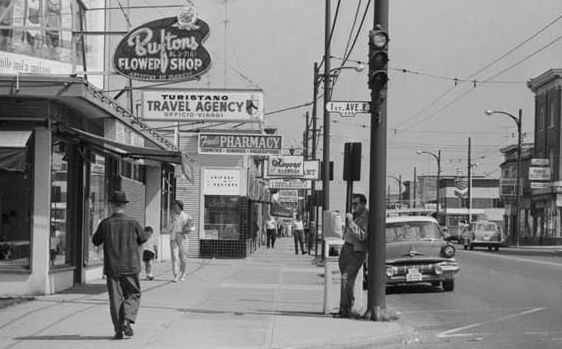
Vancouver's Commercial Drive at East 1st Avenue, 1950s

East 1st Avenue and Commercial Drive, in Vancouver, in the 1950s, facing north

Growing up in Grandview-Woodland in the 1950s and 1960s as a poverty-ridden, slum dwelling east side kid, getting into fights was almost a daily feature of my young life, as it was for most of my peers.
As bad as I often had it, though, life for my mother was often much worse.
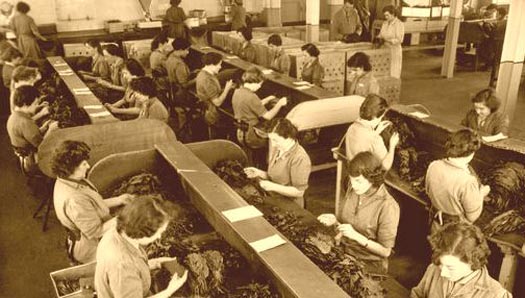
Women at work in the 1950s

Working for 35¢ an hour at one back breaking job after another, subject to the whims and the unwanted attentions of her male bosses, sexual assault was as much a feature in my mother’s life as fighting was in mine.
And my working class mother was as tough as they come, let me tell you.
Still, seeing what my mother had to endure every day, early on turned me into a feminist, and a staunch, lifelong defender of women, central to the way I’ve brought myself to the world, from as far back as I can remember.
When I met Cathy in the late ’60s, a big part of her attraction to me was as a bad boy, a wiry, never say die street fighter who could defend her interests and integrity when the occasion arose — which became a regular occurrence in the first half dozen years we were together.
Then the 1970s happened, the era of women’s consciousness-raising groups, and marching on picket lines to defend the interests of women exploited by their bosses at their place of employment — including up at Simon Fraser University, where men filled all of the senior administrative positions at the university, with women relegated to performing the work that needed to get done, although ill-paid for their endeavours, unrecognized, and denied always the opportunity for advancement.
Let us not forget, all of the above occurred less than fifty short years ago.
By the time the 1970s ended, every man of my acquaintance identified himself as a feminist, and a staunch ally of women. We learned to cook and participated with our partners in preparing meals, sharing household duties, and were as much involved with child raising as were our female partners.
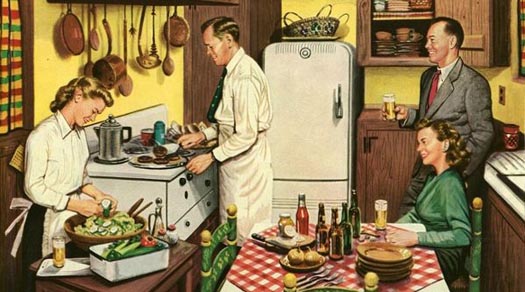
Man preparing dinner, while his wife makes the salad

Then the 1980s came along, and many changes were wrought.
The women in the lives of these “liberated” men to whom I’d been close for a decade and more turned to us, one by one, expressing how dissatisfied they were with the progressive, supportive, domesticated men we had become — each woman leaving her marriage, to take up with what we had once been: sexist, thoughtless men who would never dream of preparing a meal, taking care of our children, or “helping out around the house.”
To say that my male friends and I were flabbergasted, taken aback at the state of affairs described above would be an understatement.
We thought we’d become everything our wives had needed us to be: loving, supportive men who were gentle of spirit and presentation to the world, breadwinners as well, but equal participants in every aspect of our lives at home, the growing of organic foods in the garden, vacuuming and washing the floors on weekends, doing the laundry and ironing, child raising, all in addition to the more “manly chores” involving carpentry, electrical work, yard work, and anything that approached some degree of hard labour.
Yet, here we were: our marriages ended, our wives remarried to (or in a relationship with) a Cro-Magnon “thug”, while we were left paying alimony and maintenance through the nose, and were more often than not denied anything approaching reasonable access to our children. As a group we weren’t angry, just confused at this unforeseeable turn our lives had taken.
Every Friday evening, a bunch of us would get together at Scott Parker’s house in Burnaby, at the corner of Frances and Gilmore. We’d drink, listen to music, head out to a concert if one was happening, and kvetch about our undeserved fate. Perhaps not the most productive use of our time, hardly a ‘manly’ activity, but for a time it met our collective need for context.
Once, when high as a kite, one of the men gathered at Scott’s house suggested we constitute ourselves as the Disgusting Men’s Group, or the DMG. As plastered as we all were, individually and collectively we immediately cottoned on to the idea, adopting the DMG moniker for our regular Friday night get-togethers. In passing, it must said, once we became the DMG, our progressive politics went out the window for the few short hours we met each Friday night — at all other times, it was back to being the progressive feminist men we all had long known ourselves to be.
The member of the DMG who came up with the group’s name went so far as to draft a wildly provocative and overtly sexist DMG Manifesto, which — without informing any of the men in the DMG — he printed and distributed all across town. The response was immediate: every feminist woman in British Columbia hated us, each member was condemned, as to a man we became despised, detested, execrable, and scorned. Affairs reached such a fever pitch, that the man who drafted the Manifesto had to return to his home in Ireland, fearful for his personal safety, and the potential for harm.
In short order, members of the now disbanded Disgusting Men’s Group, were not only shunned, but became targets by our distaff comrades for horrendous abuse, not just verbal but often physical — affecting our employment, our access to our children, our standing in the community and any potential for a relationship with any woman on the Lower Mainland who considered herself to be a feminist, and a supporter of women’s causes.
In my case, when the then Ministry of Human Resources became involved in a child custody dispute between Cathy and I, when she removed my two children from the jurisdiction (read: kidnapped) upon her return, both of our children were placed in the care of the province, rather than returned to me, the custodial parent. The apprehending social worker — who I knew from left groups I’d worked with for years — hated me arising from her reading of the manifesto, the drafting / distribution of which I’d had no role.
Nonetheless, for two long, seemingly endless and miserable years, the social worker made my life a living hell, arbitrarily withholding access to my children — who didn’t know what the hell was going on, why they’d been wrenched away from their father — and otherwise engaging in court-related activity that, as the documents she submitted to the courts required a response, came to cost me a small fortune, in the many tens of thousands of dollars. When the courts appointed a mediator to assess the parenting skills of the respective warring partners – that would be Cathy and I – a feminist psychiatrist was appointed to conduct the mediation activity.
In 1983, working together, the social worker and the psychiatrist submitted a devastating report to the Supreme Court, alleging I was a combination Franco / Hitler / Mussolini / Pinochet / Stalinist provocateur, and an utterly despicable man, who not only should never see his children ever again, but to the benefit of all, must be removed from society as I posed a threat and a danger to good, innocent and well-intentioned citizens everywhere.
At the Court hearing where the Supreme Court Justice was to render a verdict on the report and my continued access to my children, the Justice became so enraged with the contents of the document that the social worker and psychiatrist had submitted to the Court, he picked up the report and flung it across the room, into the area in front of the table where the psychiatrist and the social worker sat, stating, “In all my years on the bench, I have never read as biased a report as has been submitted to this Court, a garbage report that this Court utterly rejects.” Turning to the plaintiff table, the Justice castigated the social worker & the psychiatrist, removing the social worker from the case for “bias”, and telling the psychiatrist she ought to be ashamed of herself, that arising from her report that the Court would submit her name to the College of Physicians and Surgeons for a review of her “damnable practice of medicine.”
In addition, the Justice removed the jurisdiction of the Ministry of Human Resources from involvement in the case, ordered that a Court-appointed mediator be assigned to the case — who, as time passed, did everything in her power to bring reason and justice to a case where such had been absent the previous two years — ordering, as well, that regular access to my two children be re-established sans supervision and, further, that I be afforded the opportunity to re-establish my relationship with my two children, to see and spend time with them during the week, to have them stay with me on weekends, on holidays, and for a month in the summer.
That the misery of access to my two children continued on for another five long, arduous, painful and expensive years, as Cathy took me to Court multiple times a year through 1988, is a story (or not) for another day.

Stories of a Life | My Days in Radio in the Late 1960s

Radio in Vancouver in the 1960s

In the 1960s, radio announcers — or “boss jocks”, if you will — were celebrities, afforded the same degree of adoration by young people rock ‘n roll bands were accustomed to, their deep, resonant male voices (because, alas, radio was exclusively a male domain) you heard through your transistor or car radio speakers transporting you to another time and place.

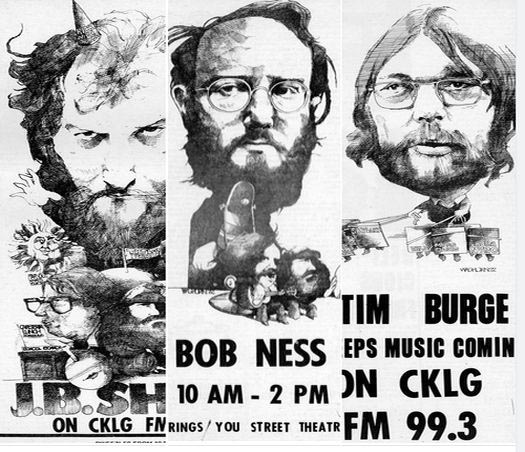
The late 1960s was when a motley group of young guys took over the radio airwaves in Vancouver, when radio really meant something: lanky John Tanner arriving from Penticton, Daryl B from Winnipeg, Terry David Mulligan from North Vancouver via Red Deer and Regina, the ‘real’ Roy Hennessey, Rick Honey travelling cross-country after working a radio gig in Halifax, the preternaturally young and talented Fred Latremouille, East End boy wonder Don Richards, ex-Edmonton Eskimos football player Jim Hault, and radio screamer, CKLG’s ‘let me on the radio’, 16-year-old ‘little’ Stevie Wonder.

And, of course, the incredibly talented Johann Bruno (JB) Shayne aka Chuck Steak, Lucy Morals Loving Housewife Mother of Five, Captain Midnight, resident gardener Herb Folley, and Uncle Ned Out In the Shed Milking The Cow Right About Now, among a dozen other radio characters who were fixtures on Vancouver’s morning & afternoon drive programmes.

These were the halcyon days of Vancouver radio, never to be heard again.

And lucky me, I got to be a part of it from 1966 until 1970, rarely on the air, although I did have a regular Sunday morning gig on LG-FM playing classical music (ordered by the CRTC that the station play classical music 6 a.m. til noon, Sundays) — which was going to be the focus of today’s post, but I thought I’d get into too much trouble telling the story I’d intended.

Even so, I’ll leave you with this one ‘fit for print’ story about my days at LG-FM. Ordinarily, when sitting in the cavernous LG-FM studio (separated from the AM side of the operation by the production studio), there was a small lamp that lit up the console, casting shadow on the rest of the room.

One Sunday morning I arrived for work only to discover that one of the jocks on the FM side who’d been “promoted” to the AM side — although the jocks loved LG-FM, station management could have cared less, as FM wasn’t a revenue generator, barely an afterthought for Conservative party honcho, General Manager Don Hamilton — had taken the lamp home with him, leaving the FM studio well lit by blindingly bright fluorescent lights.

There was no way I was going to work 6 hours under those conditions.

So, following a spin of the Moody’s Blues’ Nights of White Satin — which I considered to be classical music, and anyway, what were the chances management was listening that early on a Sunday morning, although a woman did phone in to lodge a complaint to management — I opened the microphone, gave listeners the studio telephone number, telling them that I’d take the first person to deliver a desk lamp on a tour of the station. Two minutes later I got a call, and fifteen minutes later a group of hippies, a couple of guys and a girl, pressed the front buzzer, and in one of the guy’s hands was a perfectly gorgeous little, near historical Edwardian lamp.

Walking with the three towards the FM studio, I placed the lamp on the console panel counter, put on Circus Maximus’ Wind (I’ve never been good at following directions), and proceeded to take the three on a tour of the station, from Roy Hennessy’s music room, to the newsroom, into the AM studio where my friend (and best man at my wedding), the late Bren Traff was spinning discs, and then to the basement where all the jocks got together to get stoned (another story I can’t tell — well, maybe one part of it one day, involving Carol-Ann ‘Angel‘ Mulligan — who I was head over heels in love with at the time), and then back towards the entrance to the building, showing them the front offices of 1006 Richards Street, bid them adieu, and made it back to the studio just in time to put on the next record.

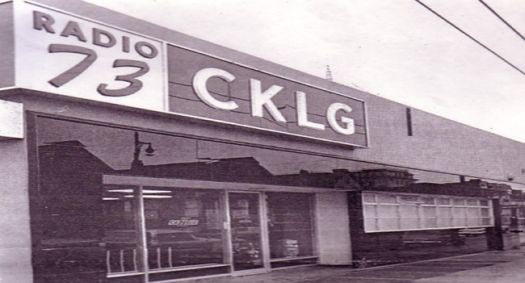
The building in which 73 CKLG Vancouver and LG-FM was housed

I pulled the chain on the lamp to turn it on, and then proceeded to turn off the overhead fluorescents. Seated back in my chair in front of the console, the room now properly lit, I noticed the lamp had dark blotches on the inside of the shade. Curious as to what those “blotches” were, I reached under the lamp and came across a very small bag that had been taped to the inside of the lamp shade. Removing the little baggie and placing it on the counter in front of me, I saw that it was a small bag of marijuana.

Hmmm, I thought to myself, as I reached under the lamp shade, and removed another baggie, this one filled with small pieces of hash. Lifting out another baggie and placing it on the counter, I saw that it contained several tabs of LSD. Eight bags in total, filled with marijuana, hashish, LSD, cocaine, and psychedelics, ranging from mescaline and magic mushrooms to LSD & peyote, a veritable pharmacological array of common 60s drugs.

And, no, I didn’t do any of those drugs during the course of my six-hour shift — although many jocks did their entire shifts high on one psychedelic or another. There’s a routinization to radio: you open the microphone, and the patter begins, the practiced way of presenting yourself on the airways, such a part of you that no matter how stoned you are, how much the room seems to be floating around you, once that microphone opens, you end up doing what you do best, the experience of the drugs serving to enhance your wit, your humour, your on air insight and your warm welcoming patter.

For years — until Cathy came along and said, “There’s no way you’re going to stay in radio hanging out with those guys. You’re going to university and that’s all there is to it” — radio played a pivotal role in my maturation, surrounded by great people, unbelievably bright and gregarious guys like Bill Reiter and Terry David Mulligan … both among the most generous, sane, and talented men I have ever met, who had my back always, as was the case with Jim Hault and Daryl B, and Douglas Miller, too — although I am sorry to report that I was not near as generous to Doug in our days at SFU, and earlier in our days in radio, as he was to me in the ten years we were close … it took me a long time to mature, and an even longer time to develop kindness and compassion as a way of bringing myself to the world.

Stories of a Life | Megan, Jude & Me and Movies | 80s and 90s

Cinema | Megan and Jude Tomlin, and their dad, love cinema, love the movies, stories of a life

Film has always been a central, organizing force in my relationship with both my daughter, Megan, and my son, Jude.
Our collective love of the cinema, attending film festivals and discussing what we saw following the various screenings we attended (usually at the Fresgo Inn on Davie, which was alive no matter the time of night or early morning) was, over the years, a central feature of our relationship — the relationship between son and daughter, and dad — that allowed us to delve deep into discussions of the meaning of life, and our collective responsibility to work towards creating a fairer and more just world for everyone.
Heart and deep caring for humanity was at the centre of our love of film, and at the centre of our loving familial relationship, informing the choices we made about how we would conduct ourselves in the world, and the projects and causes to which we would devote our time and our energies.

In the 1980s, when Cathy and I were going through a rancorous divorce, film brought us together. When in Seattle — which we visited frequently, always staying on the non-smoking 33rd floor of the Weston twin towers — in 1984, we took in a screening of Garry Marshall’s The Flamingo Kid — the story of a working class boy (Matt Dillon) who takes a summer job at a beach resort and learns valuable life lessons. Megan was seven years of age, and Jude 9 — both were uncertain about the efficacy of our trip south (without their mother’s permission — we called her upon arriving at our hotel), but the screening alleviated and, finally, repaired any of their concerns, and all went well that weekend. Fortuitously, too, upon our return, the divorce proceedings inexplicably moved forward into a more reasonable and thoughtful direction, reflective of all our collective concerns.
Whenever there was “trouble” in our relationship — generated, most usually, by their mother — film served to salve the wounds of dysfunction, allowing us to find our collective centre while healing the wounds that rent all of our lives during a decade-long, million dollar custody dispute.
Film spoke to us, made us better, took us out of the drudgery of our too often protean daily and, more often, troubled lives, and engaged us while putting our lives into a broader and more human scale perspective. Never once was there a film that we saw together when we didn’t come out of the screening feeling more whole, and more at one with ourselves & the world.

Such was true, at the screenings of Glenn Close and John Malkovich’s Dangerous Liaisons over the holiday period in 1988, or months later at the screening of Kevin Costner’s Field of Dreams, which we took in at the Oakridge Theatre, a favourite and comforting cinema haunt of ours.
When Megan wanted some “alone time” with me, it almost always revolved around watching a film together, although as Megan matured (and as her love for film matured), Megan made it plain that she was present in the theatre to watch the film, not “share time” with me, choosing always to sit in a whole other section of the theatre (it drove her crazy in the times that we were sitting together in a theatre that I would check in occasionally with her, looking at her to determine how she felt about the film — talking during a film was an unforgivable sin, so that was never going to happen).
Some days, Megan would call and say, “Dad, take me to a film.” And because I was a film critic at the time, and had a pass to attend at any cinema in North America, off the two of us would traipse to see Kathy Bates’ Fried Green Tomatoes (1991) or Johnny Depp’s Benny & Joon (1993) at the old 12-theatre complex downstairs in the Royal Centre mall.
Other times, post dinner and after Megan had finished her homework, I’d say to Megan out of the blue, “I’m heading out to attend a screening of a film. Do you want to come along with me?” Megan would ponder my question for a moment before asking, “Which film?”
In 1991, one very long film screening we attended was Kevin Costner’s directorial début, Dances With Wolves, about which we knew nothing other than it starred one of our favourite actors, and off the two of us went.

At screening’s end (Megan and I actually sat together at this particular screening, which took place in the huge Granville 7 Cinema 7, cuz the preview theatre screening room was just packed), Megan turned to me, and said, “Dad, I knew this was going to be a great film.” And it was. “And, you know what else? It’s going to pick up a raft of Oscars this year, too, and be considered one of the, if not the best, films of the year.”
Jude and Megan also attended film festival screenings with me.
Almost inevitably, Vancouver International Film Festival founder, and co-owner of Festival Cinemas Leonard Schein was present with his wife Barbara, and at a screening’s end, Megan would make her way over to wherever Leonard and Barbara were sitting to enquire of him whether or not he intended to book the film into either the Varsity, Park or Starlight.

Following screenings of Neil Jordan’s 1992 putative multiple Oscar award winner, The Crying Game or, that same year, Baz Luhrmann’s Strictly Ballroom, Megan marched right over to Leonard, and asked him boldfacedly, “Well, what did you think?” When Leonard indicated that he thought the films were not quite his cup of tea, that both films would have difficulty finding an audience, and that it was unlikely he’d be booking either film into one of his cinemas, Megan lit into Leonard with a passion and an anger that I had rarely observed as coming from her, saying, “Are you out of your mind? Strictly Ballroom (or, The Crying Game) is a wonderful film, and just the sort of film that not only should you book, but that you MUST book — these are both groundbreaking films that will only serve to reinforce your reputation as an arts cinema impresario, but will also make you a tonne of money, and we all know that you’re all about the money. Either you book these films into The Varsity, or believe me when I tell you that there’ll be hell to pay when you see me next.”
And with that, Megan marched off.

At the 1990 Vancouver International Film Festival, I’d caught a screening of Whit Stillman’s directorial début, Metropolitan, in preview, and knew that this would be a film that Megan would just love (and be astounded by, at the revelation of one of the characters, mid-film). I made arrangements to pick Megan up from University Hill Secondary at 3pm sharp on the day of the festival screening, we drove downtown, found a parking spot, and rushed over to The Studio Cinema on Granville to catch the 4pm screening of Metropolitan — which as I had predicted, Megan just loved.
In early December 1993, on a particularly chilly and overcast day, at 10am in Cinema 2 at the Granville 7 theatre complex, I caught a screening of Jonathan Demme’s groundbreaking new film, Philadelphia — a film about which I knew little, and a film that knocked me out (along with the handful of film critics in attendance at the theatre for the screening). Emerging from the theatre just after noon, making my way onto Granville, I looked for the nearest telephone in order that I might call Megan at school.
I called the office at University Hill Secondary, and asked them to find Megan and bring her to the phone. When Megan asked, “Dad, is everything all right?”, I told her about the film I had just seen, and that when it opened in January, I wanted to take her and Jude to a screening at the Granville 7. We talked about the film for a few minutes, with her saying about 10 minutes in, “I’m holding up the school phone, and calls coming in. Let’s get together after school. Come and pick me up, and we can continue our conversation. I’ll see you then, Dad. I love you.”
There are gifts we give our children. From my parents, it was what would emerge as a lifelong love for country music. For Jude and Megan, my gift was a love of music, a love of the ballet, and an abiding love for film.

Stories of a Life | 1989 – 90 | The Balloon Story

Stories of a Life | VanRamblings | The Balloon Story, 1989 - 90

Christmas of 1989, Cathy asked me if she might have the children on Christmas Day, as her mother would be in town and very much wanted to spend Christmas Day with her two grandchildren, Jude and Megan.
Now, just the previous year Cathy and I had come to the bitter end of an arduous and discomfiting 10 year, million dollar separation and divorce journey that had near bankrupted me. Although I had sole custody of the children from 1978 through 1981, because Myrtle (Cathy’s mother) hated having to go through me to see her grandchildren, she financed what turned out to be a brutal seven year campaign to wrest sole custody away from me in favour of Cathy having the children year round, in the court proceedings setting about to deny me access to my two loving children.
In order to pay for the legal fees necessary to put my position forward in the Supreme Court (and to preserve my access to Jude and Megan), I worked three jobs simultaneously, teaching, working as a social worker, as well as a corrections officer, taking an inheritance from my aunt, as well, to fund legal fees from 1981 through 1988 — going so far in the late eighties as to cash in my teacher’s pension to pay off the last of my legal bills — all but living in the Supreme Court throughout the 1980s, until one fine day, Supreme Court Justice Patrick Dohm seized himself of our divorce and custody matter (which meant that all future proceedings would be directed to his court), with Justice Dohm finally deciding in 1988 that “enough was enough”, scolding Cathy, instructing her to “behave”, and then awarding the two of us joint custody, which gave me 183 days of access to the children each year, Wednesday evenings, Friday evenings through Sunday evenings, half of each of the Easter and Christmas holidays, as well as all summers, from the beginning of July through the end of August.

Note of reflection: I will say this, had I to do it all over again, I would not have fought what was for me a half million dollar custody battle with Cathy throughout the 1980s. Some people are meant to be parents — Cathy is not one of those people. Had I not fought with her, gone to court half a dozen or more times each year for seven years, because Cathy is who she is, I likely would have spent just as much time, perhaps even more time, with Jude and Megan throughout the 1980s than I did by fighting with her in court to maintain my access to the children — and would most probably have a better relationship with my children than is the case today.

In 1988, as per the Supreme Court ruling of Justice Dohm, in the first year of the Court mandated agreement I was given the latter half of the Christmas holidays as access, which meant that in 1989, I would have the two children from the last day of school through Boxing Day morning. But as Myrtle was in Vancouver during Christmas 1989, Cathy asked if she might have the children from the end of the school term in December through Boxing Day morning.

“Raymond, you know you want to spend time with the children. School gets out for the holidays on Friday, December 22nd and Boxing Day is only four days later, which would give you very little time with Jude and Megan. If you take them for the second half of the holidays, you would have the children from Boxing Day through the late evening of Sunday, January 7th — which would give you the children for thirteen full days, more than three times the number of days you would get if you just had them through Boxing Day, which I’m sure would make you happy.”

The more time I got to spend with the children the better, I had long thought, so I agreed to take the children from Boxing Day through their return to school on the 8th of January, agreeing to forfeit spending Christmas Day with the children in favour of a longer period with the children over the holiday season, granting Myrtle her Christmas wish.
Now, given the previous seven year history of our rancorous divorce, I should have known something was up, but being the good-hearted, naïve fellow I was then (and remain today), I readily — if stupidly — agreed to Cathy’s plan. And thus the conditions are set for part one of today’s story.

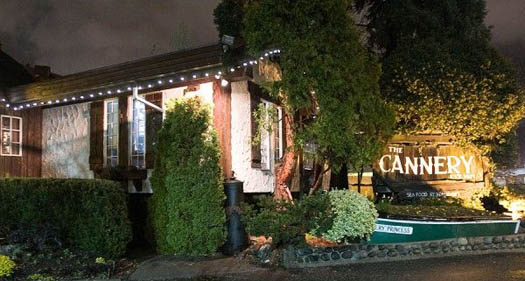
The Cannery Restaurant, along Vancouver's waterfront, in its glory days

A bit of background as to why I should’ve been wary of Cathy’s intentions:

On my birthday on August 11th 1989, Cathy drove over to my home to drop the kids off, as Jude, Megan and I prepared to spend my birthday afternoon together, after which we would attend at The Cannery Restaurant for my much-looked-forward-to birthday dinner.

Cathy drove up in her late model Jetta, parked illegally across the street, leaving Jude and Megan (who were all dressed up) in the car, approaching me as I stood on the front lawn of my home. Cathy said, in an angry tone, “I want to talk with you.” “Something contentious?” I asked. “Yes,” she said, to which I replied, “Could we put off having that discussion until tomorrow? I’d very much like to speak with you, and I’m sure we could work out to your satisfaction whatever it is that you feel needs doing — it’s my birthday, though, and as you well know from having been married to me, I like to steer clear of any sort of contention on my birthday.”

Before I knew what was happening, Cathy balled up her fist, and moving her arm back and then towards my face hit me squarely on my left cheek, with such force that it knocked me to the ground. With me now lying sprawled out on the ground, Cathy stomped back across the street, got back into her car, and drove off, the children looking at me piteously through the rear window of their mother’s car as she speedily drove off.

Cathy could have her moods, and that is an example of one of them.

Robin Williams in the movie Good Morning Vietnam

Boxing Day 1989: the Beginning of a Three Month Interregnum
As pre-arranged and agreed upon, Cathy dropped the children off to my place in the late morning of Boxing Day 1989. Upon alighting from their mother’s car, both children approached me to say that they wanted to go shopping for clothes, the first stop on our buying spree to be Aritzia at Oakridge where Megan had scoped out exactly what she wanted to acquire, with Jude asking afterwards that we drive downtown to Robson Street to a shop where he wanted to acquire a pair of jeans he’d had his eye on, and were on sale on Boxing Day. The three of us spent that day after Christmas day bopping around town, shopping, walking along crowded streets, stopping off for lunch, driving around Stanley Park and out to Horseshoe Bay — the children loved to be driven across the landscape of our region, soaking in the sights, listening to the radio and spending time together — before heading home for dinner, and a night in together watching a video.
Jude and Megan had chosen Good Morning Vietnam as the video, and after cleaning up the kitchen post dinner, set about to create the warming conditions to watch the Robin Williams movie, the three of us all snuggly & toasty warm in our pj’s and housecoats, sitting on the sofa hot chocolate in hand, and snacking on an array of chocolates and shortbread cookies.

Vancouver police officers

At 11:30pm, the front door buzzer in my apartment sounded, with me thinking, “Who could that be at this time of night?” In fact, it was two Vancouver police officers, who asked to be let in, who told me that one of them would be knocking on my apartment door within the next minute. When the officer arrived at my door, I greeted him, the officer looking into my apartment to see Jude and Megan on the sofa staring out at him, the officer asking, “Are you two alright?” “Yep, we’re fine,” they said. The officer asked me to step out into the hallway of my apartment, which I did.
The officer explained to me that a frantic Cathy was in the foyer of my apartment building, court order in hand, exclaiming that I had not returned the children to her earlier in the day, as per the court order (a court order which she had re-proclaimed for this evening event). Cathy contended, the officer said, that I had not returned the children to her, so she called the police to enforce the court order — which he and his fellow officer were now compelled to do. I set about to explain the circumstance, but the officer was clear that the court order trumped whatever exclamation of events I was presenting to him. The officer asked me to return to my apartment to instruct the children to get dressed, and prepare to return to their mother’s home — which I solemnly and reluctantly set about to do.
Within 15 minutes, Jude and Megan were in the custody of the officer, after which they took the elevator to the main floor, reuniting with their mother.
I had no contact with the children for the next three months. Despite the fact that I was earning good money, I had no desire to spend even more money taking Cathy back into court, before Justice Dohm — who, no matter what he ruled, would at the end of the day, as had been the case in the past, have little effect on Cathy’s arbitrary and injudicious conduct.

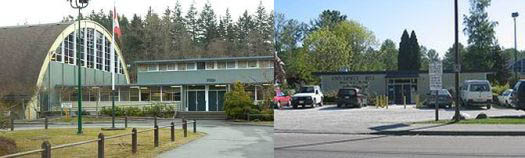
University Hill Secondary School in the 1980s

Megan was born on March 26th, 1977. March 26th, 1990 would not only mark her 13 birthday, but her entrance into teenage hood. There was no likelihood that I was not going to move the sun, the moon, the stars to become a part of the celebration of the young woman I had raised, despite the fact that we’d had no contact with one another for three months.
So, I did what any good father would do: I arranged to have a large bouquet of birthday helium balloons delivered to the offices of University Hill Secondary, addressed to the young woman, Megan Jessica Tomlin.
That afternoon, I received a telephone call from Megan asking me to pick her up from school, which I did. Megan told me how disconcerting and embarrassing she found my outré birthday gift to be, but that her friends prevailed upon her that afternoon, saying what a wonderful gesture it was, that she couldn’t possibly not see how loving the gift was, and that she must, must, must get in touch with me as soon as was practicable.
For the next nine years, Megan’s and my relationship was steady and as close as it had always been, with no breaks away from one another throughout that entire time period, trusting confidants and friends with one another, lovers of baseball both, father and daughter, advocate and advocatee, Megan in charge (Megan always had to be in charge, then and to this very day), decided and loving, independent, feminist and caring.

Megan Jessica Tomlin, age 13, in Vancouver