
Category Archives: Stories of a Life

#SaveOurParkBoard | Tender Moments of Change at Park Board, Pt 1


The mandate of the elected Vancouver Park Board: building a bridge to a better tomorrow

As the last bastion for civic democracy in our city, the Vancouver Park Board has played a vital role in serving the best environmental, recreational and family interests of the community for more than 133 years, since its founding in 1889.

For many years, members of the community who attended Park Board meetings to address an issue or a “cause” sat at the same table as the elected Park Board Commissioners while addressing their concern, and were successful in having a direct impact on the livability and humanity of our beloved home by the ocean.

Today on VanRamblings, the first of two “stories” revolving around humanity at the Park Board table, specifically involving past Park Board Chairperson John Coupar, as well as Park Board Commissioners Trevor Loke and Constance Barnes, who sat on the 2014  Vancouver Park Board with Commissioners Sarah Blyth, Melissa De Genova and current British Columbia Attorney General, Niki Sharma.

Vancouver Park Board Adopts an Inclusive Trans & Gender-Variant Policy


Trevor Loke, Vision Vancouver Park Board Commissioner

At the  May 12, 2013 meeting of Park Board, Commissioner Trevor Loke moved a motion to establish a trans and gender-variant working group, aimed at creating more inclusive spaces for members of the trans and gender-variant communities.

The Park Board Commissioners unanimously supported the motion, drawing a standing ovation from the dozens of supporters of the motion, present in the Park Board meeting room that night, many of the attendees sharing trenchant stories with the Commissioners about their experiences of feeling unwelcome in city facilities, such as recreation centres, swimming pools, and washrooms.

“There are days when with the best intents I’m off to the gym or off to the pool, and I turn around and I go back,” said Drew Dennis, a member of the City of Vancouver’s LGBTQ advisory committee.

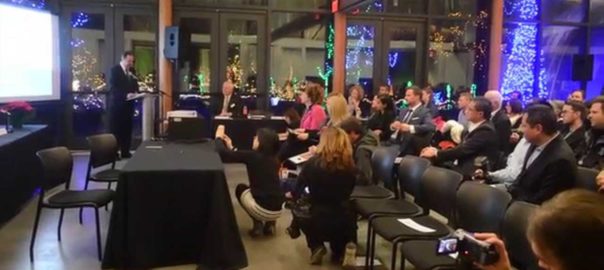
One year later, on Monday, April 28, 2014, the Vancouver Park Board’s Trans* and Gender-Variant Inclusion Working Group reported back to the seven Park Board Commissioners gathered at the table, on their engagement findings and priority recommendations, aimed at enhancing service quality and access to facilities.

On that warm, early spring evening, 150 members of the trans and gender-variant community were present in the Park Board meeting room to address the recommendations of the working group, a good number of whom who would come to sit at the Park Board table while speaking to the Commissioners: incredibly articulate physicians employed by Vancouver Coastal who identified themselves as gender-variant persons on the spectrum, who spoke movingly and with spirit.
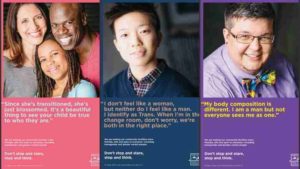
Young persons, high school students, members of the business community, teachers, lawyers, construction workers, actors and entertainers, seniors, a broad and representative spectrum of members of the cultural and ethnic mosaic communities that comprise and have long defined the Vancouver we know and love.


Constance Barnes, elected Chairperson of the Vancouver Park Board, on December 5, 2011

When it came time for the Commissioners to vote to adopt and establish a 2SLGBTQIA+ policy, the first Commissioner to speak was Vision Vancouver Park Board Commissioner Constance Barnes, who spoke with eloquence in her support of each of the members of the 2SLGBTQIA+ who were present in the room, down the long hallway outside the meeting room, and who had been standing outside the office listening to the speakers, now ready to hear Ms. Barnes’ words.

Constance Barnes’ address to the community gathered in the room, and to her fellow Commissioners, was heartbreakingly poignant, as she spoke of “righting an historical wrong”, of how — as a member of a minority community — she had often found herself excluded and even demeaned, and of how important it was to her that the Board unanimously adopt the motion to establish a 2SLGBTQIA+ policy that, among other initiatives, would construct all new change rooms, including three separate change rooms: Universal (U), Women (W) and Men (M).
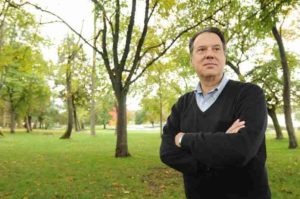

John Coupar, long-serving Non-Partisan Association Vancouver Park Board Commissioner

Next to speak: Non-Partisan Association Park Board Commissioner, John Coupar.

“Sitting at the Park Board table this quite wondrous evening, as was clearly the case with my fellow Commissioners, I was heartened and stirred by all that I heard, of the grace and vivid evocation of spirit of all the speakers, your pointed, poignant and potent argumentation for necessary change to establish a fairer and more inclusive society, and the role that the Vancouver Park Board has to play in realizing a more inclusive community for all.

Listening to the speakers who sat at the Park Board table this evening, I was moved. I am changed, forever. For me, the best part of being a Park Board Commissioner is how I am afforded the opportunity to learn about aspects of life about which I was not fully aware. I want to thank you for helping to make me a better, a more whole person, and for working with us to help create a fairer and more inclusive city for all.

2014 is an election year. If I should be so fortunate to  be re-elected to Park Board this autumn, and should I become the Chairperson of the Board, I commit to you tonight, that my first priority will include the construction of the new change rooms that Commissioner Barnes spoke about, but more: I will establish, as was requested this evening, a gender variant swim at the Templeton and Lord Byng pools, and during my next term in office, I will work with the 2SLGBTQIA+ community to create a welcoming environment in our community and aquatic centres, to work with you towards the creation of a fairer community for all.”

Indeed, John Coupar was re-elected as a Park Board Commissioner on Saturday, November 15, 2014, and was soon after inaugurated as Chairperson of the Board at a ceremony held at the VanDusen Botanical Gardens, on December 1, 2014.

Park Board Chairperson John Coupar’s first priority?

Establish a gender-variant swim at each of the Templeton and Lord Byng pools.

Next, Chairperson Coupar instructed Park Board General Manager Malcolm Bromley to begin work on the construction of inclusive change rooms and washroom facilities for members of the trans and gender variant communities.

In the 50+ years VanRamblings has covered the work that takes place at the Vancouver Park Board table, never have we been more moved than was the case this hallowed evening of change for the better, never before or since have we experienced as moving and eloquent a speaker than was the case with Constance Barnes on that particular late evening of April, 2014, and never, ever have we been more proud of an elected official than was the case that halcyon evening, and since, in the person of John Coupar, a true hero in our fair city by the sea.


Click / tap on the graphic above to sign  the Save Our Park Board Petition started by Sarah Blyth

Stories of a Life | 2021 | VanRamblings is Transformed

The ‘header’ above represents what VanRamblings used to look like.

VanRamblings made it’s début on February 15, 2004 — following on months of work by web developer, Mike Klassen, to create VanRamblings — resultant from a heartfelt plea by Michael and an editor friend of mine, Jay Currie, that …

“Raymond, you are passionate about so many things, and have much to say of interest to people on a broad range of topics. Given the current state of the media industry, although you’ve written for a variety of publications over the years, given the dearth of media outlets to employ you, at present your voice has been silenced.

We believe that it is of critical importance that you be given an outlet where you might present your unique insight on a range of topics of interest to you, and the general public. To that end, we’d like to work with you on creating a blog that will provide you with a creative outlet, and where your voice might make a difference, when you write about the state and nature of society, politics, the arts, popular culture, cinema, web and tech issues, travel and more.”

And thus VanRamblings was born, thanks to encouragement from Mike and Jay, and great — and arduously intensive — web development work by the former.

VanRamblings’ blogging platform from the outset, and for the past 17½ years, was Movable Type — the de rigueur professional blogging platform back in the day.

Over the years, a few technical issues arose beneath the hood of VanRamblings, and although Movable Type long ago fell out of favour among the blogging web developer cognoscenti — the preferred, most used and most reliable blogging platform, WordPress, in 2004 a blogging platform then in its infancy — up until mid-morning this past Wednesday all was well with VanRamblings, until disaster struck — and VanRamblings on Movable Type was no more, kaput, gone, finished.

And thus today, and going forward, a phoenix-like, risen from the ashes re-birth of VanRamblings, this time as a much more reliable — or so I am faithfully assured — WordPress blog!

VanRamblings will return on Monday with coverage of our current and incredibly dispiriting 2021 federal election, now a mere 16 days away from the unthinkable.


Stories of a Life | 1974 | Cathy & Raymond’s European Vacation

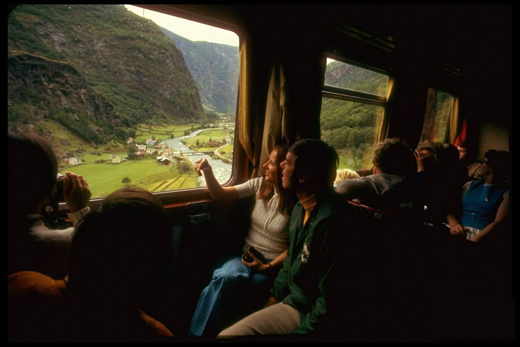
Traveling on a train across Europe, with a Eurail Pass, in the 1970s

In the summer of 1974, Cathy and I travelled to Europe for a three-month European summer vacation, BritRail and Eurail passes in hand, this was going to be a summer vacation to keep in our memory for always.

And so it proved to be …

On another day, in another post evoking memories of our cross-continental European sabbatical, I’ll relate more stories of what occurred that summer.

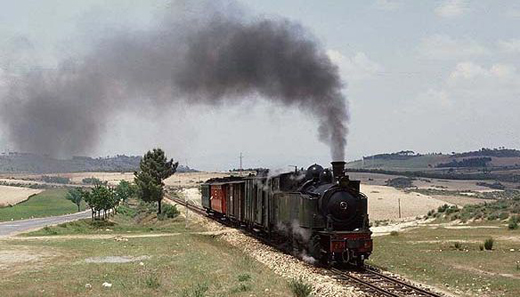
Train travel in Spain, in the 1970s, as the train makes its way around the bend

Only 10 days prior to the event I am about to relate, Cathy and I had arrived in Lisbon, Portugal, alighting from a cruise liner we’d boarded in Southampton, England (passage was only 5£s, much cheaper than now).

After a couple of wonderful days in Lisbon, Cathy and I embarked on the first part of our hitchhiking sojourn throughout every portion of Portugal we could get to, finally traveling along the Algarve before arriving in the south of the country, ready to board a train to Spain. Unfortunately, I developed some intestinal disorder or other, requiring rest and fluids. Once Cathy could see that I was going to be fine, she left the confines of our little pensão to allow me to recover in peace, returning with stories of her having spent a wonderful day at the beach with an enthusiastic retinue of young Portuguese men, who had paid attention to and flirted with her throughout the day. Cathy was in paradisiacal heaven; me, not so much.

Still, I was feeling better, almost recovered from my intestinal malady, and the two of us made a decision to be on our way the next morning.

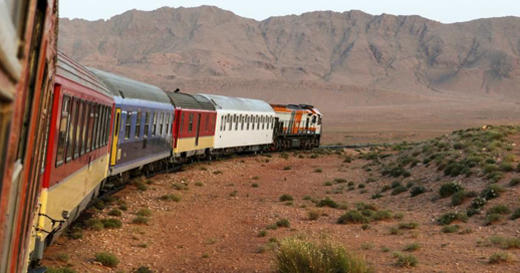
Traveling from the south of Portugal to Spain, in the 1970s

To say that I was in a bad mood when I got onto the train is to understate the matter. On the way to the station, who should we run into but the very group of amorous men Cathy had spent the previous day with, all of whom were beside themselves that this braless blonde goddess of a woman was leaving their country, as they beseeched her to “Stay, please stay.” Alas, no luck for them; this was my wife, and we were going to be on our way.

Still suffering from the vestiges of both an irritable case of jealousy and a now worsening intestinal disorder, I was in a foul mood once we got onto the train, and as we pulled away from the station, my very loud and ill-tempered mood related in English, those sitting around us thinking that I must be some homem louco, and not wishing in any manner to engage.

A few minutes into my decorous rant, a young woman walked up to me, and asked in the boldest terms possible …

Do you kiss your mother with that mouth?

“Huh,” I asked?

“Do you kiss your mother with that mouth? That’s the filthiest mouth I’ve ever heard. You’ve got to teach me how to swear!”

At which point, she sat down across from me, her lithe African American dancer companion moving past me to sit next to her. “Susan. My name is Susan. This is my friend, Danelle,” she said, pointing in the direction of Danelle. “We’re from New York. We go to school there. Columbia. I’m in English Lit. Danelle’s taking dance — not hard to tell, huh? You two traveling through Europe, are you?” Susan all but shouted. “I come from a large Jewish family. You? We’re traveling through Europe together.”
And thus began a beautiful friendship. Turns out that Susan could swear much better than I could; she needed no instruction from me. Turns out, too, that she had my number, and for all the weeks we traveled together through Europe, Susan had not one kind word for me — she set about to make my life hell, and I loved every minute of it. Susan became the sister I wished I’d had, profane, self-confident, phenomenally bright and opinionated, her acute dissection of me done lovingly and with care, to this day one of the best and most loving relationships I’ve ever had.

Little known fact about me: I love being called out by bright, emotionally healthy, socially-skilled and whole women.

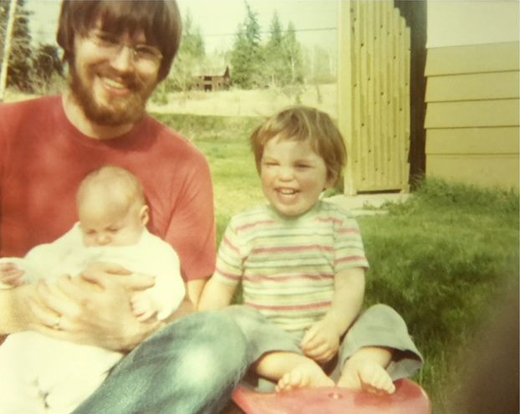
Two-year-old Jude Nathan Tomlin, baby Megan Jessica, and dad, Raymond, in June 1977The summer of 1974, when Cathy became pregnant with Jude, on the right above.

Without the women in my life, Cathy or Megan, my daughter — when Cathy and I separated — Lori, Justine, Alison, Patricia, Julienne or Melissa, each of whom loved me, love me still, and made me a better person, the best parts of me directly attributable to these lovely women, to whom I am so grateful for caring enough about me to make me a better person.

Now onto the raison d’être of this first installment of Stories of a Life.

Once Susan and I had settled down — there was an immediate connection between Susan and I, which Cathy took as the beginnings of an affair the two of us would have (as if I would sleep with my sister — Danelle, on the other hand, well … perhaps a story for another day, but nothing really happened, other than the two of us becoming close, different from Susan).

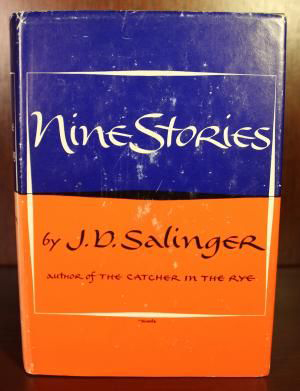
J. D. Salinger's Nine Stories, an anthology of short stories published in April 1953

Danelle saw a ragged copy of J.D. Salinger’s Nine Stories peeking out of Cathy’s backpack. “Okay,” she said. “In rounds, let’s each one of us give the title of one of the Salinger short stories,” which we proceeded to do. Cathy was just now reading Salinger, while I’d read the book while we were still in England, about three weeks earlier.

Cathy started first, For Esmé — with Love and Squalor. Danelle, Teddy. Susan, showing off, came up with A Perfect Day for Bananafish, telling us all, “That story was first published in the January 31, 1948 edition of The New Yorker.” Show off! I was up next, and came up with Uncle Wiggily in Connecticut. Phew — just barely came up with that one! Thank goodness.
Onto the second round: Cathy, Down at the Dinghy; Danelle, Pretty Mouth and Green My Eyes; Susan, showing off again, De Daumier-Smith’s Blue Period, “turned down by The New Yorker in late 1951, and published by the British Information World Review, early in 1952.” Me? Struggling yet again, but subject to a momentary epiphany, I blurted out, Just Before the War with the Eskimos. There we were, eight stories down and one to go.

But do you think any one of us could come up with the title to the 9th tale in Salinger’s 1953 anthology of short stories? Nope. We thought about it, and thought about it — and nothing, nada, zero, zilch. We racked our brains, and we simply couldn’t come up with the title of the 9th short story.

We sat there, hushed. For the first time in about half an hour, there was silence between us, only the voices of children on the train, and the clickety-clack of the tracks as the train relentlessly headed towards Madrid.

We couldn’t look at one another. We were, as a group, downcast, looking up occasionally at the passing scenery, only furtively glancing at one another, only periodically and with reservation, as Cathy held onto my arm, putting hers in mine, Danelle looking up, she too wishing for human contact.

Finally, Susan looked up at me, looked directly at me, her eyes steely and hard yet … how do I say it? … full of love and confidence in me, that I somehow would be the one to rescue us from the irresolvable dilemma in which we found ourselves. Beseechingly, Susan’s stare did not abate …

The Laughing Man,” I said, “The Laughing Man! The 9th story in Salinger’s anthology is …” and before I could say the words, I was smothered in kisses, Cathy to my left, Susan having placed herself in my lap, kissing my cheeks, my lips, my forehead, and when she found herself unable to catch her breath, Danelle carrying on where Susan had left off, more tender than Susan, loving and appreciative, Cathy now holding me tight, love all around us. A moment that will live in me always, a gift of the landscape of my life.

Stories of a Life | COVID-19 | Division in the Time of a Pandemic

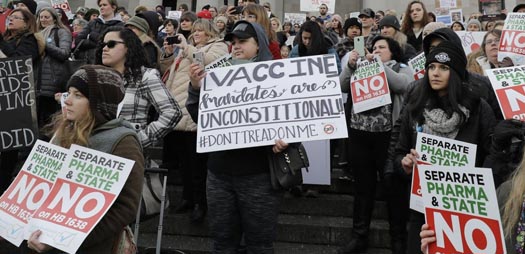
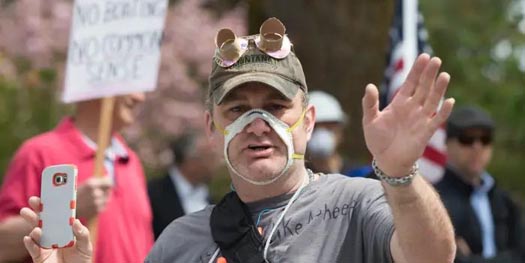
Anti vaxxer rally

COVID has proved a trying and divisive experience for many among us.

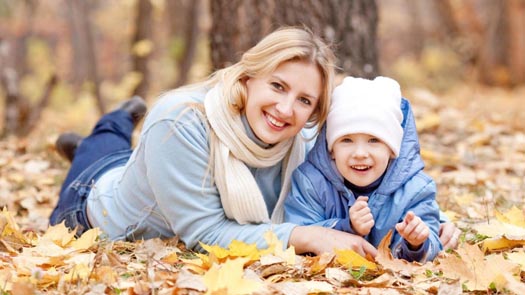
mother and son

One of my neighbours is a young mother with a two-year-old son. Happily married, her only source of concern is the welfare of her son during the current, extending COVID-19 pandemic. My neighbour’s concern for her son, shared by many in the housing co-operative in which we live, is that her neighbour is an intransigent woman who refuses to be vaccinated.
My neighbour’s very best friend in the world is a woman she has known since the two of them attended kindergarten together some two-plus decades ago, she herself a young mother, but with three young children all under the age of 12. Just like my neighbour, she too is happily married.
My young neighbour and her husband are fully vaccinated, her son not.

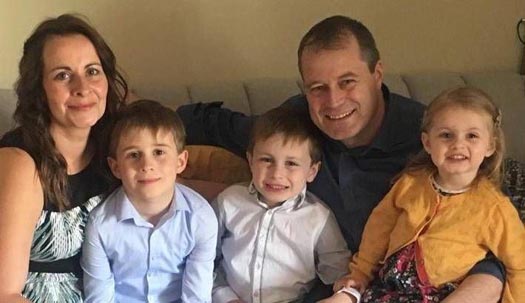
mother-3-children.jpg

My neighbour’s best friend is not vaccinated, nor will she consent to be vaccinated, and neither will she allow her three young children to be vaccinated, stating she doesn’t trust that the vaccine is safe. This woman’s loving and devoted husband, on the other hand, is fully vaccinated and a strong vaccine advocate, and has stated to his wife that he wants to ensure when a COVID-19 vaccine becomes available for those under age 12, his three children will be vaccinated — over which a marital dispute has arisen.
My neighbour has told her best friend that in the interest of the safety of her toddler son that she will not visit in the home of her cherished friend, and neither will she invite her friend to visit in her home, that she is free to believe as she wishes, but my neighbour will not put her son in any jeopardy that might compromise his health. My neighbour has told her friend they can get together outside, at a park, socially safe distanced.

children playing at the park

My neighbour is concerned that a lifelong friendship may be coming to an end, and her friend’s marriage may be in trouble resultant from the vaccination dispute, about which my neighbour feels quite some despair.

Vintage reporter at this typewriter, black and white photo

Me, I have a friend, a person who I’ve known for a quarter century, who lives in the Kits neighbourhood, and is both a prominent member of the community and a rabid anti-vaxxer, who believes the vaccine to be poison, and states to me that I am a “sheep”. This “friend” attends anti-vaxxer rallies, and despite being a member of the fourth estate to whom I have provided contact information in order that he might ask Dr. Henry directly, during her press briefings, that she address his concerns, has not done so.
As is the case with my neighbour, I too fear that a cherished friendship of some long duration and mutual respect is drawing to an untimely but necessary close, that his refusal to be vaccinated compromises not only his own health, but the health of everyone with whom he comes into contact.

COVID-19 spikes

A friend of mine was telling me the other day that one of her closest friends has not left her home since the COVID-19 pandemic was declared in March 2020. Neither will she allow anyone to visit her, nor ever gone out into her backyard, but rather has fearfully kept herself a prisoner in her own home.
I, too, have a sustaining friend of some longstanding, someone who I’ve known for more than a quarter of a century, a person I’d worked with closely for a dozen years during my employment at the Canada Mortgage and Housing Corporation (CMHC), dating back to 1996 — but, who since the pandemic was declared more than seventeen months ago, has not left his home, a spacious condominium located nearby Vancouver City Hall, a place he’s owned — with the mortgage paid off more than a decade ago — since the commencement of his employment with CMHC in 1979.

hoarder

All of my friend’s meals are ordered in, all purchases of any other goods or wants are ordered on line, and delivered to him, and left outside his door. Despite the fact my friend owns a new hybrid vehicle, and has a substantial pension, for almost 18 months he has refused to leave his apartment. For much of the first year of the pandemic, I set about to call him weekly, then (at his insistence) bi-weekly, then every three weeks and, finally, once a month. When I asked him how he was doing, he almost invariably replied, “I’m doing fine. I don’t need anyone, or feel the need for you to call me.”
I would ask him about his contact with his brother, or those in his social circle, and he would tell me that he had cut off all contact with family and friends. Finally, a year in, with little or no contact with the outside world, he told me emphatically that he no longer wanted me to call. I had encouraged him to mask up, and go for a drive in his new Toyota Prius hybrid, just to get out of the house, and see the world around him, an idea he told me that he thought was ridiculous. As of this writing, I’ve not spoken with him in months, and I find now that I’ve given up on him — not out of a lack of compassion, but in recognition of the fact that I am unable to provide support and succour to someone who doesn’t want the caring I proffer.
Another friend of mine was talking with me the other day about an acquaintance of hers who has steadfastly avoided learning anything about the pandemic, that although this person is well educated and otherwise well informed, that this acquaintance of hers studiously avoids reading or listening to anything to do with the current pandemic, whether it be information on the vaccines, or the current state of COVID-19 infection in our province, in Canada, or elsewhere — remaining utterly uninformed.
Once again, I too have a friend with whom I’ve worked with in the Coalition of Progressive Electors and the NDP for the past quarter century. This man — a year younger than me, as is my now former friend above — is a hale fellow well met, and well-liked by a broad cross-section of our mutual friends, and continues to this day to work full time in his chosen profession.
From Day One of the declaration of the pandemic, my friend has believed that COVID is a hoax, and has ignored it, stating that whatever is going on around him that causes people to wear masks has no direct impact on his life — that he will carry on with his life as normal. My friend has gone out of his way not to watch or listen to the news, and has therefore never watched or heard an Adrian Dix-Dr. Bonnie Henry press conference (in fact, does not know, or could care less, as to who Dr. Henry might be, and her role in keeping COVID-19 at bay in British Columbia, over the past 18 months). My friend last autumn even booked a non-refundable ticket to Cuba in order that he might enjoy a Christmas vacation in tropical climes — despite my advising him that the opportunity to travel to Cuba was probably not going to be possible, an idea my friend pooh-poohed.

anti vaxxer

The straw that broke the camel’s proverbial back occurred when were enjoying a mid-afternoon coffee at our neighbourhood Starbucks, sitting outside in the cool air, and socially distanced. As it was just after 3pm, I picked up my iPhone to read the latest British Columbia COVID figures — which that day established a new record for infections & deaths (10 deaths in the previous 24 hours in Vancouver alone). I advised my friend of the latest provincial COVID results, to which information in reply he snapped back at me, “What do I care? How’s that information relevant to me?”
I advised my friend that the deaths covered a range of ages, that each person was a person of value, a father or mother, a sister or brother, aunt of uncle, a neighbour, friend or colleague of someone resident in our community, and because Vancouver is in essence a village, a small town, that given the theory of seven degrees of separation, it is likely that he knows someone who knew, or was close to the, then, more than 1,500 British Columbians who had succumbed to the coronavirus — and that, at any rate, any early or untimely death is a tragedy, for each of us and for the community. Scowling at me, he got up and walked away.
We have not spoken since.
All of us have sacrificed over the past year, some more than others. Health care providers, teachers, and public health officials have put their needs aside for the sake of their communities, the country, and the entire world, really. People have lost their jobs, and in Canada more than 27,000 Canadians have lost their lives. The toll of this pandemic is staggering.

COVID relationships

The COVID-19 pandemic has reshaped our personal relationships in unprecedented ways, forcing us to live closer together with some people and further apart from others, with social distancing measures isolating us from our friends and wider communities. Socializing with others is a fundamental human need, the strain of the COVID-19 pandemic on relationships laid bare for many of us this last eighteen months.
Abundant research suggests that supportive relationships can help relieve harmful stress, with physical and mental benefits that include resistance to viruses. Yet our year and a half ride on the coronacoaster has frayed many of our relationships, and in some cases destroyed the bonds that in simpler times might have helped carry us through.
Many of us have lost some friends for good, but the overall quality of our friendships with others has improved. As a friend stated to me recently, “If you’re supposedly my friend,” she averred, “and you don’t accept my wishes about safety, then you’re really not my friend.”

“Good health depends not only on the closeness of our ties but also on their nature,” says Henry Stanford, a neuroscientist at the University of Western Ontario, his recent study suggesting that “ambivalent relationships, those combining affection and hostility — like so many family ties — create chronic stress that can ultimately damage health. This sometimes gets lost when we talk about social isolation. It’s not as if we just need to make people more engaged with others. We also have to pay more attention to the negativity in some relationships.”

The pandemic’s toll on many of our friendships goes deeper than mere political polarization —&#32the confusion of a mask with support for ‘big government’, for instance. It’s more about discovering personality differences between you and your relatives and friends, including different levels of risk-tolerance and what might seem like irrational optimism on one side vs. hysterical alarmism on the other. At a time when many of us are losing sleep, picturing ourselves or someone we love gasping for air in a crowded emergency room, these differences are painfully relevant.
Because of the pandemic, the way we communicate and relate to one another has changed. Some relationships disintegrated because of close proximity, or the lack thereof. As we enter the fourth wave of the pandemic, and a cooler and more isolating autumn and winter seasons are on the near horizon, for many of us the pandemic is far from over. The good part of the pandemic, though, is that while we have “lost” some friends, and our relationship with some members of our family has become strained, our relationships with others has both been clarified and strengthened, as we have come to realize that we share beliefs in common and an approach to life that serves not just our own interests, but the interests of all.