Category Archives: Politics

2017 Vancouver By-Election: Christy Clark’s Revenge

Vancouver's Worst Nightmare: NPA Sweeps to Massive Victory

PART ONE: VANCOUVER CITY COUNCIL
For the very, very few of you out there who give a tinker’s damn about the outcome of Vancouver’s 2017 City Council / School Board by-election, the results of which will be broadcast late on Saturday evening, October 14th: the Vancouver Non-Partisan Association (NPA) will sweep to a massive victory, both at Council — where Hector Bremner will ascend to Vancouver City Council — and at the Vancouver School Board, where NPA candidates Fraser Ballantyne, Lisa Dominato, Julian Prieto, Christopher Richardson and Rob McDowell will find themselves celebrating long, long, long into the wee and early morning hours of Sunday, October 15th.
Why is that, you ask? Well, dear and cherished VanRamblings reader …

  • The NPA were the only functioning political entity in the 2017 Vancouver by-election with a well-organized political machine. Which is to say, the NPA campaign was well-funded (much better funded than any other campaign), conducted daily burmashaves — you know, where candidates stand along the street or at the entrance or exit to bridges or viaducts madly waving signs for their candidature, employed an effective door knocking campaign in the polling areas where they secured more than 50% of the vote in the 2014 municipal election (read: Arbutus Ridge, Yaletown, Dunbar, West Point Grey, Shaughnessy and Kerrisdale — the only neighbourhoods where the NPA did at all well, and where voters got out in droves to protect their class interests and cast a ballot for NPA candidates), and drove a well-funded social media and expensive advertising campaign to help ensure their victory on October 14th.
  • Most of the by-election candidates / campaigns were downright verklempt at the probability of an overwhelming NPA victory come Saturday evening, but none more so than the woebegone folks associated with the Vision Vancouver campaign, who found at the door that the 2017 Vancouver city by-election (and this tragically applies to School Board, as well) has emerged as a referendum on the administration of Gregor Robertson. Turns out the right and the left have proven effective at the demonization of the Mayor and his Vision Vancouver party — reasonably, on Saturday night, voters can expect 7% to 10% support for sacrificial lamb Vision Vancouver candidate, Diego Cardona. Anger. There’s nothing like it as a motivating force.
  • Underfunded, untargeted campaigns by Vision Vancouver, OneCity, COPE and the Greens. The good folks at One City Vancouver have a great candidate for Council in homeless advocate Judy Graves, and two of the strongest candidates for School Board in the spectacularly grounded and bright (not to mention, informed) Carrie Bercic and Erica Jaaf — but who among the electorate knows who they are? Not many. OneCity has a tough road to hoe in electing candidates given that they have no elected presence at the municipal level. The Greens are in somewhat better shape, but apart from former VSB trustee Janet Fraser — who will secure support at the polls from both the right and the left, and could very well emerge as the top vote-getter for School Board come Saturday night — the prospects for the Greens are dire.
  • A dastardly, disreputable bullying campaign of disinformation by the NPA would seem to have played right into the “throw the bums out” mood of the electorate, and as such will ensure their victory on Saturday night. And let’s not forget, either, the red hot anger of the provincial Liberals for both Vision Vancouver and the Vancouver electorate in leading the charge against the Christy Clark government. Not for no reason has Hector Bremner — longtime executive assistant to current BC Liberal party interim leader, Rich Coleman — emerged as the NPA candidate. If you harbour any illusion whatsoever that the NPA is not the BC Liberal farm team, Mr. Bremner’s candidacy ought to give paid to that notion.

    Make no mistake, this is a payback election, Christy Clark and the B.C. Liberal party’s revenge on the Vancouver electorate for turfing them from power in Victoria, a feeling that is only exacerbated by John Horgan choosing Geoff Meggs as his Chief of Staff. Why it is that Vancouverites — who overwhelmingly voted for the progressive forces of the NDP in May’s provincial election — would allow the B.C. Liberal farm team to assume power at School Board, and elect a B.C. Liberal apparatchik at City Council beggars belief, but it’s going to happen. C’est la vie.

All of the above said, the 2017 Vancouver City Council by-election result carries little weight politically, given that whoever is elected to Council on Saturday night to fill the vacancy created when Vision Vancouver City Councillor Geoff Meggs resigned his seat to take on the job as Chief of Staff to Premier John Horgan will not affect the majority that Vision Vancouver will continue to hold municipally — Vision Vancouver, whatever the outcome, will continue as the majority party at City Hall, with six of eleven decisive votes (including that of the Mayor) at Vancouver City Council.

August 31, 2017 Justason Research poll on Vancouver City Council by-election

The success of the respective campaigns in the 2017 Vancouver by-election (this applies both to Council and School Board) will occur as a function of voter turnout. The Justason Research poll above — even if it is a month and a half out of date — could in fact be right … if, and only if, voters supporting the Greens’ entirely tremendous Pete Fry, or OneCity’s Judy Graves, or Jean Swanson’s invigorating, well-organized grassroots and near revolutionary community-based campaign for Council turn out in droves.
Sad to say, in this era of Trumpian dysfunction, and an ‘enemy of their own class interests’ anomie among the voting populace that almost beggars belief (honestly, it’s as if we’re living in some perverse, latter day version of Orwell’s 1984) voter suppression would seem to be the order of the day. Former Vancouver School Board Chair Patti Bacchus posited in her column in The Straight last week that we’re likely to witness a 10% turnout at the polls once the votes are counted on Saturday night, while Vancouver Courier columnist Mike Klassen was telling anyone who would listen the very same thing. When the left & right agree, you know we’re in trouble.
VanRamblings continues to believe that we’re likely to see a 15% voter turnout — as we’ve suggested previously, a 7% turnout on Vancouver’s eastside, with a 10% turnout in the West End and Kitsilano neighbourhood, and a 30% or better turnout in the neighbourhoods where the NPA has traditionally done very well. We, of course, hope we’re wrong, and that the 20% – 25% voter turnout posited by Vancouver’s City Clerk proves to be the case. But we don’t think so.
VanRamblings has made our support of Jean Swanson well known, and we’re pretty darned enthusiastic about Pete Fry’s candidacy, as well.
The tale will be told on Saturday night.

2017 Vancouver city by-election voting day, October 14th

Make sure that you get out to vote on Saturday, if you haven’t already cast your ballot at the Advance Polls that were held on October 4th and 10th at Vancouver City Hall. Wondering where to cast your ballot? Just click on this link to be taken to the Vancouver.ca webpage, which will afford you the opportunity to place your address in a box made available to you. After clicking Submit, the locations where you may cast your ballot will come up, in this most crucial of elections (aren’t they all?), particularly the School Board election, where the key issue is democratic and engaged advocacy for student interests vs partisan stasis. Remember: it ain’t over til it’s over.
PART TWO: VANCOUVER SCHOOL BOARD

On October 14th, get out to vote in the crucial Vancouver School Board by-election

If you believe that Vision Vancouver at City Council and Vision Vancouver at School Board are one and the same thing: give your head a shake. If you believe the malarkey that it is the Vision Vancouver trustees that were the bullies at School Board, and therefore you will not cast a ballot for the Vision Vancouver candidates for School Board: give your head a shake.
There are only 8 candidates who have placed their names forward in the 2017 Vancouver School Board by-election, who have a well-rounded and informed appreciation of the advocacy role that trustees must perform while sitting as elected Board of Education trustees on the Vancouver School Board, and these persons of conscience (for whom you must vote on Saturday, if you give a good galldarn about public education) are …

Adi Pick, running for Vancouver School Board in the 2017 Vancouver by-election

Adi Pick. 20 years of age, a graduate of Magee Secondary (where she was the valedictorian in her graduating year), currently enrolled at UBC in her fourth year of studies as an international relations student, Adi Pick emerged as the star in the Vancouver School Board by-election: incredibly bright, articulate, down-to-earth, with an informed and fundamental understanding of all of the issues on which Vancouver school trustees must adjudicate, Ms. Pick gained support across the political spectrum during the course of her candidacy, and simply outshone all other candidates at the two Vancouver School Board all-candidates meetings, with her good humour, her pointed commentary, her reasoned passion, and her unrivaled advocacy for the interests of students.

Carrie Bercic's daughter Sarah suggests you save a vote for her momSarah Bercic asks you to save a vote for her mom, Carrie, for VSB trustee

Carrie Bercic. The other shining star in the Vancouver School Board candidate firmament, Carrie Bercic is the must, must, must vote in the current VSB by-election. Carrie Bercic has attended every meeting of the Vancouver School Board since 2014. Ms. Bercic has worked with her OneCity colleague Erica Jaaf (another must, must, must vote for in the current VSB by-election) on the Parent Advocacy Network (PAN) Board (they’re both on leave at the moment), has sat as Parent Advisory Chair at both General Wolfe elementary school where her daughter was enrolled, and Parent Advisory Chair at Eric Hamber, where her son Jordan was enrolled. Quite simply, there is no more down-to-earth, better informed, more articulate public education advocate who has put their name forward for a position of trustee at the Vancouver School Board than is the case with Carrie Bercic. You would be doing yourself, and the students enrolled in the Vancouver school system a big, big favour by saving a vote for Carrie Bercic when you go to the polls on Saturday, October 14th.

star.jpg star.jpg star.jpg

Make no mistake: VanRamblings wishes for you to cast a ballot for Adi Pick, Carrie Bercic and her OneCity running mate, Erica Jaaf, COPE’s Diana Day, and every cotton pickin’ one of the incredibly talented, humane, community advocate, Vision Vancouver defenders of public education who have put their names forward to sit as Board of Education trustees on the Vancouver School Board. If you’ve not already, please read VanRamblings’ initial column on the 2017 Vancouver School Board by-election.

Vision Vancouver 2017 by-election team School Board candidate team

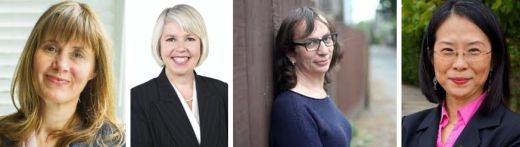
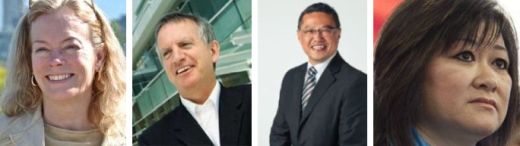
From l – r, the entirely tremendous Vision Vancouver school board candidate ‘public education advocacy’ team: newcomer to electoral politics Theodora Lamb, former VSB Chair Mike Lombardi, Ken Clement, Joy Alexander and Allan Wong, each one of whom deserve your vote October 14th.

One City Vancouver and COPE Vancouver's 2017 School Board by-election candidatesFrom l – r, OneCity Vancouver’s Carrie Bercic and Erica Jaaf, and COPE Vancouver’s Diana Day

The eight candidates for Vancouver School Board whose photos you see above — and let’s not forget Adi Pick either, who is most deserving of your vote at the polls on Saturday — are heartily endorsed by VanRamblings and constitute for any caring person who is at all concerned for Vancouver’s and British Columbia’s public education system, the only candidates for Vancouver School Board you should consider when casting your ballot.

star.jpg star.jpg star.jpg

You may read Part One of the actual election results column here.

Vancouver Civic By-Election: October 14th. Get Out to Vote!

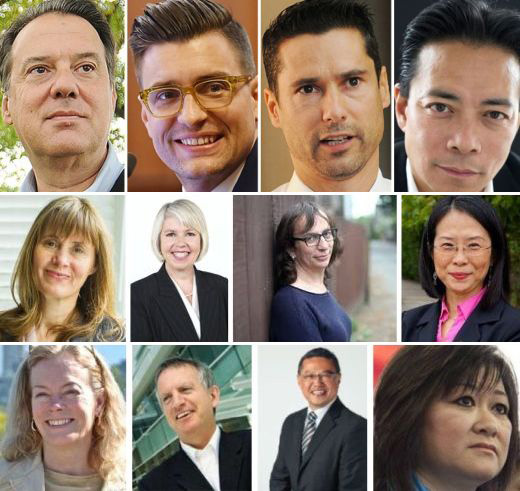
2017 Vancouver city council and school board by-election candidates

From top left: COPE School Board candidate Diana Day, Vision Vancouver Council candidate Diego Cardona and OneCity Council candidate Judy Graves, Green Party school board candidates Dr. Judy Zaichkowsky, Estrellita Gonzalez and Janet Fraser, bottom left, independent (who has been endorsed by COPE) Council candidate Jean Swanson, and in the next frame OneCity school board candidates Carrie Bercic and Erica Jaaf (both of whom deserve your vote), with NPA candidate for Council Hector Bremner below them, bottom right, Vancouver Green Party candidate for Council, Pete Fry.

Vision Vancouver 2017 by-election team of School Board candidatesFrom l – r, the Vision Vancouver school board candidate team (standing with Mayor Gregor Robertson, pictured in the middle): Mike Lombardi, newcomer to electoral politics Theodora Lamb, Joy Alexander, Allan Wong and Ken Clement, each one of whom deserve your vote on October 14th.

On October 14th, Vancouver residents go to the polls in a city by-election to vote for a City Council candidate to replace Geoff Meggs, who resigned his seat on Council to become Premier John Horgan’s Chief of Staff.
In addition, voters will be given the opportunity to elect nine trustees to the Vancouver School Board (VSB), the former members of which were fired by the BC Liberal government last October 17th, allegedly for failing to pass a budget for the school year — which wrongheaded Liberal government decision was more about morbid, corrupt and anti-democratic politics as practiced by the Christy Clark government of the day, and much less to do with any sort of wrongdoing on the part of the then VSB school trustees.
Today, VanRamblings will offer a cursory look at the candidates for Vancouver City Council, with reflective commentary on their prospects.

star.jpg star.jpg star.jpg

In the main, the fight for a seat on Vancouver City Council is in its essence a three-way fight between Vancouver Non-Partisan Association candidate Hector Bremner, a former executive assistant to current interim provincial Liberal party leader Rich Coleman; Pete Fry, a veteran community activist and the Jane Jacobs-like ‘slow growth’, neighbourhood-centred ‘city building’ Vancouver Green Party candidate, whose ascension to Council would provide the current Green Party member of Council, Adriane Carr, a needed seconder for the motions she places before Vancouver City Council; and in a neck-and neck race for the vacant Council seat, Order of Canada recipient Jean Swanson, the principled candidate of substantive and meaningful change whose clarion voice we very much need on Council.
Longtime homeless advocate Judy Graves is the OneCity candidate for the vacant Council seat, while 21-year-old Diego Cardona was appointed as the Vision Vancouver candidate to challenge for the current vacant seat on Council. Although both Ms. Graves and Mr. Cardona are fine people, truth to tell there’s a scathing and vicious takedown / whisper campaign (about which we may or not write about another day) that is being waged against both Ms. Graves and Mr. Cardona that makes it all but impossible for either candidate to secure enough of the ‘up for grabs’ vote for either candidate to be considered serious contenders for vacant Council seat. Alas

Hector Bremner, Vancouver Non-Partisan Association candidate for Vancouver City Council

As Charlie Smith recently wrote in the Georgia Straight, Vancouver Non-Partisan candidate for Council Hector Bremner (pictured above) is the candidate to beat in the upcoming October 14th by-election vote. Why?
Well, in addition to what Charlie has written, Mr. Bremner (or as he’s more popularly known among his NPA confrères, the ‘parachute candidate’) has the full weight of the provincial Liberal party behind him (from October 2014 to December 2015, Mr. Bremner was Executive Assistant to provincial Liberal minister and current interim party leader Rich Coleman, responsible for natural gas development).
Now, Mr. Bremner’s LinkedIn profile reports that Mr. Bremner was also responsible for housing (Mr. Coleman was the housing minister in the previous government), but sources tells VanRamblings that simply isn’t the case and Mr. Bremner was focused solely on the LNG file.
According to other sources within the NPA, in support of Mr. Bremner the provincial Liberals have supplied to the NPA their entire list of ‘marks’ (Vancouver-based provincial Liberal supporters), which data when combined with the NPA ‘marks’ from the 2014 Vancouver municipal election (people who put up signs, donated monies, volunteered and otherwise indicated strong support for the NPA) provides Mr. Bremner with a reliable list of strong NPA supporters on which his campaign might laser focus their resources and attention, each vote from whom Mr. Bremner intends to get out to either the advance polls, or on voting day, October 14th.
And in their class interest (which is to say, not yours and my interests) those supporters are numerous, well-heeled and actually get out to vote.
That the core NPA / provincial Liberal vote resides in Kerrisdale, Shaughnessy, West Point Grey, Dunbar and Yaletown — in which neighbourhoods there was up to a 74% turnout of voters, with up to 74% of the vote going to the NPA in 2014 in these neighbourhoods —&#32whereas in areas like Grandview-Woodlands the turnout was only 20% of eligible voters, with only 13% of the vote going to the NPA (Vision Vancouver secured 67.9% of the vote in this eastside neighbourhood) —&#32means that the NPA has pretty much written off voters in 18 of Vancouver’s 24 neighbourhoods as they mount their 2017 by-election campaign, although they will dedicate resources to polling ‘stations’ in the 18 neighbourhoods across the city where they did well in 2014’s Vancouver municipal election.
As Tyler Michaels, by-election campaign manager for OneCity reminded VanRamblings last evening, historically only 33% of residents voting in a general municipal election turn out to vote in a by-election (a record 43.4% of eligible voters in Vancouver turned out to the polls in 2014), which means that all parties putting candidates forward in the 2017 Vancouver by-election expect only a 14% turnout at the polls on October 14th.
Hector Bremner and the NPA are focusing solely on their key constituent neighbourhoods, where they expect an up to 25% turnout, as opposed to 7% – 17% in all other Vancouver neighbourhoods. In 2017, prospects for an electoral victory are a numbers game, and sad to say success augurs well for the Vancouver Non-Partisan Association, the BC Liberal farm team.

Pete Fry, Vancouver Green Party by-election candidate for Vancouver City Council

The Green Party of Vancouver’s Pete Fry has the highest profile of any of the candidates vying for a seat on Council in the 2017 by-election. As a provincial Green Party by-election candidate in February 2016 and a 2014 Vancouver municipal Green Party candidate, Pete Fry is a known quantity, and a popular and well-respected Vancouver politico, with broad support in neighbourhoods across the city, as well as the only ‘city building’ candidate: green-friendly low-form development in neighbourhoods, green-friendly at-grade transit development, and as Pete has written about his core issues …

“housing affordability, income disparity, the Downtown Eastside, homelessness, communities under threat, red tape and a de-spirited micro-managed City Hall staff, short term rentals, bogus planning processes — and of course, that soft spot for corruption: the overt financial influence that the real estate industry has over the two big developer parties that run our city, and a commitment to a fairer and more equitable city where all Vancouver citizens might thrive.”

Green Party Councillor Adriane Carr needs a seconder for her motions on Council; Pete is that seconder. Pete is a great communicator of untold resonance and empathy, and as a lifelong grassroots community organizer has committed to responding to the calls and correspondence from every constituent who contacts his office (as COPE Councillor Tim Louis did for years), has committed to working with the vibrant and responsive Coalition of Vancouver Neighbourhoods (with representation from all 23 neighbourhoods in Vancouver), while working with community centre, neighbourhood, resident and advocacy associations that span the breadth of our too often beleaguered pacific paradise by the tranquil ocean.
The secret to Pete’s success? You. Vote for Pete Fry on October 14th.

Jean Swanson, independent 2017 by-election candidate for Vancouver City Council

To paraphrase late U.S. senator Ted Kennedy in his eulogy for his brother Bobby, “Some women see things as they are and say why? Jean Swanson dreams things that never were and says why not?” Or as Hillary Clinton averred in her 1971 commencement address at Wellesley, “Some see politics as the art of the possible. I see politics as the art of achieving the impossible. And those are the things I very much intend to get done.”
With broad support from progressive peoples across our city, Jean Swanson’s is the candidacy that could spark real and palpable change for the vast majority of citizens who reside in Vancouver, with a platform that promises that …
Early in her term, as a newly elected Councillor to Vancouver City Council, Jean Swanson will submit a motion to Council to …

  • Officially adopt the position that Vancouver City Council will work to ensure the implementation of a 0% rent increase for tenants over the next four years, while working with the new NDP government to ensure that rent freeze legislation will be introduced during the 2018 sitting of the BC legislature, ensuring that such legislation would prevent landlords from circumventing the Rent Freeze;
  • Grant renovation permits to landlords only if they demonstrate that any tenants forced to vacate will be provided the opportunity to return at previous rents;
  • Ensure that the city start immediate production of 2,138 units of modular housing on city owned lots, housing that would be available to singles, families and couples as temporary housing pending provincial construction of new co-operative and resident-managed social housing;
  • Hold a city-wide door-to-door voter registration for the 2018 city election, ensuring that renters, indigenous people and other racialized groups, as well as permanent residents, can vote in the next municipal election;
  • Reduce the police budget by 2%, turning the $5 million savings over to investment in community services that promote social justice;
  • Work towards implementation of a $5 a month transit pass for low-income Vancouver residents, similar to the programme successfully implemented by Calgary Mayor Naheed Nenshi;
  • Acknowledge that ‘No One is Illegal’ by expanding and enhancing Vancouver’s designation as a Sanctuary City by implementing city policies that would ensure that VPD officers do not report Vancouver citizens to immigration and Border Services.

You know, there was a time in the not-so-distant past when COPE City Councillor Harry Rankin was the top vote-getter, election in and election out, year after year and for decades, with his COPE cohorts Libby Davies, Bruce Eriksen and and Bruce Yorke finding themselves not only being re-elected term after term after term, but emerging as the most popular councillors at City Hall, with broad support in every neighbourhood across the city, especially in Dunbar, Point Grey and Kerrisdale, in times that were less partisan and less mean, and where each and every resident in Vancouver cared about the welfare of all citizens, and recognized theirs and our collective responsibility to care for the most vulnerable among us.
Jean Swanson’s independent candidacy for Vancouver City Council is a return to the future, harkening back to a simpler and a better time, and in 2017 for all persons of conscience Jean Swanson is the only candidate for the vacant seat on Council who represents a truly revolutionary change that would mean a fairer and more just society for all, sooner rather than later.
Jean Swanson’s is the compelling voice of change that you want and need to hear on Vancouver City Council. Vote for Jean Swanson October 14th.

Hope for a New Canada, as Rookie MPs Settle into Ottawa

Justin Trudeau meeting with his caucus for the first time following the 2015 electionJustin Trudeau meeting with his new caucus for the first time, following the 2015 federal election. Photo credit: Adrian Wyld, The Canadian Press.

On election night 2011, newly-elected Québec MP Ruth Ellen Brosseau was ridiculed for being out of the country on election night, celebrating her 27th birthday in Las Vegas. Moreover, Ms. Brosseau was attacked in the media and by opposition MPs for never having stepped foot in her Berthier-Maskinongé riding during the entirety of the 35-day election campaign, for being a unilingual English-speaking ‘paper candidate’ — a ‘poteau’ in French slang — in a riding that was, and is, almost universally French speaking.
A 2011 op-ed in the National Post criticized Ms. Brosseau’s inexperience, writing that she was “an extreme example of what happens when people sign up to run for a party with little or no expectation of actually winning.” Yet, despite all, on election night 2011, Ms. Brosseau handily defeated incumbent Bloc Québécois Member of Parliament Guy André, former provincial Liberal MNA Francine Gaudet and three other candidates, winning a plurality, with 22,484 votes, representing 39.3% of all the votes cast.

Ruth Ellen Brosseau, re-elected as Member of Parliament for a second term in officeRuth Ellen Brosseau was recognized by her fellow MPs in 2014 as Parliament’s hardest working MP. Ms. Brosseau, representing the riding of Berthier-Maskinongé, was elected to a second term in office on October 19th, 2015. Photo credit: Globe and Mail.

Yet, even given all of the above, and what many in the political class considered to be Ms. Brosseau’s “sordid past”, at the conclusion of 2015’s ruinous for the NDP 78-day election campaign, Ruth Ellen Brosseau — the failed university student and vegetarian single mother turned MP — upped her vote over 2011, raking in 42.24% of the vote, handily defeating all comers, as she secured a second term as MP for Berthier-Maskinongé.
No mean feat that, when the New Democrat Party caucus in Québec was all but decimated, crushed on election night October 19th 2015, as the NDP Québec caucus was reduced from 58 seats out of the province’s 75 seats, to only 16 Québec seats out of 81 seats, of which Ms. Brosseau’s was one.

“I was tagged the ‘Vegas girl’, and hoped from day one that I would lose that identity,” says the now fluently bilingual Brosseau.

“With my win in the 2015 election, the fact that I not only won my riding for a second term, but that I was able to secure more votes and up my percentage win, demonstrates that over the course of the past four years I have gained the trust of the people I’ve been elected to serve — through hard work and being present in my riding for all of my constituents, as their champion and liaison to government, that through my continuing dedication to the people I serve — who like myself, live and work and raise their families in the riding — while working with a first-rate constituency team, together we have been able to accomplish much, to build on our successes, which makes me so, so very happy.”

On the day of Prime Minister Justin Trudeau’s first meeting with his mostly newly-elected 184-member caucus — 156 MPs were elected for the first time — just one day after the Prime Minister and his cabinet were sworn in at Rideau Hall in Ottawa, the Liberal party leader told his party’s MPs …

“I need each and every one of you to remember one thing. Regardless of the committees you’re on, the roles you have, regardless of party demands, and the partisanship that will continue to exist in this House … your one job, that you cannot ever forget, is to be a strong voice in service of the people who sent you here from your constituencies.”

And so it is. As the newly elected rookie MPs, from all parties, set about to get a handle on just what it means to be a member of Parliament, Ruth Ellen Brosseau’s story should become the instructive story of merit, that through it all, through all of the partisanship in the House of Commons and on the Hill, the prime directive always is to “serve your constituents well”, for that is what is going to get you re-elected to a second term in office.

Members of Canada's Parliament honour the security detail that saved themLast December, MPs paid tribute to the House security team for their efforts during the October shooting on Parliament Hill. Photo credit: Adrian Wyld, The Canadian Press

For rookie MPs, the transition to life as a federal politician will no doubt prove ‘educational’, if more than a little daunting, overwhelming and, as they burn the midnight oil, stressful. For rookie MPs must hire staff — both in Ottawa, and in their riding — sign a lease for a constituency office, find a place to live in the nation’s capital, sign up for remuneration and benefits, be briefed on parliamentary protocols, and try not to get lost in the Centre Block in search of the bathroom, among other immediate tasks.
All told, there are 214 new MPs (of which 17 are former MPs but weren’t sitting in the last Parliament) in the 338-seat House of Commons.

Marc Bosc, Deputy House of Commons Clerk, in his office on Parliament Hill Deputy House of Commons Clerk Marc Bosc (seen here in his office) has a few tips for new members of Parliament. Photo credit: Wayne Cuddington, Ottawa Citizen.

Last week, the newly-elected MPs participated in an administrative orientation session, the first of two being held for new MPs. A second session on parliamentary procedures will be held shortly before the House of Commons sits on December 3rd.

“It can all be quite daunting. There’s a lot of information to absorb. It’s not easy for them to arrive here with all the things happening to them all at once,” said Marc Bosc, acting Clerk of the House of Commons, in an interview with Ottawa Citizen Parliament Hill reporter, Jason Fekete.

“The burden is very heavy. Members’ time is spoken for almost from the minute they arrive here. If it’s not caucus, it’s committee work, or foreign travel, or constituency work. It’s a 24-hour-a-day, seven-day-a-week job if you let it control you to that extent. There’s no limit to the amount of work you can do.”

A multi-party panel of three long-serving and former MPs — re-elected Conservative MP Gordon Brown (Leed-Grenville), former Liberal MP Ted Hsu (Kingston and the Islands), and re-elected New Democrat MP Carol Hughes (Algoma-Manitoulin-Kapuskasing) — held a session last week with the rookies to share their experiences and provide advice.
One of the areas the veteran and former MPs addressed was maintaining a proper work-life balance. Parliament Hill, for many years, has been rife with broken marriages and personal struggles. In the interview with Mr. Fekete, Marc Bosc told the reporter that if he were to offer one piece of advice to new MPs, it would be: Don’t neglect yourself.

“It’s easy when you get here to forget about self care. It’s important to have a good work-life balance, and a lot of MPs have to pay attention to that because it’s easy to get sucked into the vortex of receptions and events, and lose sight of what’s important in your life, whether it be exercise or your family or both,” Bosc said. “Those members who are most successful obviously do a lot of constituency work but they also have some balance and carve out time for themselves and their families.”

Steep learning curve, long days, a committee workload on Parliament Hill (and all that reading) will no doubt cause some of the new MPs to wonder what they’ve gotten themselves into. Some will burn out — which, one would have to think, played some role in the NDP’s loss of 42 seats in Québec — while others will take to their new life as a swan takes to water.

Second wave Trudeaumania, as Justin Trudeau brings generational change to OttawaLiberal Leader Justin Trudeau, holding his son Hadrien, as his wife Sophie and two children Xavier, left, and Ella-Grace wave to a crowd of supporters during a rally Sunday, October 4, 2015 in Brampton, Ontario. Photo credit: Paul Chiasson, The Canadian Press

Generational change in Ottawa, gender parity in the new Liberal cabinet, 25,000 Syrian refugees — 47% of whom will be children — on their way to Canada (perhaps, even before year’s end), a new climate change policy, the long overdue end of the war on soft drugs, a new system for electing MPs to Ottawa on the near horizon and certainly in time for the next federal election in 2019, a programme for the realization of new light rail transit infrastructure in our cities, and the promise of an open, transparent and responsive government in Ottawa that will serve the interests of all Canadians — make no mistake, this is an exciting time in Canada’s history, in the lead-up to the 150-year anniversary of our country, in 2017 (the celebration of which has been tasked to Trudeau confidante, Mélanie Joly).
This blush of first love, honeymoon period in the political life of Canada that we’re all experiencing is, for all but the most dour of critics, nothing less than intoxicating. There is governing to be done, and a Canada to be transformed, so that we may recognize, once again, Canada as she is as a nation — recapturing who we once were and who we will be again and will remain, what we stand for as a nation, and the values we hold most dear, not just as a nation but in our warm, collective relations with one another.
We are our sisters and brothers keepers — let us hope and pray that the 214 MPs newly-elected to Ottawa from all parties, as well as the 124 returning Members of Parliament, work together in service of us all, in their constituencies, and in the House of Commons and on Parliament Hill.
For this is our Canada we want to reclaim — for each & every one of us, in every age group, from every ethnic community, from old stock Canadians to immigrants old and new, for every person along the gender variant spectrum, for every woman, man and child for whom Canada is home.

Camelot and Sunny Ways: Canada’s Welcome New Reality

Justin Trudeau and his family at the inauguration of his government

This past Wednesday, there was something vaguely romantic, a nostalgia-inducing cinematic, neo-realist quality to the proceedings that occurred when Canadians were able to see Justin Trudeau, his wife Sophie Grégoire, their two older children, Ella-Grace and Xavier, by their side, and the thirty new, incoming cabinet ministers strolling in behind the Trudeau family, all of them ambling together down the driveway toward Rideau Hall, Canada’s government house, blessed by the sun and the 3500-strong throng of supporters, on an unseasonably warm mid-autumn Ottawa morning. And then, when young Trudeau son Hadrien, just a year old, ran towards his father, jumping into his arms, seeing his father and mother light up with smiles … well, you couldn’t help but tear up at this most human scene.
Contrast the above warmly inviting familial scene with the 2006 first capturing of Stephen Harper with his two children heading off to school on the day after Mr. Harper became our 22nd Prime Minister — stiff and unyielding, formally shaking his son Ben’s hand as if he’d never met him before, with no hug for his then six-year-old tow-headed daughter, Rachel.
Make no mistake, dear and constant reader, Camelot has come to Canada.
If the scene described in the first paragraph above was captured in a Hollywood movie, you’d likely be caused to reflect about the unreality of it all — but, Canadians, this is in point of fact our new human-scale Canada, the new activist Canada, as Dominic LeBlanc, Liberal Party house leader and boyhood chum of the Prime Minister, constructed the early days of “Trudeau the younger’s” sunny ways incoming federalist administration.
The National Post’s John Ivison lauded “the positive symbolism” of the incoming Trudeau administration, “the atmosphere providential and full of possibility, and a powerful antidote to the severe, austere Harper years.”
As was to be expected, the first question in the scrum held on Parliament Hill following the swearing-in ceremony and the first meeting of the Trudeau cabinet, referenced the election commitments of the Liberal party on proportional representation, and a time frame for the regulation and legalization of marijuana — both commitments remain at the top of the government’s agenda, Mr. LeBlanc said, reinforcing to the assembled reporters that the Liberal government would move both pieces of legislation within the first 18 months of the new Trudeau administration.
The very next day, two of Canada’s more powerful ministers of the Crown — Minister of Innovation, Science and Economic Development Navdeep Bains, accompanied by Minister of Families, Children and Social Development, Jean-Yves Duclos — set about to announce to Canadians that the new government would reinstate Statistic Canada’s long-form census.

“We need good, reliable data,” stated Mr. Bains, in a media scrum. “We know the history of the last government, who were very much focused on ideology,” he said. “In contrast, the Liberal government is very much focused on sound, evidence-based policies, which will ensure that policy development in Canada will be driven by good evidence and quality data.”

Activist, indeed, and we’re all the better for it, with much more to come.

Jody Wilson Raybould, Justice Minister and Attorney-General of CanadaJody Wilson Raybould, Justice Minister and Attorney-General of Canada. In the picture above, the then B.C. Regional Chief — at a high-stakes meeting between Prime Minister Stephen Harper, working with a delegation of First Nations leaders — successfully argued last January for an update on Canada’s policy on comprehensive aboriginal claims.

Much of the media focus in the first couple of days of the new Trudeau administration focused on two newly-appointed cabinet ministers hailing from British Columbia, Justice Minister and Attorney-General of Canada, and Member of Parliament for the newly-created riding of Vancouver-Granville, Jody Wilson-Raybould, and Harjit Sajjan, Canada’s new very able and well-experienced Defence Minister, a very real Canadian braveheart.
A CBC archive video, referencing Ms. Raybould-Wilson when she was a child, and making the rounds on social media on Thursday, focused on a 32-year-old exchange between First Nations leader Bill Wilson, the father of the newly sworn-in federal Justice Minister, and then prime minister Pierre Elliott Trudeau, the father of Canada’s newly sworn-in PM, Justin Trudeau.

Meanwhile, Mr. Sajjan, in broad and supportive media coverage in the first 48 hours of the new governmental administration has emerged in the eyes of many as a Canadian hero, reporters and members of the opposition alike waxing poetic about the new minister as a “true badass” whose work in the military in Afghanistan yielded crucial intelligence on the Taliban defences.

Harjit Singh Sajjan, Canada's new Minister of DefenceHarjit Singh Sajjan is a decorated Lt Colonel in the Canadian Armed Forces who has served four tours of duty in Bosnia and Kandahar, Afghanistan.

A defeated opposition weighs in on Canada’s new government
Contrast the first impressions of the new government, the conduct of a newly accessible Prime Minister, and cabinet ministers prepared to answer all questions put to them by the media, with yesterday’s coverage of the increasingly dour and hard-hearted leader of Canada’s third-party, the New Democratic Party’s Tom Mulcair — who could never pull off the kind of hope and change message the new government embodies. All the bearded one had to say was that it was the NDP who are the progressive party of change, not the Liberals, and it was he and his shadow cabinet who held the Harper government to account, while Mr. Trudeau went “gallivanting” across Canada, an “absent figure” on Parliament Hill. True — but who cares? Yawwnnn … yesterday’s news. Mr. Mulcair: you lost the election — a little humility might be in order, if not a statement of outright mea culpa.

NDP leader Tom Mulcair in his first post-election press conferenceNDP leader Tom Mulcair at his first post-election press conference, readying himself to sing his favourite tune by The Beatles, “I’m A Loser”.

You could hear, as well, in Thursday’s NDP rhetoric what the tone of the first day of a New Democratic Party administration might have been, not “sunny ways”, but rather rhetoric focused on statements not dissimilar to, “Ewww, the books are way worse than we expected. We’re going to have to hold off on that change-y thing we were talking about. Not to mention, it’s a cruel world out there — maybe we oughta rethink our position on repealing Bill C51.” With the NDP it was always thus, dark statements devoid of hope, and a seeming inability to capture the public’s imagination.

Rona Ambrose, interim leader of the Conservative PartyAin’t exactly “sunny days” for Canada’s new leader of the official opposition, and interim Conservative Party leader, the virtually unilingual Rona Ambrose.

Meanwhile, the Conservatives have elected Ayn Rand-loving Rona Ambrose as their interim leader, and leader of Her Majesty’s loyal opposition, hardly a departure from what came before (i.e. the secretive Stephen Harper), who took only two questions when the announcement of her new position was made public, the “scrum” cut short when Ms. Ambrose’s faltering, and hardly up to par, French became all too evident, as she couldn’t answer questions put to her in Canada’s “other” official language — one can just imagine how many questions in French will be placed to Ms. Ambrose in the House in the days to come; it ain’t gonna be pretty, folks.
The takedown has already begun
From Andrew Coyne’s ludicrous, regressive column in the National Post, taking Mr. Trudeau to task for appointing a cabinet that had as one of its goals gender parity, to Christie Blatchford’s takedown of the positive coverage of Trudeau’s “ascension to the throne” in the same, right-wing rag, reporters across all media have proved more than cynical about the opening days of the Trudeau administration, from the “pageantry” of the opening day, to the news that five of the female ministers in the Trudeau cabinet are not, in fact, full-fledged ministers but “junior” ministers of state who must report to senior ministers to sign off on legislation.
On the latter issue above, a spokesperson for the Trudeau government stated emphatically that although it is, at present, contrary to the Act that governs such things, the appointed ministers of state will become, and are to be considered by Canadians to be full-fledged ministers of the crown in the Trudeau cabinet, rather than junior ministers, that each new minister will be compensated as such (note: ministers of state receive $60,000 per year on top of the $167,000 MP salary, while full ministers receive $80,000 — looks like legislation to enforce the claims of the spokesperson will be on the legislative agenda when Parliament resumes on December 3rd).
In the early days of the new Justin Trudeau-led Liberal government, expectations have been set impossibly high — no government, not even that of the affable and approachable Mr. Trudeau, could possibly live up to the expectations for the …

“… most open, transparent and consultative government in Canadian history, a government that will act upon the wishes of all Canadians for a fairer and more just Canada, where child poverty will once and for all be eradicated, where equality of opportunity for all Canadians will carry the day, where Canadians will feel safe and secure within our borders in a too often uncertain world, a Canada where there will be a focus on the environment and the taking of very real measures to reduce the effects of climate change in Canada and across our globe, where the war on drugs will finally come to an end, and where the voices of Canadians will be heard and felt at the ballot box as Canada moves forward to an electoral system based on proportional representation, where every Canadian’s vote will count. These, and the more than 300 commitments the Liberal government has made to Canadians will come to pass — patience will be required, but make no mistake, real change is on its way in Canada.”

Camelot — a fantastical realm of romance and possibility, in our Canada.
Let us hope, for all our sakes, that the most positive aspects of Camelot come to pass, and not the failed idealism of the Arthurian legend, that change becomes papably real in Canada in the months and years to come, to be reflected in the social and economic experience of all Canadians.