Category Archives: Politics

Decision Canada 2019 | Reflections on a Shit Election, Part 1

Decision Canada | CBC Poll Tracker | October 14, 2019

The term “shit election” was coined by Liberal Party apparatchiks Scott Reid and David Herle, and Conservative Party eminence gris Jenny Byrne (no mean feat being an eminence gris at only 42 years of age), although, for the sake of propriety, the title of that particular episode of The Herle Burly podcast — where for the past month and more all three have weighed in on the current federal election —&#32eventually was titled The Seinfeld Election, “where the various political parties offering candidates in the 43rd Canadian federal general election are throwing the kitchen sink at the public and at each other, effectively turning the race into an episode of Seinfeld: an election about nothing.” And so this election has proven to be.

If you look at CBC’s poll tracker above, the intentions of the electorate have barely shifted since the writ was dropped on Wednesday, September 11th. The two leading parties have been stuck at 33% for the past five weeks, while the NDP have inched up a couple of points, as have the fortunes of the Bloc Québécois. Elizabeth May’s Green Party has failed to move the needle at all, as is the case with Maxime Bernier’s People’s Party of Canada.
Chances are that for the first time in a decade, Canadians face the prospect of a hung Parliament, with no Canadian federal party emerging with enough seats to form anything other than a precarious minority government. If, as the poll above suggests, the Liberals garner 140 seats, the NDP 25 and the Greens 4, together the three parties would not have enough votes to pass a budget or any legislation in the Parliament of Canada. If the Bloc outdoes expectations and garners 40 seats, Bloc leader Yves-François Blanchet could effectively align himself with Andrew Scheer and the Conservatives, for a non-coalition / “working agreement” majority — a very real prospect.
Up until a week ago, it looked as if Justin Trudeau would be able to form a government of around 154 seats (170 seats constitutes a majority) with the support of Jagmeet Singh’s NDP and Elizabeth May’s Green Party — and all would be right with the world. Canada would continue to have progressive government, both domestically and on the world stage.
One week ago, the Liberals were leading in all provinces across Canada, except on the Prairies (the base of support for the Conservatives), with 40% of the vote wrapped up in the three largest, and most seat rich, provinces: British Columbia, Ontario and Québec, and the prospect of 154 to 164 seats in Parliament. But, alas, no more. Bloc leader Yves-François Blanchet — with his message of “Québec for Québecers, we’re not interested in federal politics, we’re interested only in representing the interests of Québec” — has decimated prospects in Québec for both the Liberals and, more particularly for, the Conservatives.

Decision Canada | CBC Poll Tracker | Quebec | October 14, 2019

In Québec, Liberal support has dropped 6 points to 33.1%, the Conservatives dropping from 23% to 16%, the NDP on the rise at 12.8% (up 3 points), and the Greens a non-factor (again, as is the case with the People’s Party of Canada). Only a week ago, the Liberals were looking to win between 50 and 60 seats in Québec (out of 78 seats). But no more. The Liberals will hold on to only 30 – 33 of their current 40 seats, the Conservatives will be decimated, winning maybe 2 seats (down from 11 in the last Parliament), the NDP could hold on to a half dozen Québec seats, while the Bloc Québécois will pick up the rest, with 40 seats or more.
In 2019, no federal party policy platform, no issue, and no federal party leader has fired the imagination across a cross-section of the electorate.
In 2015, cannabis legalization brought out hundreds of thousands of new voters, Canadians who would otherwise have stayed home, a commitment by the Liberals to raise minimum pension payments for seniors to $2000 a month by 2024 (more on that tomorrow), a return to sanity in Ottawa — with Justin Trudeau committed to holding regular press conferences, as well as regular town halls across the country, in contrast to a secretive and elitist Stephen Harper government, which hadn’t had a press conference since 2006 — a commitment to a child tax credit for families that would make life easier and more affordable for young families, a commitment to proportional representation, to building transit infrastructure and affordable housing across Canada, allowing scientists to speak freely and openly on issues respecting the environment, and the introduction of assisted dying legislation saw a record number of Canadians going to the polls.
In 2019: nada, nothing, zilch — aside from a commitment from Andrew Scheer to gut infrastructure spending, gut foreign aid, and a commitment to do nothing on the climate change file. And the electorate yawns.
As we write above: a “shit election” — when there is so much on the line.

Decision Canada | Politics | Final Pre-Election Week Wrap-Up

2019 Canadian federal election outcome projection | Final Pre-Election Week Wrap-Up

At some point over the course of the next nine days, Prime Minister Justin Pierre James Trudeau will attend at Rideau Hall in Ottawa, the home of Canada’s 29th Governor General, the Right Honourable Julie Payette, to recommend to the Crown that a federal election be called. In 2019, under Canadian law, the election period may be no less than 36 days, which gives the Prime Minister until Sunday, September 15th to “drop the writ”.

One week, or so, from the commencement of the 43rd Canadian general election, how are the five major political parties, and their leaders, faring as Canadians head into the five week long election period?
The Conservative Party

Canada. Andrew Scheer, Conservative Party leader.

Six weeks out from the October 21st federal election, Andrew Scheer’s Conservative Party has emerged as the only Canadian federal political party to have nominated candidates in all of Canada’s provinces and territories which comprise the 338 ridings that constitute the Parliament of Canada.
The Conservative Party goes into the election with the largest fundraising total for any federal political party with $28 million in the coffers to run both the national and the riding-by-riding campaigns, outstripping their four rival Canadian political parties. If elections could be bought, Andrew Scheer would become Canada’s 24th Prime Minister.

Elizabeth May, Jagmeet Singh and Justin Trudeau march in the 2019 Vancouver Pride ParadeGreen Party Elizabeth May, New Democratic Party leader Jagmeet Singh, and Prime Minister Justin Trudeau march together in the 2019 Vancouver Pride Parade.

Sad to say for the Conservatives, though, the pre-election period has hardly been kind to either Andrew Scheer, or his struggling Conservative party. A couple of weeks back, Mr. Scheer found himself in hot water for failing to participate in any LGBTQ2+ Pride Parades across Canada — when Prime Minister Justin Trudeau, Green Party leader Elizabeth May and NDP leader Jagmeet Singh were front-and-centre walking arm and arm at the Vancouver Pride Parade — after which (in a series of challenging and ultimately failed press interviews), Mr. Scheer failed again to enunciate a position on LGBTQ2+ issues acknowledging that as Prime Minister he would represent all Canadians, not just right-of-centre Canadians.
On top of that, Conservative party leader Andrew Scheer found himself in hot water arising from the release of a 2004 Canadian Parliamentary video where he rose in the house to decry same sex marriage. And, finally, in the 14-day-old contretemps, Mr. Scheer failed to assure Canadians that he would forbid Conservative MPs from putting abortion on the political agenda in a Conservative Party led Canada — concerning, given that Conservative party members who are also “anti-abortion activists are planning to win 50 ridings for their cause in the upcoming federal election.”
This past week, in his bid to fear monger — a traditional right-of-centre political party tactic — Mr. Scheer sought to scare the bejeezus out of Canadians by suggesting the government of Justin Trudeau would allow infamous child-murderer Jon Venables’ move to Canada after being released from prison in England. Scheer’s post caused widespread controversy. To make matters worse for Andrew Scheer, the British Justice Ministry stated Britain has no intention sending Venables to Canada.
As further confirmation that Scheer’s post was categorically false, and was indeed ‘fake news,’ Immigration, Refugees and Citizenship Canada also added that some people are “inadmissible” to the country under Canada’s immigration law, particularly if they have a criminal record or could pose a risk to Canada’s security. Meaning that even if Venables was headed towards Canada, he would probably struggle to get though immigration.
The Liberal Party
Justin Trudeau wins the 2015 Canadian federal election
Meanwhile, the government of Prime Minister Justin Trudeau has gotten out of the way of the train wreck that has become the Conservative party 2019 bid for government, while making a record 5500 spending announcements this summer totaling $15+ billion, in ridings across Canada, ranging from transit and affordable housing to the environment and infrastructure, with the unstated caveat that all of the commitments made by his government would be cut were Andrew Scheer to become Canada’s next Prime Minister.
The New Democratic Party
Nominated candidates as of September 5 2019 by each party in the 2019 Canadian federal election

Take a look at the graphic above. As of Thursday evening, September 5th, the federal New Democratic Party has nominated candidates in only 54% of ridings across Canada, with no nominated candidates in the provinces of New Brunswick and Prince Edward Island. Furthermore, the NDP goes into the 2019 federal election with a $4.5 million debt from the 2015 election, and less than a quarter of the money raised by either the Conservative or Liberal parties with which to present their case to the Canadian people.
For the first time since the party was formed in 1961, the New Democratic Party will have no campaign plane to take the leader, and the press entourage, across the country, in order that campaigning might take place more readily in all provinces and territories across the country.
According to Éric Grenier’s CBC Canada Poll Tracker, an aggregation of all publicly available polling data, the New Democrats are at 9.4% support in the province of Québec. That places them in fifth place, behind the leading Liberals (32.8%), the Conservatives (23.5%), the Bloc Québécois (18.5%) and the Greens (11%). The very real prospect exists that the NDP may be wiped out in Québec, losing all 15 of the current seats held in the province.
(VanRamblings wouldn’t count out Ruth Ellen-Brosseau in the riding of Berthier-Maskinongé, a popular hard-working NDP member of Parliament.)
On Tuesday, New Brunswick’s Green Party announced the defection of 15 NDP candidates to the federal Green Party. Turns out, though, that eight of the so-called NDP dissidents knew nothing about their defection to the Greens, forcing federal Green Party leader Elizabeth May to backtrack, and restate the number of defections at only seven, while the other eight members of the New Brunswick NDP went on record stating they would remain loyal members of the NDP, and knew nothing about the decision to defect to the Greens. In a CBC interview, federal NDP Leader Jagmeet Singh said Green Party Leader Elizabeth May “has a lot to answer for.”

Federal NDP nominated candidates represent a broad, diverse spectrum of the Canadian population

Meanwhile, British Columbia and much of southern Ontario remain NDP strongholds, with a popular John Horgan NDP government holding power in Victoria, and a strong presence with Andrea Horvath’s NDP, who elected 40 MPPs to the Ontario legislature in the 2018 provincial election.
In British Columbia, Vancouver East MP Jenny Kwan is a lock to hold onto her seat, as is the case with Don Davies in Vancouver Kingsway and Peter Julian in New Westminster-Burnaby. Jagmeet Singh, we predict, will hold on to his seat in Burnaby South. Svend Robinson looks to make a welcome comeback in Burnaby North-Seymour. Yvonne Hanson is running a first rate NDP environmental campaign in Vancouver Granville, as is the case with community activist Christina Gower in Coquitlam-Port Coquitlam — both novice candidates could very well win their respective ridings.

CBC’s At Issue panel podcast | Thursday, September 5 2019 | Upcoming election

The Green Party
Green Party of Canada
Canadians most frequently score Green Party Leader Elizabeth May as the most ethical among her federal counterparts, according to a series of Nanos Research and other surveys conducted over the past 12 months. The Greens will have nominated candidates in all federal ridings by this time next week, and according to recent polling stand a good chance of gaining official party status (12 seats) in Parliament, post the October 21st election.
In the final week of the pre-election period, according to the latest polls, the federal Green Party could elect 5 members to Parliament representing ridings on Vancouver Island, a member or two in Ontario, as well as Québec, and a sturdy contingent of Green Party MPs in the Maritimes.
The fortunes of the Greens rely on the benevolent affability of Ms. May.
Should Ms. May acquit herself well at the Canadian Museum of History in Gatineau, Québec (just across the Ottawa River from Parliament Hill) during the course of the October 7th federal leaders’ debate, she could very well consolidate support for the Green Party of Canada, and assure official status for the party in Parliament following the October 21st election.
Please find below an episode of The Herle Burly, one of the finest podcasts to come out of Canada, fascinating always, the interviews conducted and conversations led by longtime Liberal Party apparatchik David Herle. In the episode below, you’ll hear Mr. Herle’s recent, fascinating, wildly informative and revealing interview with Elizabeth May. Very much worth a listen.


People’s Party of Canada

People's Party of Canada leader Maxime Bernier on climate change activist Greta Thunberg

Currently polling at 2.9% across Canada, Maxime Bernier and his band of racist, transphobic and xenophobic supporters don’t have a chance in hell of electing anyone to Parliament. Mr. Bernier will not be included in the leaders’ debates. The less said about this group of reprobates the better.

star.jpg star.jpg star.jpg

CBC Poll Tracker, September 5 2019, has the Liberal Party winning the most seat

Netflix | Central Park Five | Rise of a Racially Charged Demagogue

In the 1980s, Donald Trump called for the death penalty to be brought back for the Central Park Five

In 1989 five young black men were wrongfully convicted of raping a woman jogging in New York City. Leading the charge against them was a real estate mogul whose divisive rhetoric can be found in his Presidency today.
Nearly three decades before the sociopathic pseudo-billionaire began his run for Presidency of the United States — before Donald Trump called for a ban on Muslims entering the U.S., for the expulsion of all undocumented migrants, before he branded Mexicans as “rapists” and mocked the disabled — Trump called for the reinstatement of the death penalty in New York following a rape case in which the five teenagers were wrongfully convicted.
The miscarriage of justice is widely remembered as a definitive moment in New York’s fractured race relations.
But Trump’s intervention — he signed full-page newspaper advertisements implicitly calling for the boys to die — has been gradually overlooked. Now those involved in the case of the so-called Central Park Five and its aftermath say Trump’s rhetoric served as an unlikely precursor to a unique brand of divisive populism that powered his rise to political prominence.

Donald Trump ‘was the firestarter’ when he called for the death penalty in the 1989 Central Park jogger case, says Yusef Salaam, one of the wrongfully convicted Central Park Five: “To see that he has not changed his position of being a hateful person … what has become of the country with a person like Donald Trump as President?”

Why is this raising of the case of the Central Park Five relevant now?

when-they-see-us-line.jpgJharrel Jerome, in Ava Duvernay’s new Netflix mini-series, When They See Us.

Today on Netflix, acclaimed director Ava DuVernay sets about to restore the good names of the five Harlem teens who were arrested, convicted and imprisoned in the 1989 rape of a jogger, only to have those convictions vacated in 2002. They’re more commonly known as the Central Park Five, but that’s a pejorative creator DuVernay excludes almost entirely from her riveting four-episode documentary dramatization, When They See Us.

Here’s a brief survey of critical reviews of Duvernay’s narrative drama …

It is unsettling to realize that many people looking for something new to watch on Netflix this week will actually be unfamiliar with what happened in Central Park, New York, on an April night in 1989. What happened was the rape and attempted murder of a young woman who was jogging there, Trisha Meili. The 28-year-old Meili was doing her usual evening run after a long day at work on Wall Street.

And while there are many unsettling scenes in the first hour of When They See Us (streams today on Netflix), nothing is more disconcerting than the realization, an hour into the drama, that we know very little about Trisha Meili. She is not the focus of the story. The five boys charged with the attack on her are the point. The way in which they were coerced into confessions, threatened and intimidated, is the point.

When They See Us is superbly made and startling in its invective. That invective is aimed with blistering intensity, not just at a justice system that allowed a miscarriage of justice, but at all of American society. The point of the title is that nobody actually saw the boys, who became known as the Central Park Five, as who they were. They saw black youths and wanted to convict them.

Donald Trump took out ads in New York newspapers calling for the restoration of the death penalty so that the boys would be executed. Now, he runs the country. And the state of the country is the real point of When They See Us. As such, it’s a heightened, fraught series, the most unsettling drama so far in 2019, and meant to be.

John Doyle, The Globe and Mail

A searing portrait of injustice and innocence lost
Matthew Gilbert, Boston Globe

Ava Duvernay’s mini-series will break any heart, except, perhaps, that of our president, who maintains their guilt despite the confession and DNA evidence that exonerated them in 2002 and led to a $41 million legal settlement from New York City. Knowing with certainty that the boys are innocent makes watching each step of their descent into hell — from the manipulated false confessions that open the miniseries and the damning group-think media coverage that follows, to the way their young promise is squashed by prison and the stigma that trails them once they’re released — into an unnervingly doom-ridden tragedy.

The Vindication of the Central Park Five
Judy Berman, Time magazine

Nearly an hour into the premiere episode of Ava DuVernay’s Netflix miniseries When They See Us, four of the boys who will soon be known as the Central Park Five are left alone together in a holding cell. (The fifth, Korey Wise, is locked in with adults because he’s all of 16 years old.) They’ve just spent hours being interrogated — and intimidated — by police seeking confessions to support the theory that they gang-raped a woman in the park and left her for dead. In fact, most of them don’t even know each other. There’s a long silence before they start talking. The camera alternates between closeups of these scared, exhausted, beaten-up kids’ faces. They see each other. Hopefully, we see them, too.

As the title suggests, the idea of seeing is crucial to this elegant, wrenching four-part reenactment of the Central Park Five saga. DuVernay, who wrote, directed and (along with collaborators including Oprah and Robert De Niro) executive produced the miniseries, has a gift for framing a familiar historical moment so that you can really see it for the first time. In this case, the Selma director’s simplest but most profound decision is to portray these five black and Latino boys, ages 14 to 16, as the scared children they are, rather than as the gangsters or delinquents they were made out to be.

All four episodes of When They See Us are now available on Netflix.

#VanPoli | Vancouver City Council | Vapid & Not on Your Side

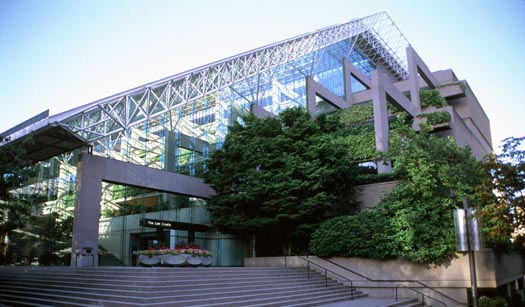
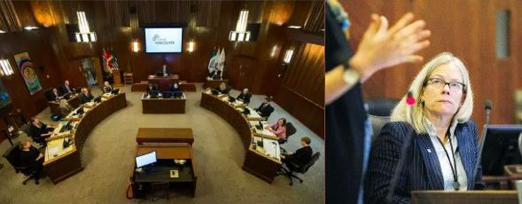
Vancouver City Hall.

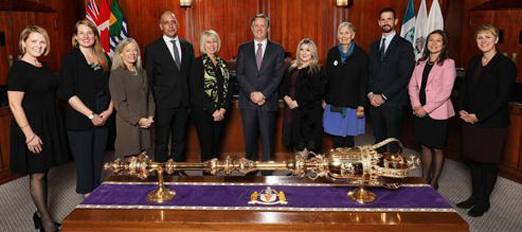
Today’s VanRamblings column was originally intended to take our “new” Vancouver City Council to task, a City Council in which we are profoundly disappointed — who have against all reason turned out to be a reactionary amalgam of self-serving, do-nothing municipal politicians who have surrounded themselves with sycophants who praise them for their “good works”, a group of electeds who not only have lost the thread of why it was they were elected (read: build affordable housing!), but rather who have proven these past seven months to be just like the character in the Danish author Hans Christian Andersen’s 1837 tale, The Emperor’s New Clothes, who seem to as the child in the story says appears not to be “wearing anything at all!”
We here at VanRamblings had intended on employing satirical commentary, combined with our tried-and-true hyperbolic approach to recording our thoughts on the screen in front of you for the Thursday post today.
But, alas, we’re simply not up for doing that on this tremendous day!

Vessi footwear | Carbon blue | 100% waterproof | comfyVanRamblings’ new carbon blue Vessi shoes. Comfy. Stylish. 100% waterproof!

For you see, it is a wonderfully sunny day in Vancouver, deserving of a walk along the beach and an opportunity to spend time with friends. Today, VanRamblings — our disappointment in our “new” Vancouver City Council notwithstanding — find ourselves enjoying our new carbon blue Vessi shoes that are comfy and swell-looking and oh-so-stylish, which makes us happy.
So, in consequence, VanRamblings will hold off until next week to spell out exactly why we find ourselves dispirited in respect of Vancouver’s “new” do-nothing, survival of the fittest Darwinian City Council, and instead will set about to enjoy the day, while thinking to our self: why was editor, author, columnist, political activist, father, lover of baseball, and person of principle (always!) Derrick O’Keefe not elected to Council, to hold the current ne’er-do-well group of “oh we love our City staff, they’d never give us advice and provide direction to us that is anything other than true to the interests of the citizenry of our fair city” members of our inept Council to account?
Arts Friday on Friday. Stories of a Life on Saturday. Music Sunday Sunday.
And back to municipal political writing on Monday or Tuesday. See ya then.