Category Archives: Politics

BC Poli | BC NDP To Win Coveted Majority October 24th | Part 2

Elections BC prepares for a snap October 2020 provincial electionIn 2020, Elections BC staff will wear masks, when inviting voters into polling stations

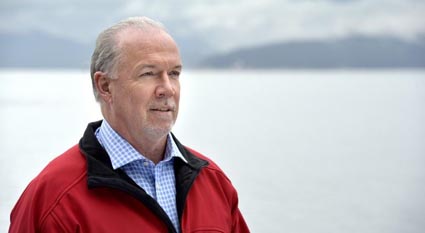
British Columbia autumn election speculation continues to rise, with some insider BC NDP folks telling VanRamblings that Premier John Horgan will call a snap election as early as this upcoming Saturday, with voters set to go to the polls on Saturday, October 24th. If that is the case, and should the election call take place, there’ll be a number of distinct differences in 2020 …

  • Advance polling stations will open seven days a week, from 8am to 8pm, beginning as early as Monday, September 28th;

  • A process will be put in place to provide absentee voters an earlier opportunity than ever before to vote early;
  • An enhanced, secure protocol for the provision of mail-in ballots for voters has been established by Elections BC.

As of this writing, VanRamblings has not been apprised of information related to the prospect of voters being allowed the opportunity to vote securely online, but such a venture remains a distinct possibility should British Columbians ‘go to the polls’ next month.

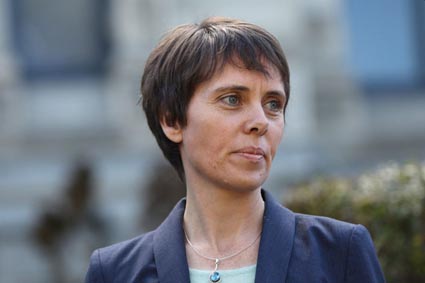
Michelle Mungall, Member of the BC Legislature representing the riding of Nelson-Creston

Meanwhile, there’s pre-election news galore to report. For instance, yesterday morning 42-year-old Michelle Mungall, currently our province’s Minister of Jobs, Economic Development and Competitiveness, and since 2009 the sitting MLA for Nelson-Creston, announced that she would not seek re-election, and would be leaving the Legislature.
Earlier, B.C. NDP Ministers of the Crown Shane Simpson (Vancouver-Hastings, Minister of Social Development and Poverty Reduction), Doug Donaldson (Stikine, Minister of Forests, Lands, Natural Resource Operations and Rural Development), Scott Fraser (Mid Island-Pacific Rim, Minister of Indigenous Relations and Reconciliation), and Carole James (Victoria-Beacon Hill, Minister of Finance and Deputy Premier) announced they would not seek re-election to the British Columbia Legislative Assembly.
And just today, Judy Darcy (New Westminster, Minister of Mental Health and Addictions), first elected in 2013, became the fifth Minister of the Crown to announce that she will not be seeking another term in office.
All is not lost for our British Columbia New Democratic Party government.
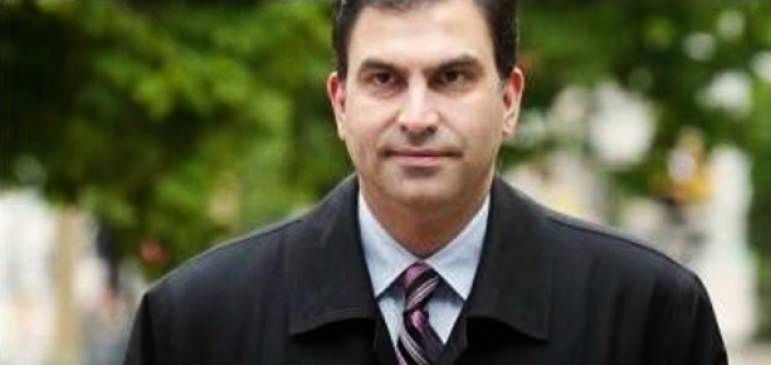
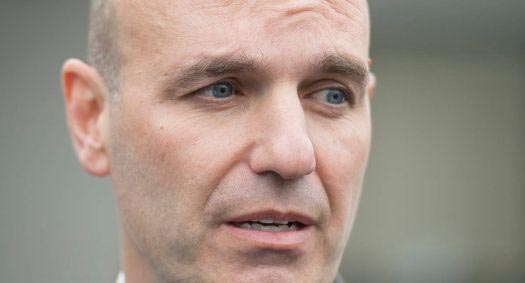
A couple of weeks back, two retired federal NDP MPs, the incredibly charismatic and competent Nathan Cullen (who is more amiable, and even a better story teller, than the gregariously engaging Dave Barrett was, and that’s no mean feat), who represented the riding of Skeena - Bulkley Valley from 2004 through last year — who will seek the Stikine nomination, to replace outgoing Minister Doug Donaldson - and Finn Donnelly, the B.C. NDP MP who represented the good folks who elected him to office in Port Moody - Coquitlam for ten years, from 2009 through last year, announced they would be seeking to represent constituents in their old federal ridings, in the next session of the B.C. Legislature. And, just yesterday, Murray Rankin, MP for Victoria from 2012 through 2019 — and current Chair of the National Security and Intelligence Review Agency — announced he would seek the B.C. NDP nomination in outgoing former B.C. Green party leader, Andrew Weaver’s riding of Oak Bay-Gordon Head (with, apparently, Mr. Weaver’s endorsement and full support). A veritable cornucopia of riches.

Vancouver-Point Grey MLA David Eby seeking another term in office in the 2020 election

In addition, yesterday afternoon, British Columbia Attorney-General and Minister of Justice, and sitting Member of the Legislature for Vancouver-Point Grey wrote to VanRamblings asking us to formally nominate him to a further term in office — which of course we did, also donating $50 to his soon-to-be upcoming campaign, with more monies definitely set to come.

Aaron Sumexheltza, the B.C. NDP candidate in the riding of Nicola-Fraser, in 2020First Nations lawyer Aaron Sumexheltza, appointed BC NDP candidate for Fraser-Nicola.

All is not necessarily roses & sunshine for B.C. New Democratic land, tho.
When party headquarters appointed Aaron Sumexheltza as the B.C. NDP standard-bearer in Fraser-Nicola, in the upcoming election — a key battleground riding on the eve of a potential election — the entire 13-person riding association resigned en masse, accusing B.C. NDP president Craig Keating and executive director Raj Sihota of “disrespectful behaviour” by thwarting the wishes of local members, each member who quit pledging to work against the election of Aaron Sumexheltza to office.
Gosh, you just gotta love politics. Not.

B.C. NDP Executive Director Raj Sihota, and former Park Board Chair Niki Sharma seeking Vancouver-Hastings nomination

What was that? Raj Sihota, you say? Twenty-five year activist resident of Vancouver-Hastings, and current B.C. NDP executive director, that Raj Sihota, the nomination candidate in Shane Simpson’s riding who is challenging the party’s chosen candidate, the very bright and young and gifted climate change activist Niki Sharma for the nomination in Vancouver-Hastings? The Raj Sihota who so alienated the B.C. NDP riding executive in Fraser-Nicola that they all just up and quit? You mean that Raj Sihota?
And what else has that fella, Craig Keating, been up to, you ask?

Former Vancouver School Board trustee Carrie Bercic in Twitter conversation with Brenda Bailey

Well, it seems that the party is none-too-thrilled with either Morgane Oger, and her former best friend and riding president, Catherine Jenkins, seeking the B.C. NDP nomination in Vancouver-False Creek. So, what does the party do? Yep, identify a disaffected B.C. Liberal, Brenda Bailey, and with party support, talk her into seeking the nomination to run against Sam Sullivan.
As Irish Liberal leader Pat Cox told the Irish Times back in 2014, “All’s fair in love, war … and politics.” And so it seems in B.C. NDP politics, as well.
There are a few few more points to be made, as we wend our way towards the end of today’s overlong VanRamblings column.
B.C. New Democrats Believe They Can Pick Up 19 Seats
B.C. New Democrat internal polls show them with such a commanding lead across Vancouver Island that the party could very well sweep the entire Island, picking up four seats, taking B.C. Liberal Michelle Stilwell’s riding of Parksville-Qualicum, former B.C. Green leader Andrew Weaver’s soon-to-be-vacated seat in Oak Bay-Gordon Head, Green Party house leader Adam Olsen’s Saanich North and the Islands seat, as well as the riding of Cowichan Valley, the seat currently held by new B.C. Green leader Sonia Furstenau — little wonder Ms. Furstenau doesn’t want a provincial election.
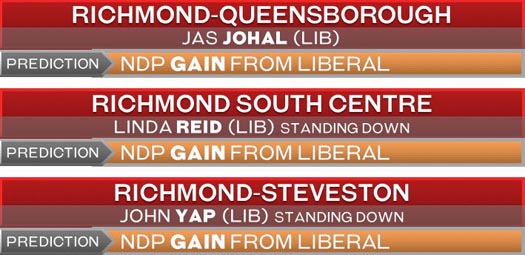
Across the Metro Vancouver region and the Fraser Valley, the NDP look to turn several B.C. Liberal seats orange, defeating Stephanie-Cadieux (Surrey South), Joan Isaacs (Coquitlam-Burke Mountain), Ian Paton (Delta South), Mary Polak (Langley), Simon Gibson (Abbotsford-Mission), Marvin Hunt (Surrey-Cloverdale), Jane Thornthwaite (North Vancouver-Seymour), Sam Sullivan (Vancouver-False Creek), and taking both seats in Chilliwack, sending Laurie Throness and John Martin onto the scrapheap of history.
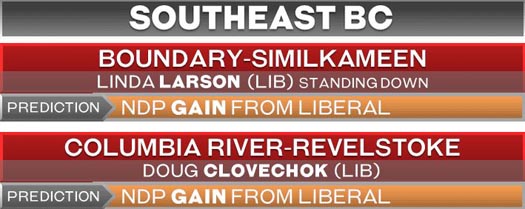
In the Interior, Peter Milobar (Kamloops-North Thompson) is gettable the NDP believe; the same goes for Jackie Tegart in Fraser-Nicola. Tom Shypitka (Kootenay East) also looks to be on his way out, as does Linda Larson (Boundary-Similkameen), and Ellis Ross (Skeena).
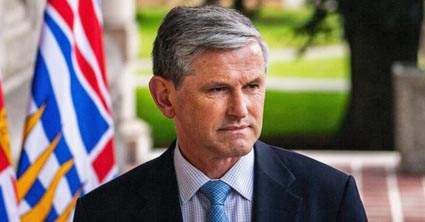
With B.C. Liberal leader Andrew Wilkinson’s low approval rating (21%), a silver-spoon, elitist leader absolutely lacking in anything approaching the ‘common touch’, and a provincial party leader possessed of the charisma of a kumquat, the B.C. Liberals will accept winning only 25 seats come October 24th, if it means ridding themselves of their Howe Street harridan.
One can easily see why pundits on the right are expressing concern about a pending election: the B.C. Liberals are all but going to be wiped out.
Why the B.C. NDP May Want to Hold Off on Calling an Election

Traditional BC New Democrat supporters come out against the Site C dam project

Every Friday for more than a year, protesters — to a one, longtime members of the B.C. New Democratic Party — gathered outside Vancouver-Point Grey MLA David Eby’s office to protest the John Horgan government moving forward on the Site C dam project. The strong contingent of climate action B.C. New Democrats are also vehemently opposed to the $40B Shell Global liquid natural gas project in northern B.C., the fracking, and the environmental harm associated with the LNG project.

Mark Bowen, the B.C. Liberal candidate in Vancouver Point Grey

A significant number of VanRamblings’ friends with whom we’ve worked on the left for 50 years — folks once associated with In Struggle, the Workers’ Communist Party, Maoists, Trotskyites, the Marxist-Leninist Party of Canada, Black Flag anarchists, and more — have told us that under no circumstances will they cast a vote for the NDP in the next provincial election. Although VanRamblings believes David Eby will win again in Vancouver-Point Grey, it will likely be by a much slimmer margin than in 2017, due in no small part to the B.C. NDP’s position on Site C and LNG.

Teachers, parents and students across British Columbia are unhappy with the BC NDP's back to school plan

At the outset of their mandate in 2017, the John Horgan government made the decision to prioritize the seismic upgrading, or where necessary replacement, of schools across the province, and complete this work by 2022. Well, whaddya know — a political party that actually keeps its promise, in the process keeping our children (and teachers) safe. Kind of.
Parents, students and teachers across the province have continued to express grave concerns about the B.C. NDP government’s back to school plan. Daily, on social media, one can read one horror story after the other (following Patti Bacchus on Twitter oughta come with a disclaimer).

Parents and teachers express concern with B.C's back to school plan


VanRamblings believes that October 2020 is the right time for British Columbians to go to the polls

VanRamblings was around when Premier Dave Barrett went to the polls in December 1975, only three years and a bit into his government’s mandate. The NDP lost that election — even though they increased their vote, and during their term in office had transformed our province for the better.
In 1990, Ontario Premier David Peterson, much loved by the electorate, even with his majority government, decided to go to the polls on September 6th, dropping 59 seats, losing to Ontario NDP leader, Bob Rae.
For some weeks now, VanRamblings has told anyone who would listen that John Horgan would be foolish to go to the polls.
We no longer believe that panjandrum. Why?
For the first time in modern British Columbia political history, we have a government in Victoria that is utterly (and thankfully) scandal free. Imagine. John Horgan, his Ministers and the NDP caucus go to work for us, and never conduct themselves in a foolish or self-serving manner.
In John Horgan, we have a Premier — a true working class man of the people, and how unusual is that? — who allows his Ministers to get the job they’ve been assigned to do to get done, to find their efforts well-financed, the B.C. NDP caucus united, and ready and prepared always to get to work to make B.C. a better place to live, an inclusive and fairer place to live for everyone, no matter their nationality, country of origin, gender, or home community across our far flung province, a government committed to ensuring fair wages for working people, well on their way to constructing 110,000 units of affordable housing across British Columbia where citizens would pay no more than 30% of their income for housing, a government that removed tolls on our bridges, and payments for our medical services plan, who have met their commitment to the people all across our province.
As well, B.C. Health Minister, Adrian Dix has emerged as the hero we have always known him to be, steady, incredibly bright, compassionate, organized, a communicator who instills confidence each and every day.
Even while addressing the pandemic, Adrian Dix has assured what the B.C. Liberal party said was impossible: ensuring that every British Columbian has a family doctor, no matter where they live in our province, no matter what community they live in across Metro Vancouver and the Fraser Valley, or on Vancouver Island, where in every community across the province of British Columbia, the government of John Horgan has committed to constructing 24-hour urgent care centres, staffed by doctors and nurse practitioners, and are well on their way to meeting that commitment.
Where Ontario Premier Doug Ford, and Québec Premier François Legault have put themselves out front on COVID-19, taking to the airwaves daily, in British Columbia Premier John Horgan has encouraged Adrian Dix and Dr. Bonnie Henry to emerge as the faces of the fight against the deadly COVID-19 pandemic that has all of us and the world in its unforgiving grip.
The government of John Horgan moved forward on the construction of a new Patullo bridge — which seemed for the longest time as if it would never get built — is moving forward on the twinning of the George Massey tunnel, has funded an extension of the Millennium Skytrain line, first to Arbutus, and next to UBC, has begun a discussion on a new crossing to Metro Vancouver’s North Shore, has completed the construction of a new and much safer Island highway, while engaging in an an historic initiative that has brought the Premier, First Nations, and local decision makers together to discuss the Island Rail corridor the B.C. Liberal party had mothballed.

Premier Blaine Higgs wins a majority government in New Brunswick

On the evening of Monday, September 14th, New Brunswick Premier Blaine Higgs won a majority government mandate from the people of his province.
In the last provincial election in New Brunswick, in 2018, the New Brunswick Liberal party under leader Brian Gallant won 42.72% of the vote, to Blaine Higgs’ 34.64% of the vote for his Progressive Conservative Party. Even so, as was the case in 2017 in British Columbia when John Horgan signed a Confidence and Supply Agreement with the B.C. Green Party, Mr. Higgs was able to cobble together a working minority government.
Even so, mid-pandemic, Premier Higgs decided to call an election, and go to the polls, in order that he might feel assured that he had the confidence of the people — because, let’s face it, when one lives in a democracy, as we do, it is critical that the government has the support of the populace, particularly during these very trying, unprecedented times, in order that government might function effectively, in the best interests of the people.
And that is why — because John Horgan is a democrat to his core — our Premier will call for an election this autumn in British Columbia, at some point over the next week, to allow John Horgan and his British Columbia New Democratic Party to lead our province towards the safety and prosperity we all desire, to build the housing we need, to fund $10-a-day child care as an economic and a feminist initiative, to move our province forward towards a fairer, more just and inclusive, and more secure future.
When the people of New Brunswick were asked on election night why they voted for a majority Blaine Higgs government, the answer was a simple, straightforward one: stability. The people of New Brunswick wanted good government, steady, competent & caring, with a true leader at the helm.

“A lot of people wondered why Mr. Higgs called a general election during a global health crisis when he could have called the necessary by-elections and continued to govern with the support of the People’s Alliance. A steady hand at the wheel, Mr. Higgs turned the election into a referendum on managerial competence,” writes Donald Wright, a professor of political science at the University of New Brunswick, in an opinion piece published in The Globe and Mail this past Tuesday.

“Voters trusted Elections New Brunswick to run a safe election. Mail-in ballots were sent to anyone who wanted one, and record numbers voted at the advance polls. Providing masks, ensuring physical distancing and cleaning contact surfaces, returning officers ran a tight ship.

At the end of the day, Mr. Higgs got what he wanted when, half an hour after the polls closed, it was clear that his party would form a majority government with just under 40% of the popular vote.

Mr. Higgs won because he could credibly say that he had steered the province through the worst of the pandemic, something Liberal opposition leader Kevin Vickers, who failed to win a seat and resigned as leader, couldn’t say.”

In British Columbia, Premier John Horgan has proved a steady hand at the tiller, providing us with the government we have long needed. As VanRamblings has recently said to those in our life, “The citizens across our province are not about to change horses mid-stream. They know we have a good thing in Premier John Horgan, and Health Minister Adrian Dix, and a government that we all can rely on to best serve our collective interests.”
And so it is, and so it must be.
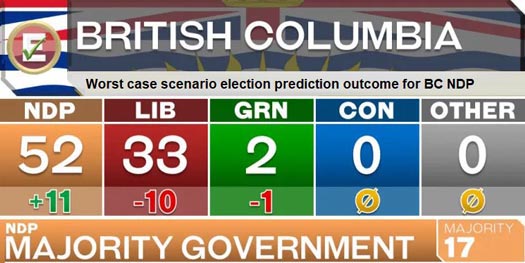
In forty-one days from today, on Saturday, October 24th, the people of B.C. will elect a majority John Horgan government that will allow him, and his colleagues, to get on with the job of keeping us safe & building prosperity.

BC Poli | BC NDP To Win Coveted Majority October 20th | Part 1

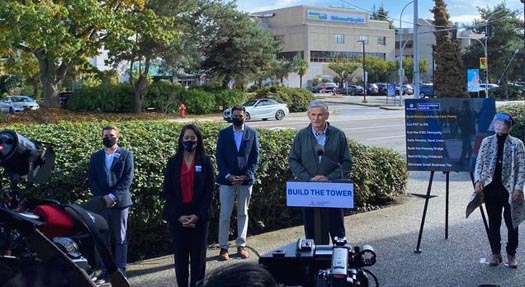
British Columbia Premier John Horgan believes the province in a strong position for an economic rebound

With the majority win last evening by Premier Blaine Higgs in the 2020 New Brunswick pandemic election — an election to which politicians, both provincial and federal, were looking to for insight as to how voters felt about going to the polls in the middle of a pandemic — the decks are now cleared for British Columbia’s first-term Premier / man of the people, John Horgan — currently the most popular Premier in Canada, with a 56% approval rating — to call a British Columbia provincial election as early as this coming Saturday, and no later than next Tuesday, which means that given a 28-day election period, the B.C. electorate could be going to the polls, either on Saturday, October 17th or on Saturday, October 24th.

Although newly-elected B.C. Green Party leader Sonia Furstenau called out the Premier at the assumption of her leadership of the party, just because the Greens find themselves ill-prepared and underfunded for a provincial election campaign — with ex-B.C. Green Party leader, Andrew Weaver, stating bold facedly that he’ll campaign for the election of a majority B.C. NDP government led by John Horgan, as he told VanColour podcast host Mo Amir in an August 31st interview, “I hope [John Horgan] is Premier again. British Columbia has been very well-served by the Premier.” That there is no love loss between Weaver, and his former Green Party seatmates, Furstenau and Adam Olsen, doesn’t bode well for the Greens, particularly when recent polling shows the BC NDP sweeping Vancouver Island.

Tracey Redies, Andrew Weaver and Carole James will not seek re-election in British Columbia

On July 29th, when Surrey-White Rock Liberal MLA Tracy Redies announced that she would be leaving politics on August 31st to start a new job as CEO of Science World in September, necessitating a by-election, with rumours out of Victoria that Andrew Weaver will resign his seat this month in order to care for his ailing wife, and the health of Finance Minister Carole James continuing on the wane, even moreso than when she announced on March 5th that she would not seek re-election after being diagnosed with Parkinson’s disease, there is every reason to believe that in order to maintain a stable government in the midst of a deadly pandemic, Premier Horgan believes he must seek the support of the electorate going forward.

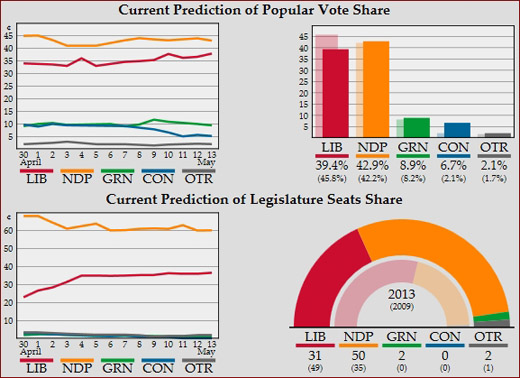
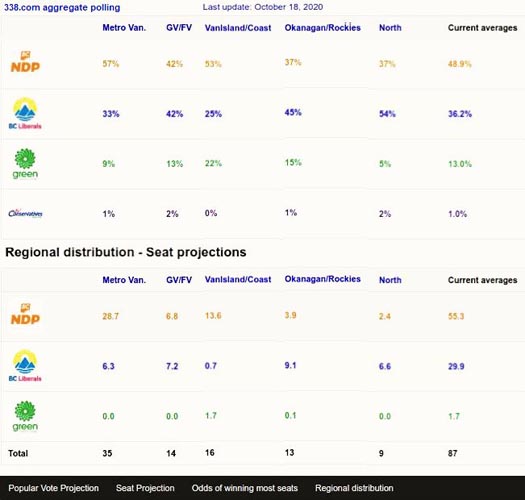
338 Canada projects a majority BC NDP government were an election to be called in September 2020

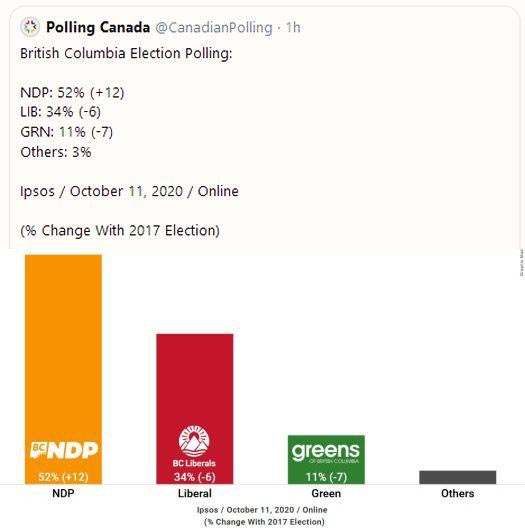
The latest 338Canada polling projection indicates 99.9% odds of the British Columbia New Democratic Party forming the next government with a majority mandate, while an EKOS poll conducted this summer shows the BC NDP with a substantial lead over their woebegone B.C. Liberal rivals.

EKOS poll shows British Columbia New Democratic Party with a commanding lead

British Columbia’s New Democratic Party is in full-on election preparation mode, with the largest war chest the party has ever gone into an election with, with new election legislation passed early in their current term of office that will limit expenditures by their B.C. Liberal opposition rivals, with BC NDP constituency associations across the province rushing to confirm candidates in each of the 87 ridings up for grabs, with the BC NDP running ahead in every part of the province — except the Cariboo, where polls indicate a statistical dead heat — with sitting MLAs across the province conducting fund raisers, with constituency associations seeking rental accommodations to house election offices, with BC NDP election preparation / phone bank instruction Zoom meetings scheduled across the province, well, it ain’t hard to believe that as early as this upcoming Saturday, British Columbians — or at least the 61.2% of the electorate the deigns to go to the polls — could very well find ourselves in the midst of British Columbia’s 42nd general election, when each and every one of us is afforded the opportunity to exercise our democratic franchise, as we set about to elect to Victoria a provincial government that will best represent our individual and collective interests over the next four years.

British Columbia electorate, amidst the pandemic, to wear masks to the polls

VanRamblings, now that we’re publishing again daily, is doing our very best to provide coverage of the upcoming 39th annual Vancouver International Film Festival, which we will continue tomorrow.

Vancouver Sun columnist Vaughn Palmer predicts a B.C. provincial election on Hallowe'en

On Thursday, though, VanRamblings will publish part two of our British Columbia election prediction, as we seek to provide insight into what going to the polls will look like, which ridings are most contentious — both the politics within the ridings, as BC NDP candidates vie for a coveted nomination, and which ridings are most likely up for grabs — the achievements of the BC NDP government to date, as well as what the core issues will be as we head into an early provincial election, and - as well - where the governing party might well be tripped up — election outcomes should never be considered a foregone conclusion.

Vote B.C. Liberal | BC NDP | BC Green Party in the 2020 British Columbia provincial election

One last thing as we head into a provincial election: join the provincial political party of your choice, get out on the campaign trail to support the candidate running for the party you support in the constituency in which you reside, set aside up to one per cent of your annual income in donations to the political party of your choice (if you are able to do so), and break down any sense of isolation and anomie you might feel by getting to know your neighbours, those with whom you share the core values that give your life meaning, and who reside nearby you. Next to raising and loving your children, there is no better use of your time and energies than to contribute your personal and financial resources towards electing the candidate of your choice to represent yours, and your neighbours’, best interests.

On the Left = Daily Activism Towards a Fairer, More Just Society

Seeking Justice, and Working Towards a Fairer and More Just Society

If You Ain’t Marchin’ at Rallies For Causes You Support, Working Within Your Union (or Organizing a Bargaining Unit in a Non-Union Place of Employment) and Are On The Union Executive, If You Haven’t Joined a Left-of-Centre Political Party (Municipally, Provincially and Federally — Parties to Which You Donate Monies Each Month), Are Not Actively Engaged in the Fight Against Racism & Intolerance, If You’re Not Engaged in the Fight for LGBTQ Rights and Offering Your Active Support To Members of Our Transgender Community, If You Are Not Championing UNDRIP and Offering Your Active Support For The Right to Self-Determination for Members of Indigenous Communities — And Do Not Acknowledge That You Are Living On Stolen Land — If You Ain’t Fighting Together With Your Neighbours, and With A Broad Cross-Section of Members of Our Community Towards Achieving a Fairer, More Just Society for All — And Are Not Actively Engaged in That Fight — You Ain’t a Leftist.

Colten Boushie rally, Vancouver, February 10, 2018Rally held in Vancouver, Feb. 10, 2018 protesting wrongful death of 22-year old Colten Boushie of the Cree Red Pheasant First Nation fatally shot on a rural Saskatchewan farm.

Approximately a year and a half ago, in the lead up to the 2018 Vancouver civic election, a former neighbour contacted me to ask if I would be open to discussing with her the latest article by noted left wing journalist and documentarian, John Pilger, on the continuing genocidal debacle in Syria.
As was the case with another former neighbour, Marion had experienced a late in life conversion to leftist politics, dedicating herself to reading Noam Chomsky, John Pilger, Naomi Klein, Owen Jones, Irshad Manji and others.
During the course of our conversation, I asked her how she would involve herself in the upcoming municipal election, which civic party or parties and which candidates for those parties she would be supporting and working to get elected, which groups she had aligned herself with, and what for her were the key issues that drove her commitment to moving the societal agenda forward towards the realization of a fairer and more just society.

Politics and activism, Martha Gellhorn

“Oh, there’s no one in the city who’s as left as I am, no one with whom I would affiliate, and no political party that reflects the approach I believe needs to be taken to tear down the old order, and build a new and more democratic society,” Marion told me. “I would never join the NDP — they’re neoliberal collaborators, every single one of them — and there are no other parties on the left who reflect my values, municipally or otherwise.”
I asked her if in the past she had ever worked on a New Democratic Party provincial or federal campaign, or worked in Vancouver’s left leaning, sometimes thought to be Communist, Coalition of Progressive Electors, with whom she had affiliated herself, and with whom she had worked urgently towards the realization of the societal change she felt critical and essential.
The answer: no one, ever, on any issue, ever, never worked with anyone.

Protesting the Kinder Morgan pipeline

Calling Yourself Left Wing Means Unequivocal Community Activism
Words without action accomplishes nothing. One cannot describe oneself as progressive or a leftist without working with others towards social change. Activism is not ever a solitary activity, change does not occur in isolation.
If you’re going to call yourself a progressive, a leftist or a socialist, here are the pre-conditions necessary to adopt that nomenclature …

Join the BC NDP

Join a political party. During the course of the 2017 British Columbia election, more than 400 volunteers joined the Re-Elect David Eby campaign, out daily door knocking, participating in burmashaves, delivering NDP literature to constituents across the Vancouver Point Grey provincial riding, out on the streets daily, including teachers who lived in Kitsilano but taught in Coquitlam, Delta, Langley and Surrey — but there they were every day, picking up literature, receiving instruction and their assignment from David’s inspiring (and organized) volunteer co-ordinator, Danika Skye Hammond. The 400 number doesn’t account, either, for the 200 inside volunteers working the phones from 9 a.m. til 9 p.m. seven days a week.
The same energy and passion David Eby’s volunteers brought to his 2017 re-election campaign — and aren’t you glad that David is British Columbia’s Attorney General & Minister of Justice? — an equal number of enthusiastic volunteers brought to Mable Elmore’s campaign in Vancouver-Kensington, Adrian Dix’s re-election campaign in Vancouver Kingsway, and to every BC NDP campaign in every riding across the province of British Columbia. Cuz getting out to actively support and contribute to your candidate’s campaign for office is what democratic socialist / leftist politics is all about.
Gaining friends. Feeling isolated in your community? See people on the street in your neighbourhood, and think to yourself, “I bet they’d be interesting to get to know” — but you’re hardly going to walk up and start a conversation with a complete stranger, someone you don’t even know. Joining with other like-minded members of your community in an important political endeavour that will help to bring about the necessary change you want to see and know needs to occur sooner than later serves to break down the pervasive sense of isolation that plagues contemporary society.
Campaigns for left-of-centre parties rely on volunteers — they can’t raise, and in most cases don’t want, the corporate funds that the Liberals and Conservative parties hoover up in the millions. All of which means: the federal NDP, the BC NDP, COPE and OneCity Vancouver — if you live in Vancouver — need you to contribute whatever funds you can afford.

Little Mountain rally in Vancouver in support of providing social housing on Litte Mountain siteAt 11am, this upcoming Saturday, November 30th, hundreds of members of our community will rally at what was once the Little Mountain social housing site, at 33rd and Ontario in Vancouver, to protest the utter lack of progress over the past 12 years in building social and moderate rental housing on the Little Mountain site — rallying, as well, to encourage the provincial government to re-acquire the site sold to Holborn Properties Ltd. in 2007 by the B.C. Liberals, in order to immediately begin the development of social and moderate rental housing, and co-operative and co-housing projects, on the site.

Rallies. If you’ve never attended a rally, or do not regularly attend rallies — on climate change, indigenous issues, tenant’s rights, affordable housing, anti-racism, in support of public education, or any of the myriad issues of societal concern — you are neither a progressive nor a leftist. Rather, you’re a couch potato, or as George Orwell wrote in 1984, a prole:

… a member of the lowest rung of society, of society’s bottom class, those who are only educated to a basic degree and in consequence perform routinized tasks or perform menial labour that requires little thought or engagement, those in society who are utterly without power and who are given over almost entirely to hedonistic pursuit, to drinking and carousing and sex, to attendance at mass sporting events, and those who live in society without any sense of a social conscience or an understanding of the nature of the state, and who simply ‘don’t want to know’ because it taxes their brains, or keeps them away from their hedonistic pursuits — allowing them not to think or engage in common cause with others, or find any meaning in their regrettable, pitiless lives.

Academic studies have shown that only four per cent of the population is at all engaged in the life of society, have joined a political party, are actively involved in their union, have ever attended a march or a rally, or ever engaged with others to bring about societal change towards the realization of a fairer and more just society. That lamentable circumstance must change if we are to survive as a species, if the quality of our lives and that of our children, our friends, colleagues and our neighbours are to prevail.

Unions Make Us Strong

Being a Union member
Unions have a substantial impact on the compensation and work lives of both unionized and non-unionized workers.

1. Unions raise wages of unionized workers by roughly 20% and raise compensation, including both wages and benefits, by about 28%;

2. Unions reduce wage inequality because they raise wages more for low- and middle-wage workers than for higher-wage workers, more for blue-collar than for white-collar workers, and more for workers who do not have a college degree;

3. The most sweeping advantage for unionized workers is in the benefits that are afforded. Unionized workers are more likely than their non-unionized counterparts to receive paid leave, are approximately 18% to 28% more likely to have employer-provided health insurance, and are 23% to 54% more likely to be in employer-provided pension plans;

4. Unionized workers receive more generous health benefits than non-unionized workers. They also pay 18% lower health care deductibles and a smaller share of the costs for family coverage. In retirement, unionized workers are 24% more likely to be covered by health insurance paid for by their employer;

5. Unionized workers receive better pension plans. Not only are they more likely to have a guaranteed benefit in retirement, their employers contribute 28% more toward pensions;

6. Unionized workers receive 26% more vacation time and 14% more total paid leave (vacations and holidays).

Unions play a pivotal role both in securing legislated labour protections and rights such as safety and health, overtime, and family/medical leave and in enforcing those rights on the job.
All the gains that union membership affords — increasingly, for all of us, union members as well as (to a lesser degree) non-union members — have not occurred as part of a befuddingly magical process. All of us live in an increasingly just society arising from the hard work of union members over many, many decades, marching on picket lines, and placing themselves in harm’s way facing down intransigent employers given to violence against their employees (more a feature of the past, although it still occurs today).
If you are a member of a union: your union needs you, needs your energy, your passion and your compassion. Take the training and become a shop steward. Run for a position on your union executive. Get to know your fellow union members, build community, build solidarity of purpose and intent — and, as above, in joining a political party — break down your sense of community isolation while working towards building relationships full of meaning that will enhance the quality of your life, gain new friends, and know that when you go to sleep at night that you’ve made a difference.

Activism: working with others towards societal change beneficial to the majority of the population

As a leftist, you are perforce an activist — which means you are working actively with others towards the realization of a fairer, more just society.
Other than working with political parties and working within your union, supporting causes that are important to you, marching and rallying with others to bring attention to the issues that require our immediate attention, how else might you address yourself to the issue of societal change?

1. Attend a meeting of your local City Council, School Board, and in Vancouver, the Park Board meetings — find out what the core issues are that these elected bodies area attempting to address, see democracy in action, get yourself on the speaker’s list at Council or Park Board.

Get involved!

2. If you live in Vancouver, make application to be a member of one of the city’s 33 advisory committees that help determine city policy. Every community provides opportunities for citizen involvement in the decision-making process in civic government. Get involved. Make a difference;

3. Attend talks & seminars on diverse topics. Thursday night, November 28th at 7pm, for instance, there’s a seminar, deemed a “conversation,” at SFU Woodwards, 149 West Hastings Street on the topic, Shaping Vancouver 2019: Conversation #4: What’s Happening to Heritage?

4. Change-makers to follow on social media. If you’re not following, regularly reading and interacting with community activists Derrick O’Keefe and housing activist Stephanie Allen — currently, VanRamblings’ favourite, make a difference, live every moment of their lives with integrity, community activists — you can’t honestly say you know what’s going on in our city. Vancouver and District Labour Council President Stephen (pronounced Stefan) Von Sychowski on Facebook is a must-follow, as is recent Coquitlam-Port Coquitlam federal NDP candidate, Christina Gower — my favourite friend find on Facebook in three years, her every post on social media compelling, humane and full of compassion and wit — and former / almost won Vancouver False Creek 2017 NDP candidate and community and transgender activist, Morgane Oger on Twitter — if you aren’t following all five you don’t know what you’re missing. A lot!
The same is true for public education activist, Patti Bacchus — VanRamblings’ favourite non-elected political figure in the province, if not all of Canada, an honest, unafraid truth teller of the first order.

The persons whose names are listed above are agents of change.

Social activism towards a fairer and more just society

To reiterate: leftist politics requires activism and engagement. Activists work for necessary, meaningful change, and do not in any way hinder it.

Activism: working with others towards societal change beneficial to the majority of the population

There are two more features to left politics, caring and empathy.

Women's Rights Are Human Rights

Those who are working on the left are involved in selfless endeavour, requiring not just a little bit of caring, but rather the capacity for immense caring, and activism: we fight with people who for too long have been voiceless in the decision-making affecting their lives. Men fight together with women towards the creation of a fairer, much safer society for our distaff population of partners and spouses, sisters and children.

Empathy

More than caring, even immense caring, we require throughout our day, every day, empathy for all those around us, for all those persons with whom we come into contact, and on behalf of whom we engage in activism towards a fairer and more just society.
What is required of us always is empathy, of which commodity there is too little in our world, be it at our current city council or school board or, for far too many, in the daily machinations of our lives.
If you are white and middle class, before you speak, put yourself in the position of others — be they persons of colour, indigenous persons, immigrants or refugees, or members of the LGBTQ community — listen to what members of these minority communities have to say about their life experience, and the discrimination they face — and, for good measure — acknowledge your white privilege, that just by very dint of your skin colour, chances are that your experience of life is so very much easier than those who are members of a minority community.
And act accordingly.

Cover of the UNDRIP - United Nations Declaration on the Rights of Indigenous Peoples

Fight, along with our indigenous peoples and our federal and provincial governments for reconciliation — just yesterday, our provincial legislature unanimously endorsed UNDRIP, the United Nations Declaration on the Rights of Indigenous Peoples, the first province in Canada to do so.
If our governments — municipally, provincially and federally — are committed to reconciliation with our indigenous peoples, that reconciliation has been acknowledged as a core Canadian value, then it is incumbent upon each and every one of us to do all that is in our power to support reconciliation with our indigenous population, to ensure that centuries of genocide are acknowledged, and a commitment to a just reconciliation with our indigenous peoples is atop the social and political agenda.
And, finally, on the topic of empathy, this quote from Joshua Halberstam …

Joshua Halberstam, author of Everyday Ethics. "It's not easy doing a life."

Decision Canada 2019 | VanRamblings’ Post Election Wrap Up

Vancouver on a sunny autumn day, in Stanley Park

On the Tuesday, October 22nd, 2019 morning on Canada’s west coast, the day after the consequential 43rd Canadian federal general election, the sun shone in the skies for the first time in nearly 42 days on British Columbia’s stormy, coastal rainforest, since that fateful day when Justin Trudeau dropped the electoral writ on the afternoon of Wednesday, September 11th.
Clearly, sunny ways and sunny days had once again blessed our nation, as the gods above celebrated our collective good fortune that in the infinite wisdom of the Canadian people, voters had elected what will in all likelihood turn out to be a stable, four year Liberal minority government.
Yes, for six, long, dreary, relentless weeks, the rains poured down from the heavens like the cascading tears that tumble down our cheeks when life seems so uncertain, when we don’t know what will occur next in our lives.

The seat count in the House of Commons following the 2019 Canadian federal election

But all now seems well — fighting climate change remains at the top of the political agenda, Greta Thunberg will rally with west coast citizens on Friday (at the Art Gallery downtown), affordable housing, the very real prospect of both a long promised national pharmacare and dental care closer to realization than, perhaps, ever before — and indigenous reconciliation, and public transit also at the top of the federal government’s political agenda.

Justin Trudeau and his wife Sophie Gregoire celebrate the 2019 Canadian Liberal Party victory

In the next short while, Canadians will be afforded a unique and expansive opportunity to get to know our Prime Minister Justin Trudeau better than we’ve ever known him, as he sets about to make an historic decision as to what form governance will take over the course of his coming mandate …

  • 1. Will Justin Trudeau choose to become Stephen Harper redux, and adopt the former Conservative Prime Minister’s approach following the 2008 federal election — when he won only 143 seats in the House of Commons, 11 seats shy of forming a bare majority government — and govern as if he has a majority, and damn the consequences?;

  • 2. Will Justin Trudeau, if he is truly a progressive, adopt some form of a co-operative ‘Confidence and Supply’ agreement (as we have in B.C. between the NDP and the Greens), with Jagmeet Singh and the NDP (as well as Elizabeth May and her two Green Member of Parliament colleagues), as did Lester Pearson in 1963 with NDP leader Tommy Douglas — when in a two year period, Canadians saw the introduction and realization of universal health care, the Canada Student Loan programme, the Canada Assistance Programme, and the Canada Pension Plan — or as did his father in 1972 when his government achieved only a minority in Parliament, but working closely with NDP leader David Lewis set about to create a made in Canada solution to the provision of socially just affordable housing, constructing 2500 housing co-ops across Canada, housing more than 130,000 Canadians?;
  • 3. Or, will Justin Trudeau govern on a catch-as-catch-can basis, looking for support from the NDP and Greens when such support is deemed necessary (say, on reconciliation or climate change issues), or from Yves François Blanchet and the Bloc Québécois when it comes to issues of importance to the citizens of Québec, or from Andrew Scheer and the Conservatives when it comes to pipeline issues?

Whatever the case, over the course of the next four years (many pundits believe the Trudeau government will realize a full mandate), Justin Trudeau will be sticking much closer to home, he and his Ministers traveling the globe much less, particularly should he choose option one or three above.
None of the federal parties want to return to the polls anytime soon.
Jagmeet Singh’s New Democratic Party is flat dead broke, having mortgaged their party headquarters in Ottawa to pay for the 2019 campaign. Andrew Scheer faces what is sure to be a contentious review of his leadership next spring, and should he fare as Tom Mulcair did in 2017, the Conservative Party will be looking for a new leader. Elizabeth May will be gone within a year to 18 months, with (in all likelihood) Jody Wilson-Raybould stepping into the breach to become national leader of the Green Party of Canada. The Bloc? Thirty-two seats — far, far better than Mr. Blanchet believed was possible only a month ago. Already he’s told anyone who will listen that Mr. Trudeau deserves a four year term in office.
The next order of business for Justin Pierre James Trudeau (who will turn 48 on this upcoming Christmas Day) will be for the Prime Minister to appoint a new Cabinet, which he announced yesterday would occur on Wednesday, November 20th.
Early speculation has Mr. Trudeau pleading with recent Alberta Premier Rachel Notley to join his Cabinet (given that the Liberals lost all four seats in Alberta), as well as appointing outgoing and defeated Public Safety Minister Ralph Goodale to the Senate, after which he would appoint Mr. Goodale to his new Cabinet (no Liberal elected in Saskatchewan, either).
Canadians proved their wisdom in consigning Andrew Scheer and his far right-of-centre Conservative Party to her majesty’s loyal opposition, so there is that to celebrate. What else might we celebrate in the days, weeks, months and years to come? Only time and good fortune will tell.