Category Archives: News

Taxpayer vs Citizen | Responding to Right Wing Propaganda

Taxes

The suffering hero of our times is, we are told, the tormented taxpayer.

Conservative politicians mount campaigns to protect the taxpayer, editorial writers evaluate politicians and their policies on whether they will increase or decrease the “burden” to taxpayers, and some self-described taxpayers have formed faux, corporate-funded organizations to plead their cause & lament their plight. Thus, you have the Canadian Taxpayers Federation.
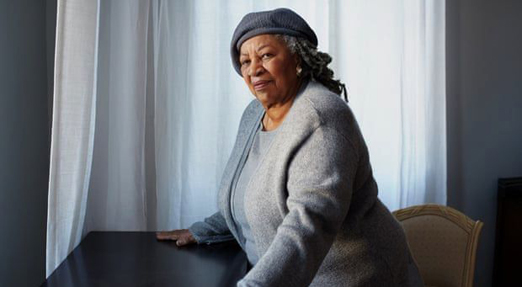
Toni Morrison, American novelist, essayist, editor, teacher and professor emeritus at Princeton University.
Nobel prize winning author Toni Morrison, in her New York apartment. Photo | Tim Knox

At a speaking engagement, a few years back, at a New Yorker festival, Pulitzer Prize winning American novelist, essayist, editor, teacher and professor emeritus at Princeton University, Toni Morrison, offered insightful commentary on topics about race, gender, writing, and other issues. One particular observation made by Ms. Morrison was quite memorable …

The complexity of the so-called individual that’s been praised for decades in America somehow has narrowed itself to the ‘me’. When I was a young girl we were called citizens — American citizens. We were second-class citizens, but that was the word. In the 50s and 60s they started calling us consumers. So we did — consume. Now they don’t use those words any more — it’s the American taxpayer, and those are different attitudes.

The phrase “taxpayer’s money” is almost always propaganda — that must be rejected and resisted by all of us who support progressive politics.A better phrase is “public money”.

So, why do so few in the news media, if any at all in these times of corporate-owned media, refuse to use the term public money, replacing it instead with the far from benign word taxpayer?

Public money is the property of the entire public, not of taxpayers.

Taxes are a way to pool our resources and develop common infrastructure that can have a positive impact on us all. They build our roads and bridges, pay for our police and firefighters, our system of justice, offer support for raising children and contribute to reducing child poverty, provide income security and housing for people who are in need, contribute to foreign aid, and help to ensure our environment is clean and safe. All of these things are much cheaper and effective when we pay for them collectively.

The taxes paid by previous generations benefits us today, and the taxes we pay hopefully act to benefit the generations of tomorrow.
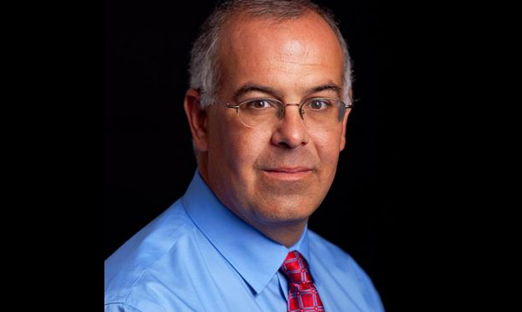
David Brooks, conservative political pundit and commentator, and New York Times columnist
David Brooks. Toronto-born American centre-right, self-described “moderate centrist” political pundit and cultural commentator who writes for The New York Times

In 2016, New York Times columnist and PBS political commentator David Brooks wrote about the difference between taxpayers and citizens …

You can be a taxpayer or you can be a citizen. If you’re a taxpayer your role in the country is defined by your economic and legal status. Your primary identity is individual. You’re perfectly within your rights to do everything you legally can to look after your self-interest.The problem with the taxpayer mentality is that you end up serving your individual interest short term but soiling the nest you need to be happy in over the long term.

A healthy nation isn’t just an atomized mass of individual economic and legal units. A nation is a web of giving and getting. You give to your job, and your employer gives to you. You give to your neighbourhood, and your neighbourhood gives to you. You give to your government, and your government gives to you.

If you orient everything around individual self-interest, you end up ripping the web of giving and receiving. Neighbours can’t trust neighbours. Individuals can’t trust their institutions, and they certainly can’t trust their government. Everything that is not explicitly prohibited is permissible. Everybody winds up suspicious and defensive and competitive. You wind up alone at 3 a.m. miserably tweeting out at your enemies.

And this is exactly the atomized mentality that is corroding North America.

Years ago, David Foster Wallace put it more gently …

“It may sound reactionary, I know. But we can all feel it. We’ve changed the way we think of ourselves as citizens. We don’t think of ourselves as citizens in the old sense of being small parts of something larger and infinitely more important to which we have serious responsibilities. We do still think of ourselves as citizens in the sense of being beneficiaries — we’re actually conscious of our rights as citizens and our nation’s responsibilities to us and ensuring we get our share of the American pie.”

This is where the Canadian Taxpayers Federation comes in, a shady, secretly-funded (who are, in fact, funded by right wing elements within Canada’s corporate culture), unrepresentative organization that sells itself as a populist “citizens advocacy group” looking to cut waste and ensure accountability in government, when such couldn’t be further from the truth.

Income tax

Larry Haiven, a professor in the faculty of management at Saint Mary’s University in Halifax, says most of CTF’s stances on issues — and particularly their relentless calls to lower taxes — are …

“the most simplistic garbage. It assumes that nothing that is purchased with our taxes is of any use for us. Despite CTF’s anti-tax, spending-is-out-of-control rhetoric, taxes are lower now than they’ve been in decades, leaving governments struggling to provide essential services.

Provinces and the federal government have been cutting taxes frenetically, frantically, for the past 25 years. Governments across Canada are taking in about $250 billion less than they did 15 years ago. You have to weigh that against everything the Taxpayers Federation says.”

Yet night in, night out the Canadian Taxpayers Federation is given a platform on the corporate-owned and operated evening news, with folks on Shaw-owned Global TV, anchors like Chris Gailus and Sophie Liu, and Bell Media CTV Vancouver hosts Scott Roberts and Mi-Jung Lee fulfilling their supplicant role as handmaidens to their corporate bosses & not on our side.

The Canadian Taxpayers Federation media presence is truly remarkable when you consider it has a membership of five people.

You read that correctly: five.
money.jpg

Writes Dougald Lamont for CBC News Manitoba

This might come as a surprise, but the Canadian Taxpayers Federation is not now, nor has it ever been, a grassroots, member-based organization where anyone can pay $10 to sign up (or sign up free) and have a say in how the organization is run.

Instead, it has supporters — about 90,000 of them, who, like followers on Facebook, can like, comment, answer surveys and make donations, but they have no actual say in how the organization is run.

While the CTF’s mandate is to hold elected officials to account, who holds the CTF’s five members to account? Each other. Who decides who else can become a member? They do. It should be no surprise that the Canadian Taxpayers Federation has, as a result, faced accusations of being an Astroturf organization — a fake grassroots organization.

Writing in The Tyee, journalist David J. Climenhaga says the following …

Charles and David Koch, right-wing American billionaires
Right-wing billionaires Charles and David Koch are among the funders of the international Atlas Network, a Canadian Taxpayers Federation partner. Photo credit: DonkeyHotey.

The Canadian Taxpayers Federation,” writes Climenhaga, “a self-described non-partisan tax watchdog and taxpayer advocacy group once headed by Alberta Premier Jason Kenney, has always been tight-lipped about the sources of its own funding and support. This may be mildly ironic, given its vocal demands for transparency in government policy.”

Since the 1980’s and the rise of the Koch brothers in the U.S. and the Canadian Taxpayers Federation in Canada, there has been a deliberate effort to reframe citizens as “taxpayers” and public spending as “taxpayers’ money,” as if taxpayers are shareholders. CBC’s Dougald Lamont writes …

Journalists and politicians in every political party routinely use these terms without considering that this framing is anti-democratic. That is because politicians are elected by citizens, not just taxpayers. The word “taxpayer” is not in the constitution; the word “citizen” is.

All citizens are equal. Taxpayers are not.

It is self-evident that you can contribute to the economy and society without paying taxes. Many citizens don’t pay income taxes, notably children, the working poor and a few millionaires and billionaires. Charities, churches and places of faith are all tax-exempt.

Defining taxpayers as the only people who matter has real and serious consequences for policy. It is not a politically neutral position: it is a radical right-wing ideology that drives inequality by making the rich richer while neglecting the poor.

That is why the Canadian Taxpayers Federation’s real membership of five people matters, as does its ideology. We don’t have to care what they think, but we should be clear on just where they are coming from.

So the next time you hear British Columbia’s new wicked witch of the west, CTF spokesperson Kris Sims, blathering on your TV about how your “taxpayer dollars” are being wasted, remember: Kris Sims and the Canadian Taxpayers Federation could give a damn about you as a citizen of the province of British Columbia, and could care even less about what our provincial government is doing to alleviate child poverty, build urgent care centres to serve the 780,000 British Columbians without a family doctor, build truly affordable housing for seniors and working people across the vast expanse of our province, create affordable $10-a-day child care for working families, while funding our public safety and justice, education, transportation and infrastructure, agriculture and fisheries, climate action and environment, social development and poverty reduction, indigenous relations and reconciliation, and jobs, training, trade and technology ministries of government to better serve your interests, and the interests of your family, your neighbours, your co-workers, and your friends.

And while you’re at it, ignore Kris Sims when you see her next on your TV!
Disinhibition, Coarseness & Social Cantagion In The Age of Trump

Disinhibition, Coarseness, Anti-Semitism and Social Cantagion In The Age of Trump

Two centuries ago, a wave of suicides swept across Europe as if the very act of suicide was somehow infectious.
Shortly before their untimely deaths, many of the suicide victims had come into contact with Johann von Goethe’s tragic tale The Sorrows of Young Werther, in which the hero, Werther, himself commits suicide. In an attempt to stem what was seen as a rising tide of imitative suicides, anxious authorities banned the book in several regions across Europe.
During the two hundred years that have followed the publication and subsequent censorship of Goethe’s novel, social scientific research has largely confirmed the thesis that affect, attitudes, beliefs and behaviour can indeed spread through populations as if they were somehow infectious.
Simple exposure sometimes appears to be a sufficient condition for social transmission to occur. This is social contagion theory; that sociocultural phenomena can spread through and leap between people like outbreaks of measles or chicken pox rather than through a process of rational choice.
The online disinhibition effect is a term used to describe the lowering of psychological restraints, a seeming inability to regulate our behaviors in an online social environment leading to reduced behavioural inhibitions online, and a negating of normative behavioural boundaries while in cyberspace, resulting in destructive interpersonal behaviors while using social media.
Welcome to the Age of Trump, the age of unreason and disinformation, of Russian bots and the spreading of racial hatred, the targeting of minority populations as “the other”, the rise of anti-Semitism, rampant cynicism, misplaced anger, isolation and the breakdown of contemporary society.

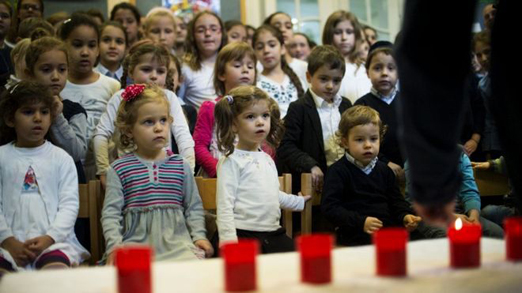
Germany to fight rising anti-SemitismGermany to fight anti-Semitism. Children learn about Holocaust at Berlin Jewish school.

On Saturday, May 25th, Felix Klein, the German government’s anti-Semitism commissioner, told the Funke media group

“I cannot advise Jews to wear the kippah everywhere in Germany. Jews should think twice before wearing the traditional kippah skullcap in public arising from a recent and sustained rise in attacks against Jews.

Anti-Semitism has always existed in Germany, but in this new era of social dysfunction, brought on in some measure by the odious conduct of the U.S. President, anti-Semitism is now showing its ugly face more openly.

There is no question that the rise in social disinhibition and coarseness has played a role in the worsening situation we’re currently experiencing in Europe. The internet and social media have also strongly contributed to this — and also to the continuous attacks on our culture of remembrance.

The word Jew as an insult was not common in my time when I went to school. Now, in the early part of the 21st century, it is and it’s even an insult at schools where there are no Jews, where there are no Jewish students. So that is a growing concern and of course we have to develop strategies to counter that, in Germany and across Europe.”

Toxic disinhibition, an empathy deficit, the absence of restraint — and online, anonymity, invisibility and intermittent, unfledged asynchronous communication are far from benign in their impacts, not only on social discourse, but at the ballot box and in each and every one of our lives, where increasingly otherwise good people live without conscience, informed social awareness, and their role in the social collective we call Canada.

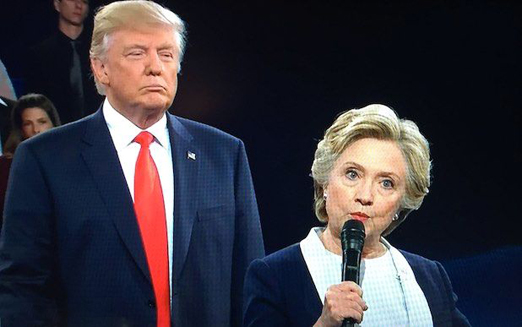
Donald Trump hovering over Hillary Clinton on the debate stage in the 2016 United States election

The 2016 American election was one of the ugliest elections in the history of the United States. Hillary Clinton was continually subject to unwarranted attacks, and daily demonized online. Not a day went by in the lead up to the November 8, 2016 U.S. election when I didn’t find myself outraged at the “sharing” — by a broad range of people on the left with whom I had worked over many years — of Russian bot disinformation, and misogynist commentary about the “war-mongering” U.S. Senator & Secretary of State.
Speaking at a Liberal fundraiser in Toronto last October, Prime Minister Justin Trudeau told those who were gathered at the Danforth Music Hall the upcoming federal election would be the ugliest election in Canadian history.

“We are now looking at perhaps what will be the most divisive and negative and nasty political campaign in Canada’s history,” Trudeau said. “I can tell you, we will do the same thing we did in 2015: No personal attacks, strong differentiation on issues of policy. I will not engage in personal attacks and none of our team will either.

A positive, compelling message that brings people together, that refuses the politics of personal attacks, that refuses the politics of division of scare tactics — whether it’s snitch lines or hijab attacks — that kind of approach that Stephen Harper tried does not work.

Once you’ve gone and divided and angered people in order to get elected it becomes very difficult afterward to pull them together in a way that actually allows us to solve the challenges that we need to solve. To run on division and fear and easy populism makes it harder to do the good things that must be the central purpose of why we run for office.”

Make no mistake, with $65 million in corporate funds already in the kitty for the federal Conservative party to wage their 2019 electoral campaign, with a lesser $41 million available to the Trudeau Liberals, and a paltry $5 million and $3 million, respectively, for Jagmeet Singh’s New Democratic Party of Canada and Elizabeth May’s Green Party of Canada, Andrew Scheer’s far right-of-centre social Conservative party is ready to wage that nasty, ugly campaign Justin Trudeau has talked about to crowds across Canada who have gathered to hear our Prime Minister.

Fight to Defeat Coarseness, Social Contagion, Disinhibition & Isolation
As Canadians, we can do our part by keeping our online discourse respectful, sticking to the facts, not sharing or retweeting the disinformation that will surely be provided by the Russian bots invading our social media, by joining the Greens, the New Democrats or the federal Liberal party, to donate time and money, to work on the campaigns of the socially progressive candidates we support, to staff the candidates’ offices, to go door knocking, gather with others in burmashaves in neighbourhoods, across our city and in Metro Vancouver — and make a difference, fight for inclusion & have a positive impact on the outcome of the election, in order that diversity, climate action, transit, infrastructure, affordable housing, continued subsidy funding of housing co-ops, preservation of our coasts, and preservation of the Canada Child Benefit introduced by the Trudeau government in 2016 that has served to reduce child poverty in Canada by 40%, or 300,000 children, since its introduction only three short years ago, will remain atop the political agenda in Canadian federal governance.

Arts Friday | The 72nd Annual Cannes Film Festival | Winners!

The 72nd annual Cannes Film Festival | 2019

Saturday night, the 72nd annual Cannes Film Festival draws to a close.
Why should that matter to you?
Well, if you love film, and foreign cinema in particular, the award winning films that will be announced Saturday night in Cannes highlight the most important films made outside the North American continent this year, and most probably predict this year’s Oscar award contenders for what used to be called Best Foreign Language Film but for the 2020 Oscar ceremony will be renamed the Best International Feature Film. Not to mention, for aficionados of the Vancouver International Film Festival, a raft of Cannes films will arrive on our shores this upcoming September and October.
Here’s IndieWire chief film critic Eric Kohn’s wrap up column on the 72nd annual Cannes Film Festival, Class War & the 2019 Cannes Film Festival.
WINNER, Palme d’Or | Director: Bong Joon-ho
Parasite | South Korea

The fearlessly and fiendishly well-crafted new film from director Bong Joon-ho (The Host, Snowpiecer) offers a masterful dissection of social inequality, in a film that while a diabolically fun watch is also resolutely political, the film’s tonal shifts clearly in service of its class politics, infecting Parasite’s breezy dark-comedy with notes of rage and melancholy. Bong delivers a stunning return to form with this newest venture, which takes bold leaps between tenors and tone, the film entertaining and intelligent, and an unsparing social indictment of class inequality — a roaringly raucous, blood-spattered social satire that is also luxuriously watchable, suspenseful, uproarious, and a brilliant return to form for South Korean auteur Bong.
For background on how the Cannes Jury chose Parasite, click here.
WINNER, Grand Prix | Director: Mati Diop
Atlantics | Senegal

Mati Diop entered the Official Competition at Cannes with plenty of attention, as the first black woman with a film in the section across the festival’s 72 years. But, according to IndieWire film critic, Eric Kohn …

“The real reason to pay attention to Atlantics is its singular vision of the migration crisis. Diop’s gorgeous, mesmerizing feature directorial début focuses on the experiences of a young woman named Ada (Mama Sané) stuck in repressive circumstances on the coast of Dakar after her boyfriend vanishes en route to Spain. But the film is less fixated on his departure than with the community around her.

Diop’s enigmatic, lyrical narrative left audiences dazzled by its cinematic textures and haunting atmosphere. The peculiar allegorical nature of its story, and a supernatural twist that creeps into the plot, could make it a tough consensus choice for this year’s jury. But it’s quite the impressive début, and could very well wind up with some sort of prize by the end of the festival.”

There was a tie for the next category …
WINNER, Jury Prize | Tie
Les Misérables | France | Director: Ladj Ly

The directorial début of Ladj Ly offers a relentless tale of mounting tension between tough police officers and an oppressed Muslim population in modern-day Paris. Ly’s jittery, naturalistic style spends much of its running time focused on several officers as they clash with the neighborhood youth, and one conflicted new recruit (Damien Bonnard) with a moral conscience. The suspense builds to an anxiety-inducing showdown involving the bubbling frustrations of a local Muslim boy (Issa Perica) whose pithy crimes receive a nasty comeuppance in the film’s wrenching finale, causing audiences to draw thematic parallels to Spike Lee’s Do the Right Thing.
Bacurau | Brazil | Directors: Kleber Mendonça Filho Juliano Dornelles

A bracingly confrontational commentary on the direction his home country of Brazil is taking in the Trump-like era of Bolsonaro, Bacurau’s propulsive storytelling doesn’t come at the expense of the vividly sketched personality of Brazil, in this often strange fever-dream Jacobean-style bloodbath of a film, all at once densely layered and rich, ruthless and clear-minded, a film that divided the critics, but not this year’s Cannes Jury, it would seem. Mendonça Filho has scored before at the Vancouver International Film Festival, with his absolutely brilliant Neighbouring Sounds, which took VIFF 2016 by storm, emerging as an audience favourite.
Best Screenplay | Writer / director: Céline Sciamma
Queer Palm (Feature) | Céline Sciamma
Portrait of a Lady on Fire | France

Acclaimed French director Céline Sciamma makes her long-overdue Competition début with this vivid period drama, which focuses on an 18th century lesbian romance about a painter (Noémie Merlant) hired to create a portrait of a woman from a wealthy family (Adèle Haenel) without her knowledge. In the process, the two women fall in love, against the backdrop of a magical seaside landscape. Sciamma’s sharp, picturesque imagery meshes with the palpable erotic sparks between her two stars, who transform this emotionally resonant two-hander into a riveting portrait of hidden sexuality, a film Hollywood Elsewhere’s Jeff Wells writes is “as close to perfect as a gently erotic, deeply passionate period drama could be,” while The Guardian’s Peter Bradshaw writes in his five-star review …

Céline Sciamma has brought a superbly elegant, enigmatic drama to Cannes that compels a shiver of aesthetic pleasure and fear, demonstrating a deeply satisfying new mastery of classical style to go with the contemporary social realism she showed in Girlhood (2014) and Tomboy (2011).

The setting is 18th-century Brittany, where an Italian noblewoman (Valeria Golino) has engaged what is officially a ladies’ companion for her beautiful daughter, Héloïse (Adèle Haenel), who has just come out of a convent and is recovering from the loss of her sister. The companion, Marianne (Noémie Merlant), is actually an artist, and the countess wishes her to paint a portrait of Héloïse in secret, to be shown to a wealthy prospective husband in Milan, because headstrong Héloïse would never consent to sitting for any such picture.

Sciamma brings the erotic together with the cerebral. The final scenes set in the art gallery and the opera house are gripping: a past obsession simultaneously sour and yet vividly alive. What did it remind me of? De Laclos’ Dangerous Liaisons? Nicolas Roeg’s Bad Timing? I don’t know.

But what a story of desire.

From the reviews out of Cannes, Portrait of a Lady on Fire is a sure-fire contender for the Palme d’Or, with a seeming Best Actress nod for the luminous Adèle Haenel [2017’s BPM (Beats Per Minute)] a near certainty.
Best Actor | Antonio Banderas
Pain and Glory | Spain

A beautiful, full-hearted celebration of the craft of filmmaking, Pain and Glory is one of the most meditative of Pedro Almodóvar’s career, an especially personal work, anchored by the director’s on-off muse Antonio Banderas in perhaps his greatest performance, as he sweeps through the Spanish maestro’s recurrent themes: high melodrama and kitsch comedy, piety and carnal lust, sex and death, human pain and transcendent glory.
Best Actress | Emily Beecham
Little Joe | France

An artfully unnerving, austerely hypnotic horror movie about a very sinister plant, visually Little Joe is a total feast for the eyes, contrasting art-deco pinks and mint greens against sterile, symmetrically framed expanses of white, vaguely evoking the aesthetic of some lost sci-fi film of the ’70s. Another film that divided the critics, with CineVue critic John Bleasdale writing, “compared to the sophisticated and nuanced horrors of Black Mirror, Little Joe feels like a fairly straightforward riff on a very familiar idea. Nonethless, because it won an award at Cannes, because it’s a horror film (and outside of the hothouse of the Cannes Film Festival, the film will receive stronger reviews), Little Joe will likely arrive on our shores at some point this summer or autumn.
Best Director | Jean-Pierre & Luc Dardenne
The Young Ahmed | Belgium

Camera d’Or
Our Mothers | Guatemala | Director: César Díaz

From the military dictatorship established in the late 1970’s in Guatemala was born a civil war that only ended some twenty years later, leaving in its wake more than 200, 000 victims, and burying the memories of 40, 000 missing people. With Our Mothers, selected in the Critics’ Week section of this year’s Cannes Film Festival, César Díaz offers a film of remembrance and resilience, Our Mothers erupting like a shout in the darkness that surrounds this often overlooked massacre that cost mostly Indian lives, the film a heartbreaking portrait of a mother and her son.

star.jpg star.jpg star.jpg

Otherwise, the following films garnered praise at Cannes 2019 …

An American film, but director Quentin Tarantino and his all-star cast of Leonardo DiCaprio, Brad Pitt, Margot Robbie, Al Pacino, Lena Dunham, Kurt Russell, Dakota Fanning, James Marsden, Tim Roth, Timothy Olyphant and a host of other actors, stepped onto The Croisette at Cannes for the international début of his latest film, Once Upon a Time in Hollywood, which more than lived up to its hype in advance of the film’s much-anticipated mid-summer (July 26th) release in theatres across the continent.

The buzz out of Cannes 2019 for a Best Oscar nomination for Brad Pitt was very strongStrong buzz out of Cannes 2019 for Brad Pitt as a potential Best Actor Oscar winner in Quentin Tarantino’s enthusiastically received Once Upon a Time in Hollywood..

At screening’s end, Once Upon a Time received a rare 7-minute standing ovation, with both Brad Pitt and Leonardo DiCaprio scoring great reviews and buzz for the two as potential Best Actor Oscar nominees.

Another film emerging from Cannes with immense positive buzz for probable Best Actor Oscar nominee Taron Egerton, in the title role, is Dexter Fletcher’s Rocketman, the story of Elton John’s life, from his years as a prodigy at the Royal Academy of Music through his influential and enduring musical partnership with Bernie Taupin, a film that the critics raved about, writing that Rocketman “explodes with the kind of colour and energy that only Elton John himself could invoke.”

“Freddie Mercury may have had the better voice,” writes the New York Post’s Johnny Oleksinski. “but it’s Elton John who gets the better movie. Rocketman, director Dexter Fletcher’s trippy new biopic about the flamboyant rocker is braver, deeper and more enlightening than last year’s slobbering piece of Queen propaganda Bohemian Rhapsody (which he also partly directed), a flashy fantasia of a movie that will have you both cheering and in tears in the film’s phenomenally moving pivotal scene.”

We’ll know soon enough — Rocketman opens in theatres next Friday.

Films striving to winner the coveted Cannes 2019 Palme d'Or

Since 1955, the Cannes Film Festival has awarded the coveted Palme d’Or to the greatest filmmakers of our age, from Frances Ford Coppola to Michael Haneke, Terrence Malick, Abdellatif Kechiche, Costas Gavras and Jane Campion. While Oscar season involves thousands of voters and aggressive, months-long campaigns, the Palme d’Or race among the 20, or so, films selected for Official Competition is often difficult to predict.
This year’s Cannes jury stands out for being particularly filmmaker-centric, with Cannes veteran Alejandro G. Iñarritu serving as president, joined by fellow directors Kelly Reichardt, Alice Rohrwatcher, Maimouna N’Diaye, Yorgos Lanthimos, and Pawel Pawlikowski — as well as Elle Fanning, the youngest Cannes juror in history. All have screened work at the festival, this year’s jury composed of particularly complex & disparate sensibilities.
Today’s update: the winners, and more, at the 2019 Cannes Film Festival, some of which will receive a Best International Film Feature Oscar nomination, most of which will screen at the 38th Vancouver International Film Festival, running from September 26th through October 11th, 2019.

Robert Eggers' The Lighthouse, starring Willem Dafoe and Robert Pattinson Wins Fipresci Critics Awards At Cannes Film Festival

Just announced: The Lighthouse has won the Fipresci Critics Awards at Cannes, about which the Deadline website writes …

“A story of two lighthouse keepers who drive each other to madness, won the Cannes Film Festival critics’ award for best first or second features in Directors’ Fortnight and Critics Week. The award was announced Saturday by the International Federation of Film Critics (Fipresci).

Robert Eggers The Lighthouse was shot in black and white and starred Willem Dafoe and Robert Pattinson.


Fipresci also honoured Elia Suleiman’s It Must Be Heaven as the best film in competition and Kantemir Balagov’s Beanpole as best film in the sidebar Un Certain Regard.

Terrence Malick’s Cannes competition entry, Hidden Life, won the Prize of the Ecumenical Jury.

The Lighthouse sees ‘two lead actors give stormy, career-best performances,” according to the statement from the Fipresci jury. It described the Eggers film as “a brutal work of art, all shot in beautiful black-and-white cinematography and fueled by a soundscape that echoes like a foghorn.”

The full list of winners at the 72nd annual Cannes Film Festival.

#BC + VanPoli | An Update on the Affordable Housing File in B.C.

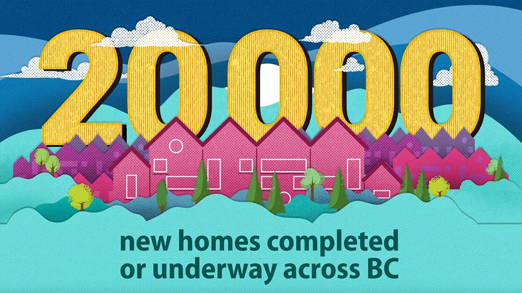
BC NDP announces 20,000 affordable homes either completed or under construction in B.C. in 2019

After 16 years of despair under a too often far right-of-centre B.C. Liberal government where, in their final full year in office, 120 children died in the care of the province, while another 791 children in care were critically injured — all while the Christy Clark government left a $2.7 billion surplus for what would turn out to be an incoming BC NDP government — whether it was Gordon Campbell or Clark, the B.C. Liberal government proved day in and day out that they were dedicated not to the interests of the people of British Columbia (and certainly not the most vulnerable among us), but to the monied corporate titans and financial backers who, working collectively, built barely one unit of affordable housing amidst an unprecedented and ever worsening housing crisis in Canada’s third largest city and region.
Whether it’s the B.C. Liberals — as they’re presently constituted (VanRamblings awaits the day when Vancouver City Councillor Sarah Kirby-Yung is leader of the party, and Premier, to redefine fiscally and socially responsible, nominally right-of-centre government in B.C.) — or Andrew Scheer’s ultra-conservative Conservative party, make no mistake, right-of-centre parties & politicians are rarely on the side of the 95% of Canadians who earn less than $100,000 a year, which is to say not on your side.
BC NDP Government Has Built, or Will Build, 20,000 Affordable Homes in BC in 2019 | A Further 94,000 Homes Are on Their Way

B.C. Housing Minister reports that  20,000 affordable housing units under construction in B.C.Here’s the link to detail on the BC Homes graphic B.C. Housing Minister Selina Robinson presents above, including indigenous, community, student, regional, supportive, affordable rental and other housing currently completed, or under construction, in B.C.

Whether it be Chris Gailus and Global BC, the news team at CTV Vancouver, or as the local paper of record, the Vancouver Sun — or the Globe and Mail, or their even further right-of-centre brethren at the National Post — make no mistake, you’re not going to turn on your TV, pick up a local newspaper or surf to their online sites and read about the 20,000 affordable housing homes that have been completed, or are in process of being completed, in 2019, during the next year, or in early 2021.
God knows that corporate-owned media — none of which endorsed the BC NDP in 2017 — are interested in the least in reporting out to you the news that really matters: that in British Columbia citizens have a government in Victoria that actually cares about working people, and is committed to the realization of the construction and completion of 114,000 affordable homes, $10-a-day child care, and the construction of 24-hour-a-day, open and accessible urgent care centres in every municipality across B.C. — more than 780,000 British Columbians (that’s almost 17% of the population) don’t have a family doctor, the previous Liberal government abandoning their plan to link every person to a doctor by 2015 as “unachievable”.

British Columbia government funding 102 units of low cost housing in East VancouverConstruction on this 109-unit affordable rental building to be completed in early 2021. Location: 3185 Riverwalk Avenue, in the East Fraserlands area of Vancouver.

Funded by the British Columbia government under their Deepening Affordability Fund, this past December B.C. Housing Minister Selina Robinson announced the construction of 109 low-cost, affordable homes at 3185 Riverwalk Avenue in the East Fraserlands area of Vancouver — a five-storey project that will offer 7 studios, 30 one-bedroom, 48 two-bedroom & 24 three-bedroom homes + a shared amenity space — for seniors, families & those on fixed incomes, not a social, but an affordable rental, housing project, where tenants will pay no more than 30% of their income in rent.
Click on this link, and scroll down to the Deepening Affordability Fund section for more information on 490 more homes being built through the fund in Burnaby, Kamloops, Saanich, Port Alberni, Terrace and Courtenay.
In addition, by clicking on the link you will find detail on homes being built under the Supportive Housing Fund, as well as the Rapid Response to Homelessness, the Regional Housing First and the Student Loan Housing programmes, the Indigenous Housing Fund & the two projects being built as part of the Housing Hub programme, for a total of 20,000 new homes.

58 West Hastings Street in Vancouver will see the construction of 231 low-cost,affordable homesConstruction of 231 low-cost, affordable homes at 58 West Hastings underway.

In March of this year, the B.C. government provided a list of 25 affordable housing projects, currently under construction in Vancouver, to Vancouver Courier civic affairs journalist Mike Howell — a total of 2,450 new affordable rental homes, including a $14.8 million, 74-unit project at 6390 Crown Place that will be operated by the Musqueam Indian Band, and a $90 million 231-unit project at 58 West Hastings that will be operated — including $30 million in funding — by the Vancouver Chinatown Foundation.
The bottom line: all is not lost, there is a government in Victoria that is on our side, and although the provincial government may not be moving fast enough for some on their election promises, remember (as folks were wont to say in times past): “Rome wasn’t built in a day.”
The same very well might be said about our current Vancouver City Council, each of whom VanRamblings knows well, and who we know to be persons of grit, integrity & social responsibility who are also very much on our side.
If by 2022 (the next civic election) Vancouver City Councillors have not followed through on their commitment to the alleviation of the affordable housing crisis, they will become — as some have written — a one-term civic government, replaced by Councillors who can get the job done.
But you only have to know Christine Boyle, Lisa Dominato, Sarah Kirby-Yung, Pete Fry, Rebecca Bligh, Michael Wiebe, Jean Swanson, Colleen Hardwick, Adriane Carr and Melissa De Genova to know that this remarkably capable and utterly unique group of change makers are not about to let you down, that they’re on the case, with their heads screwed on straight and much sooner than later, they’ll come through for all of us.