Category Archives: Netflix

Netflix | Central Park Five | Rise of a Racially Charged Demagogue

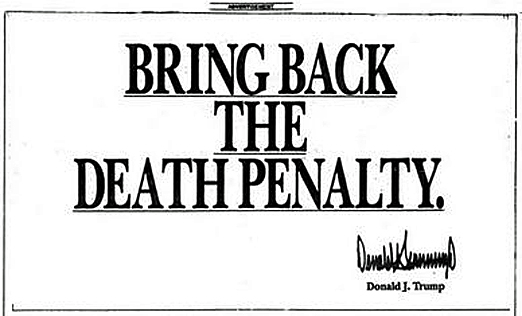
In the 1980s, Donald Trump called for the death penalty to be brought back for the Central Park Five

In 1989 five young black men were wrongfully convicted of raping a woman jogging in New York City. Leading the charge against them was a real estate mogul whose divisive rhetoric can be found in his Presidency today.
Nearly three decades before the sociopathic pseudo-billionaire began his run for Presidency of the United States — before Donald Trump called for a ban on Muslims entering the U.S., for the expulsion of all undocumented migrants, before he branded Mexicans as “rapists” and mocked the disabled — Trump called for the reinstatement of the death penalty in New York following a rape case in which the five teenagers were wrongfully convicted.
The miscarriage of justice is widely remembered as a definitive moment in New York’s fractured race relations.
But Trump’s intervention — he signed full-page newspaper advertisements implicitly calling for the boys to die — has been gradually overlooked. Now those involved in the case of the so-called Central Park Five and its aftermath say Trump’s rhetoric served as an unlikely precursor to a unique brand of divisive populism that powered his rise to political prominence.

Donald Trump ‘was the firestarter’ when he called for the death penalty in the 1989 Central Park jogger case, says Yusef Salaam, one of the wrongfully convicted Central Park Five: “To see that he has not changed his position of being a hateful person … what has become of the country with a person like Donald Trump as President?”

Why is this raising of the case of the Central Park Five relevant now?
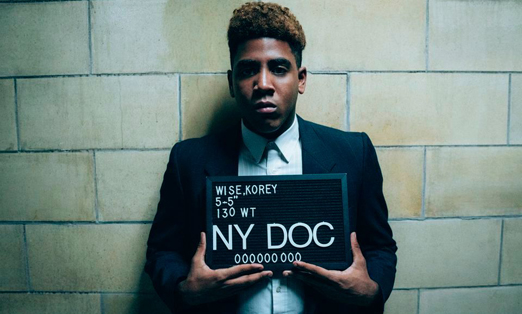
when-they-see-us-line.jpgJharrel Jerome, in Ava Duvernay’s new Netflix mini-series, When They See Us.

Today on Netflix, acclaimed director Ava DuVernay sets about to restore the good names of the five Harlem teens who were arrested, convicted and imprisoned in the 1989 rape of a jogger, only to have those convictions vacated in 2002. They’re more commonly known as the Central Park Five, but that’s a pejorative creator DuVernay excludes almost entirely from her riveting four-episode documentary dramatization, When They See Us.

Here’s a brief survey of critical reviews of Duvernay’s narrative drama …

It is unsettling to realize that many people looking for something new to watch on Netflix this week will actually be unfamiliar with what happened in Central Park, New York, on an April night in 1989. What happened was the rape and attempted murder of a young woman who was jogging there, Trisha Meili. The 28-year-old Meili was doing her usual evening run after a long day at work on Wall Street.

And while there are many unsettling scenes in the first hour of When They See Us (streams today on Netflix), nothing is more disconcerting than the realization, an hour into the drama, that we know very little about Trisha Meili. She is not the focus of the story. The five boys charged with the attack on her are the point. The way in which they were coerced into confessions, threatened and intimidated, is the point.

When They See Us is superbly made and startling in its invective. That invective is aimed with blistering intensity, not just at a justice system that allowed a miscarriage of justice, but at all of American society. The point of the title is that nobody actually saw the boys, who became known as the Central Park Five, as who they were. They saw black youths and wanted to convict them.

Donald Trump took out ads in New York newspapers calling for the restoration of the death penalty so that the boys would be executed. Now, he runs the country. And the state of the country is the real point of When They See Us. As such, it’s a heightened, fraught series, the most unsettling drama so far in 2019, and meant to be.

John Doyle, The Globe and Mail

A searing portrait of injustice and innocence lost
Matthew Gilbert, Boston Globe

Ava Duvernay’s mini-series will break any heart, except, perhaps, that of our president, who maintains their guilt despite the confession and DNA evidence that exonerated them in 2002 and led to a $41 million legal settlement from New York City. Knowing with certainty that the boys are innocent makes watching each step of their descent into hell — from the manipulated false confessions that open the miniseries and the damning group-think media coverage that follows, to the way their young promise is squashed by prison and the stigma that trails them once they’re released — into an unnervingly doom-ridden tragedy.

The Vindication of the Central Park Five
Judy Berman, Time magazine

Nearly an hour into the premiere episode of Ava DuVernay’s Netflix miniseries When They See Us, four of the boys who will soon be known as the Central Park Five are left alone together in a holding cell. (The fifth, Korey Wise, is locked in with adults because he’s all of 16 years old.) They’ve just spent hours being interrogated — and intimidated — by police seeking confessions to support the theory that they gang-raped a woman in the park and left her for dead. In fact, most of them don’t even know each other. There’s a long silence before they start talking. The camera alternates between closeups of these scared, exhausted, beaten-up kids’ faces. They see each other. Hopefully, we see them, too.

As the title suggests, the idea of seeing is crucial to this elegant, wrenching four-part reenactment of the Central Park Five saga. DuVernay, who wrote, directed and (along with collaborators including Oprah and Robert De Niro) executive produced the miniseries, has a gift for framing a familiar historical moment so that you can really see it for the first time. In this case, the Selma director’s simplest but most profound decision is to portray these five black and Latino boys, ages 14 to 16, as the scared children they are, rather than as the gangsters or delinquents they were made out to be.

All four episodes of When They See Us are now available on Netflix.
Arts Friday | Netflix and the Death of the Theatrical Experience

Netflix and the Death of Hollywood

With movie theatre attendance at a two-decade low and profits dwindling, with revenues hovering slightly above $10 billion, Hollywood is on the verge of experiencing the kind of disruption that hit the music, publishing, and related cultural industries a decade ago and more.
Hollywood once ruled the world with must-see movies that would entice people to head to the nearest cinema every weekend. But movie crowds have been declining as more people opt to “Netflix”, and chill at home.
Like other industries, entertainment is feeling the shock of technology and scrambling to adapt to sharply shifting economics. Studios are increasingly banking on big-budget franchise films to bring in bucks. But is that enough?
Wall Street Journal reporter Ben Fritz considered those issues in his book, The Big Picture: The Fight for the Future of Movies.

“Netflix is having a massive impact on Hollywood,” Fritz writes. “They’re disrupting all the traditional economics of television and movies. It’s inescapable how much Netflix has become the TV diet for so many people. Now it’s happening to movies.”

“The movie industry is going through what the record industry has gone through. Subscription streaming is changing the movie business. The music business has had to adapt to people streaming, and that’s going to happen in the movie business. A lot of traditionalists are saying, ‘No, a movie is made to be seen in a theatre.’ That may be what Hollywood wants, but that is not what a lot of consumers want.”

As we wrote in a column published in 2018, in recent years Hollywood has been gun shy about producing romantic comedies.

Netflix, though, has proven just how durable the romcom formula is.
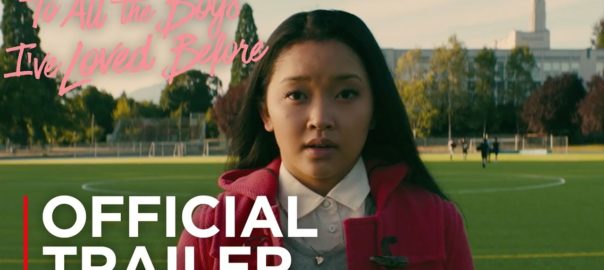
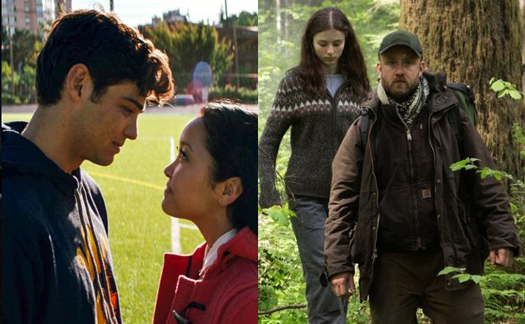
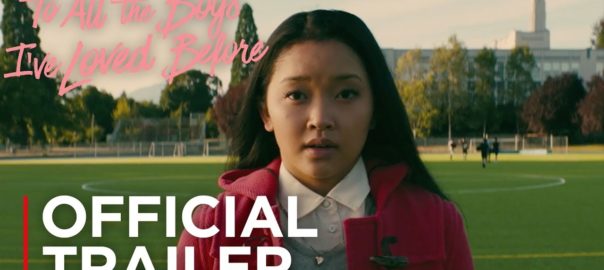
When Lara Condon and Noah Centineo’s To All the Boys I’ve Loved Before débuted last August, it set Netflix streaming records, with over 45 million viewers tuning in. Needless to say, a sequel will be released later this year, as is the case with Joey King’s breakout hit, The Kissing Booth.
Meanwhile, Rose McIver’s The Christmas Prince also spawned a much-anticipated sequel on Netflix this past holiday season.
In 2019, Netflix is set to spend around $18 billion on original programming, most of which is slated for movie production and documentaries, consisting of a 121 movie and documentary slate. Warner Bros.will release 23 films this year, while Disney (Hollywood’s most profitable studio) will début a mere 10. All the Hollywood studios combined in 2019 won’t spend $18 billion on production, and will release only a mere fraction of Netflix’s titles.
Looking into the financial crystal ball, investment firm Goldman Sachs predicts that Netflix could have an annual spending budget of $22.5 billion in 2022, a staggering number that would see Netflix far outstrip the total spending by all of the Hollywood movie studios combined.
With Netflix boasting 139 million subscribers, and growing by millions every month, according to tech mogul Barry Diller, a former senior member of the executive team at Paramount and 20th Century Fox and current Chairman of the Expedia group, “Hollywood is now irrelevant.”

The rise of Netflix may spell the end of the theatrical experience, and trips to your local multiplex

Having disrupted the model for TV broadcasters by making schedules extraneous and grabbing millions of viewers at the same time, Netflix is now making a run at Hollywood. “I think it’s going to be fascinating to watch,” says US journalist Gina Keating, author of Netflixed: The Epic Battle for America’s Eyeballs.
Netflix’s deep pockets have lured Hollywood stars such as Will Smith (Bright), Joel Edgerton, Sandra Bullock (Bird Box), Ben Affleck (Triple Frontier), Kevin Costner and Woody Harrelson (The Highwaymen), Anne Hathaway, Robert DeNiro, Al Pacino and Harvey Keitel, the latter three of whom will star in Martin Scorcese’s $150 million epic, The Irishman, arriving day and date on Netflix and a handful of theatres across the continent this upcoming autumn season, just in time for the Oscars.
And talking about the Oscars, Netflix’s Roma won a slew of Oscars this past Ocotber, winning Best Director, Cinematographer and Foreign Language Film for Alfonso Cuarón, while Period, End of Sentence won Best Documentary. Both films have been available on Netflix since December.
Although Netflix has been around for over two decades, the company’s rise to the top of Hollywood happened in a remarkably short period of time.
House of Cards, Neflix’s first foray into original content, débuted only six years ago. By expending monies to produce more shows and movies, it has managed to grow so rapidly that even its own executives are surprised.

“We’ve outperformed the business in a way we didn’t predict,” David Wells, Netflix’s (now former) chief financial officer, told The Hollywood Reporter in late February, after the company announced that its subscriber base had increased by over seven million in the first two months of 2019, its largest increase ever.

While Hollywood could take control of its fate, it’s very difficult for mature businesses — ones that have operated in similar ways for decades and where the top players have entrenched interests — to embrace change.
One can imagine the future looking something like this: You come home (in a driverless car) and say aloud to Alexa, Siri, Google Home or some A.I. assistant that doesn’t exist yet, “I want to watch a comedy with two female actors as the leads.” Alexa responds, “O.K., but you have to be at dinner at 8pm. Should I make the movie one hour long?” “Sure, that sounds good.” Then you’ll sit down to watch on a screen that resembles digital wallpaper.
At the Consumer Electronics Show this year Samsung débuted a flexible display that rolls up like paper.
There are other, more dystopian theories which predict that film and video games will merge, and we will become actors in a movie, reading lines or being told to “look out!” as an exploding car comes hurtling in our direction, not too dissimilar from Mildred Montag’s evening rituals in Fahrenheit 451.
When we finally get there, you can be sure of two things.
The bad news is that many of the people on the set of a standard Hollywood production won’t have a job anymore. The good news?
You’ll never be bored again.

Music & Film | Bedroom Pop, Tribeca and Skate Kitchen

Bedroom pop, a lo-fi genre of indie music popular with teens and twenties
Bedroom pop. Who’da thunk that such a thing even exists?
Bedroom pop is a sub-genre of Lo-fi (“low fidelity”), defined in 2019 as a DIY musical genre or aesthetic in which artists record at home on their own equipment, rather than in traditional recording spaces, the music characterized by contemplative lyrics, bedroom pop a contemporary indie re-invention of the once popular emo or dream pop musical genres.
There are a great many bedroom pop artists, but the most celebrated is Claire Cottrill (born August 18, 1998), known professionally as Clairo, an American recording artist from Carlisle, Massachusetts who wrote Pretty Girl, a lo-fi-produced song that attracted over 30 million views on YouTube.

At 16 years of age, Clairo wrote and produced Pretty Girl employing studio equipment in her bedroom (the equipment sometimes referred to as a digital audio workstation), as well as Pro Tools production software, while also recording and editing the video before uploading it to YouTube.
Home studios have been popular for decades, but have become ever more refined as computer technology has become increasingly sophisticated, enabling ever higher quality music production. One of VanRamblings favourite artists, Imogen Heap (who we interviewed and wrote about in 1997, at the outset of her career) records all of her music in her kitchen, where she’s set up a home studio that revolves around the use of Pro Tools.

As it happens, VanRamblings discovered bedroom pop during our recent bout of illness, when all we could manage to do most days was plunk ourselves down in front of Netflix — where we were very pleased to see that Crystal Moselle’s acclaimed Sundance and Tribeca award-winning film, Skate Kitchen, simply appeared out of the blue (and unheralded, but not by us) one very fine day, as one of the varied viewing options.

Vibrant, alive, poetic, superby shot and and richly informed, Ms. Moselle’s follow-up to her award-winning, one of a kind documentary, The Wolfpack, her fiction début emerges as the most accomplished film about skater culture since Catherine Hardwicke’s 2005 American biographical drama, The Lords of Dogtown (which is also available on Netflix).
The story goes that Moselle spotted two of the girls on the subway, introduced herself as a filmmaker, and asked if there were more girls like them. Indeed there were, all forming a feminist, sex-positive, shred-happy collective called the Skate Kitchen. Some time later, Moselle’s film arrived in Park City, with all the kids playing a version of themselves.
And who do you think the featured music artist on the soundtrack might be? Yep, you got it — none other than Clairo, who wrote and produced Heaven for the Skate Kitchen soundtrack.

So, while VanRamblings reveled in our discovery of Skate Kitchen on Netflix, we were also introduced to Clairo, and the contemporary musical genre known as “bedroom pop.” And now, you are familiar with Skate Kitchen (a must, must watch!), the work of Crystal Moselle, the musical genre of bedroom pop, and its most acclaimed progenitor, Clairo.
You know what’s exciting about life? That you get to discover something new, something that just yesterday you knew nothing about, every day.

Arts Friday | 2018 | Cinema | A Year To Be Thankful for

A Look Back at 2018 | Cinema | The Many Things We Have To Be Grateful For

As the cinematic year draws to a close, today on VanRamblings — given that it’s American Thanksgiving — we take a fond look back at 2018 and some of the movie-related innovations we have to be thankful for this year.

As we’ve written previously, 2018 marked the year of the return of the romantic comedy — not at the cinema, but on Netflix, where mid-budget smash hits like To All the Boys I’ve Loved and The Kissing Booth, both mid-budget teen romantic comedies, gained massive followings on social media, while re-establishing the rom-com as a genre that should not be underestimated. Good on Netflix for reviving this near forgotten genre.

Far and away the strongest and most affecting independent film of 2018, director Debra Granik’s first outing since 2010’s multiple Oscar award nominee, Winter’s Bone (in which Jennifer Lawrence made her début, gaining a Best Actress Oscar nomination), Leave No Trace tracks a father and daughter living precariously off the grid, introducing us to an incandescent 17-year-old Thomasin Harcourt McKenzie, who lives a tranquil life sheltered with her loving, PTSD suffering father, Ben Foster, in an urban Oregon woodland, in perfect harmony with one another, despite all. Uncompromising, authentic, raw, heartbreaking, brilliant, haunting, full of grace, and riveting throughout, Leave No Trace is a multiple Gotham and Independent Spirit Award nominee — including Best Actor, Supporting Actress, Director and Feature — and a must-see film streaming on demand.
Netflix Starts to Prioritize Theatrical Releases

For the longest time, Netflix refused to screen their films in theatres, which last year hurt the chances of Dee Rees’ Mudbound winning any Academy Awards, despite its four Oscar nominations.
In 2018, after allowing certain films exclusive theatrical engagements — including the Coen brothers’ The Ballad of Buster Scruggs a week before it hit its platform, and in 42 select theatres across North America, Alfonso Cuarón’s almost certain Best Picture Academy Award winner Roma, which will screen exclusively in Vancouver at the Vancity Theatre, December 14th through the end of December — while Netflix is still the disrupter it’s always been, 2018 is the year they thankfully realized theatres still matter.
The Most Exciting Foreign-Language Academy Award Race in Years

Oscar Foreign Language Film entries 2018

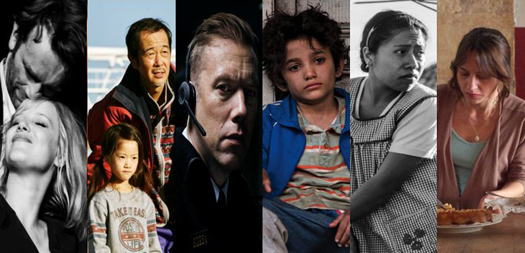
Whether it be Poland’s Cold War, Mexico’s Roma, South Korea’s Burning, Israel’s The Cakemaker, Denmark’s The Guilty, Colombia’s Birds of Passage, Belgium’s Girl, Hungary’s Sunset, Japan’s Shoplifters, Sweden’s Border, or Lebanon’s Capernaum, there is an embarrassment of riches of foreign language films vying for an Academy Award this year. Lucky us.