Category Archives: Jude and Megan

Stories of a Life | The Inaugural Edition | 1974 European Vacation

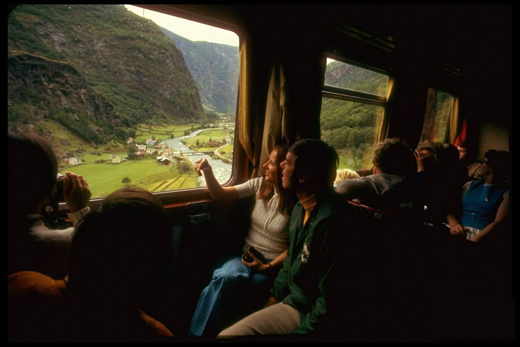
Traveling on a train across Europe, with a Eurail Pass, in the 1970s

In the summer of 1974, Cathy and I traveled to Europe for a three-month European summer vacation, BritRail and Eurail passes in hand, this was going to be a summer vacation to keep in our memory for always.
And so it proved to be …
On another day, in another post evoking memories of our cross-continental European sabbatical, I’ll relate more stories of what occurred that summer.
In this inaugural edition of Stories of a Life, I will set about to relate the following story, one of the most salutary and heartening events of my life.
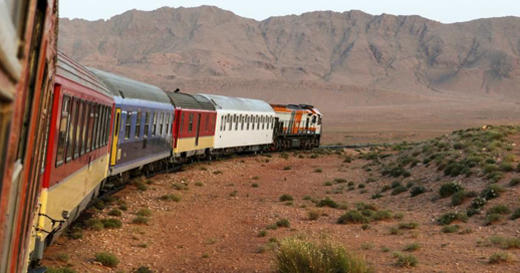
Train travel in Spain, in the 1970s, as the train makes its way around the bend

Only 10 days prior to the event I am about to relate, Cathy and I had arrived in Lisbon, Portugal, alighting from a cruise liner we’d boarded in Southampton, England (passage was only 5£s, much cheaper than now).
After a couple of wonderful days in Lisbon, Cathy and I embarked on the first part of our hitchhiking sojourn throughout every portion of Portugal we could get to, finally traveling along the Algarve before arriving in the south of the country, ready to board a train to Spain. Unfortunately, I developed some intestinal disorder or other, requiring rest and fluids. Once Cathy could see that I was going to be fine, she left the confines of our little pensão to allow me to recover in peace, returning with stories of her having spent a wonderful day at the beach with an enthusiastic retinue of young Portuguese men, who had paid attention to and flirted with her throughout the day. Cathy was in paradisiacal heaven; me, not so much.
Still, I was feeling better, almost recovered from my intestinal malady, and the two of us made a decision to be on our way the next morning.

Traveling from the south of Portugal to Spain, in the 1970s

To say that I was in a bad mood when I got onto the train is to understate the matter. On the way to the station, who should we run into but the very group of amorous men Cathy had spent the previous day with, all of whom were beside themselves that this braless blonde goddess of a woman was leaving their country, as they beseeched her to “Stay, please stay.” Alas, no luck for them; this was my wife, and we were going to be on our way.
Still suffering from the vestiges of both an irritable case of jealousy and a now worsening intestinal disorder, I was in a foul mood once we got onto the train, and as we pulled away from the station, my very loud and ill-tempered mood related in English, those sitting around us thinking that I must be some homem louco, and not wishing in any manner to engage.
A few minutes into my decorous rant, a young woman walked up to me, and asked in the boldest terms possible …
Do you kiss your mother with that mouth?
“Huh,” I asked?
“Do you kiss your mother with that mouth? That’s the filthiest mouth I’ve ever heard. You’ve got to teach me how to swear!”
At which point, she sat down across from me, her lithe African American dancer companion moving past me to sit next to her. “Susan. My name is Susan. This is my friend, Danelle,” she said, pointing in the direction of Danelle. “We’re from New York. We go to school there. Columbia. I’m in English Lit. Danelle’s taking dance — not hard to tell, huh? You two traveling through Europe, are you?” Susan all but shouted. “I come from a large Jewish family. You? We’re traveling through Europe together.”
And thus began a beautiful friendship. Turns out that Susan could swear much better than I could; she needed no instruction from me. Turns out, too, that she had my number, and for all the weeks we traveled together through Europe, Susan had not one kind word for me — she set about to make my life hell, and I loved every minute of it. Susan became the sister I wished I’d had, profane, self-confident, phenomenally bright and opinionated, her acute dissection of me done lovingly and with care, to this day one of the best and most loving relationships I’ve ever had.
Little known fact about me: I love being called out by bright, emotionally healthy, socially-skilled and whole women.
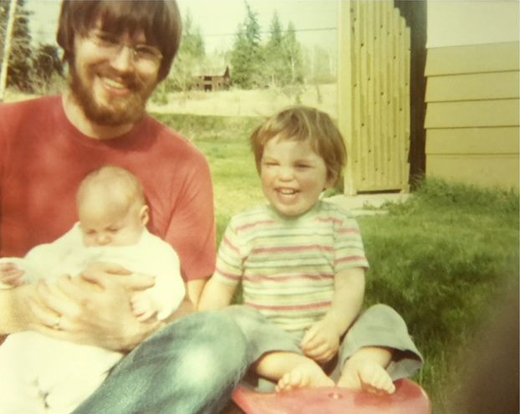
Two-year-old Jude Nathan Tomlin, baby Megan Jessica, and dad, Raymond, in June 1977The summer of 1974, when Cathy became pregnant with Jude, on the right above

Without the women in my life, Cathy or Megan, my daughter — when Cathy and I separated — Lori, Justine, Alison, Patricia, Julienne or Melissa, each of whom loved me, love me still, and made me a better person, the best parts of me directly attributable to these lovely women, to whom I am so grateful for caring enough about me to make me a better person.
Now onto the raison d’être of this first installment of Stories of a Life.
Once Susan and I had settled down — there was an immediate connection between Susan and I, which Cathy took as the beginnings of an affair the two of us would have (as if I would sleep with my sister — Danelle, on the other hand, well … perhaps a story for another day, but nothing really happened, other than the two of us becoming close, different from Susan).
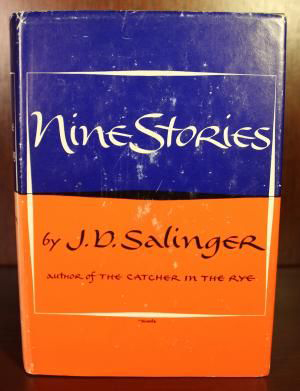
J. D. Salinger's Nine Stories, an anthology of short stories published in April 1953

Danelle saw a ragged copy of J.D. Salinger’s Nine Stories peeking out of Cathy’s backpack. “Okay,” she said. “In rounds, let’s each one of us give the title of one of the Salinger short stories,” which we proceeded to do. Cathy was just now reading Salinger, while I’d read the book while we were still in England, about three weeks earlier.
Cathy started first, For Esmé — with Love and Squalor. Danelle, Teddy. Susan, showing off, came up with A Perfect Day for Bananafish, telling us all, “That story was first published in the January 31, 1948 edition of The New Yorker.” Show off! I was up next, and came up with Uncle Wiggily in Connecticut. Phew — just barely came up with that one! Thank goodness.
Onto the second round: Cathy, Down at the Dinghy; Danelle, Pretty Mouth and Green My Eyes; Susan, showing off again, De Daumier-Smith’s Blue Period, “turned down by The New Yorker in late 1951, and published by the British Information World Review, early in 1952.” Me? Struggling yet again, but subject to a momentary epiphany, I blurted out, Just Before the War with the Eskimos. There we were, eight stories down and one to go.
But do you think any one of us could come up with the title to the 9th tale in Salinger’s 1953 anthology of short stories? Nope. We thought about it, and thought about it — and nothing, nada, zero, zilch. We racked our brains, and we simply couldn’t come up with the title of the 9th short story.
We sat there, hushed. For the first time in about half an hour, there was silence between us, only the voices of children on the train, and the clickety-clack of the tracks as the train relentlessly headed towards Madrid.
We couldn’t look at one another. We were, as a group, downcast, looking up occasionally at the passing scenery, only furtively glancing at one another, only periodically and with reservation, as Cathy held onto my arm, putting hers in mine, Danelle looking up, she too wishing for human contact.
Finally, Susan looked up at me, looked directly at me, her eyes steely and hard yet … how do I say it? … full of love and confidence in me, that I somehow would be the one to rescue us from the irresolvable dilemma in which we found ourselves. Beseechingly, Susan’s stare did not abate …
The Laughing Man,” I said, “The Laughing Man! The 9th story in Salinger’s anthology is …” and before I could say the words, I was smothered in kisses, Cathy to my left, Susan having placed herself in my lap, kissing my cheeks, my lips, my forehead, and when she found herself unable to catch her breath, Danelle carrying on where Susan had left off, more tender than Susan, loving and appreciative, Cathy now holding me tight, love all around us. A moment that will live in me always, a gift of the landscape of my life, and the first such Story of a Life that you’ll read from here on in, should you choose — each and every Saturday for a very long time to come.
Indie Cinema, The Summer and the Salvation of Good Movies

VanRamblings has always loved the cinema, from the time we held our younger sister’s hand to keep her safe, while on our way to the Grandview Theatre, just south of 1st Avenue on Commercial Drive on the east side of the street, every Saturday in every month throughout 1955 until near the end of August in 1958, when our family moved to Edmonton, where our movie-going regimen was kept up — alone this time, on the bus at the age of eight heading downtown during the most unforgiving of 40-below winter nights cascading towards the Rialto Theatre to see the latest Hayley Mills film, for we were in love with Hayley Mills and never, ever missed one of her films … through to the mid-1960s when we were once again resident on Vancouver’s eastside, just north of Semlin Drive & 1st Avenue, in the neighbourhood where we were raised, and where we lived for most of our first 18 years of life, through until … now, to this day, when this year we celebrate 50 years as a published film critic, and ardent lover of film.

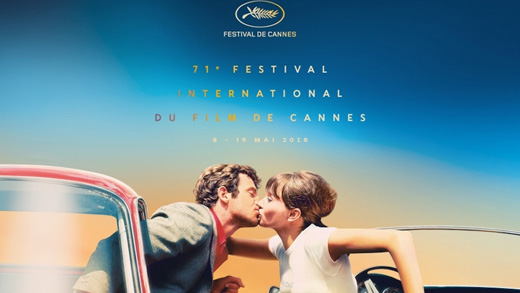
2018 Cannes Film Festival

Not for us, the big blockbuster films that have dominated movie landscapes for most of the past three decades. No, we’re a ‘window on the world’ foreign film aficionado, as Rocky Mountaineer President and founder Peter Armstrong will tell you if you ask him, and we love small, lower-budget independent films to near distraction, and we love reading and writing about the film festivals that dot the cultural landscape throughout the year, from January’s Sundance Film Festival — founded by Robert Redford in Salt Lake City in August 1978 — to the Berlin “Berlinale” Film Festival in February, to March’s annual, Austin, Texas-based South by Southwest (SXSW) Film Festival, followed in April by Robert DeNiro’s Manhattan-based Tribeca Film Festival — and this next month, the grand mama of them all, the prestigious and much-anticipated Cannes Film Festival, which has taken place on the leisurely French Riviera every year since 1946.

Independent film, or "indie" films, stalwart survivors and purveyors of human-scale cinema

As we write above, VanRamblings loves independent — or, indie — film. But what is indie film? Hang on to your hat, because here we go …
Indie films are movies produced with a low budget, most often by small, boutique production companies, and produced for less than $20 million.
Originally, the defining quality of indie media (film, music, publishing, etc.) was that it was produced outside of the traditional systems of production. So in film, for example, movies produced without the support of the major Hollywood studios would be independent films, or “indies” for short.
After a few decades of independent media, however, aesthetic patterns and themes have emerged that make “indie” more of a style or genre label.
Confusing matters even more, in recent years the six major Hollywood studios — Fox, Paramount, Warner, Sony, Universal, and Disney — have brought indie films in-house, with Disney acquiring Miramax, Paramount (Vantage), Sony (Classics), Fox (Searchlight), Universal (Focus, Working Title), and Warner (New Line, Castle Rock), the major studios competing each year for prestigious Oscar attention with their much-ballyhooed “independent” art house releases, most of the films acquired by the studios but not financed by them, from many of the film festivals mentioned above.

With indie films, the director’s approach is paramount, these auteur films creative, artistic and personal in tone, with subject matter that reflects the lives of everyday people, or as is sometimes the case, the marginalized persons or communities within our cities, provinces or states; indie films also often take on forbidden subject matter considered to be taboo by conventional society. Indie films will more often than not use music sourced from bands or indie music groups or artists, rather than employ original orchestral scoring to aid in the telling of the film’s story.
At the most recent Oscars ceremony, as the latest clutch of arthouse films — including Darkest Hour, The Shape of Water, Call Me by Your Name and Three Billboards Outside Ebbing, Missouri — were feted throughout the awards season, indie films grappled with Hollywood’s blockbuster addiction, and the new challenges presented by Netflix and Amazon.
While the big six Hollywood studios made 113 movies last year, taking in $11 billion in domestic box office and another $14 billion internationally, a record number of smaller-budget films were released from the beginning of January to the end of December 2017, most —&#32but not all — of the indie films released onto silver screens at a multiplex near you.
Why “not all”? Where did the “other” indie films secure release?

With 80 independent films currently set for production at Netflix, none of which will be given a theatrical release, in 2018 if you want to watch what might be a few of the most provocative films of the year, films made by some of the most prominent names in filmmaking, you’re going to have to stay home, or watch the latest Netflix “indie” on your smartphone or tablet.
Over the past couple of years, Netflix’s dominance of streaming platforms has proved game-changing for Hollywood, as they work to rewrite the film and TV universe to match its model. For anyone who cares about film and its future, that may be a scary thought, or sound potentially threatening.
But is it really?
Today, most studio greenlight conversations are at their most reductive: “Can we sell this in China?” By contrast, Netflix doesn’t care what “plays” in China, given its utter lack of presence in the country, and seeming lack of desire to gain a presence in the countries that comprise east Asia.
For now, the Netflix model injects a deep-pocketed force in the indie mix, their massive, near global reach casting a wide net, placing Netflix at the forefront of the wave of alternate narrative forms —&#32allowing producers to successfully argue for niche-audience titles that might struggle within the theatrical model —&#32while challenging the conventional distribution model.
As we write above, the early year annual Sundance, SXSW (South-by-Southwest), Tribeca and Cannes film festivals remain primary sources for the discovery of new directors and the first-rate indie films they take on the festival circuit, films that tend to garner critical and awards recognition at the end of each calendar year and, increasingly, films that are produced and screened only on Netflix. But not always. Cinema is not dead, yet.
Next month, VanRamblings will write about all the indie films that you can screen within a darkened, air-conditioned movie theatre, in this sure-to-be-sweltering upcoming summer season. In the meantime, look for …

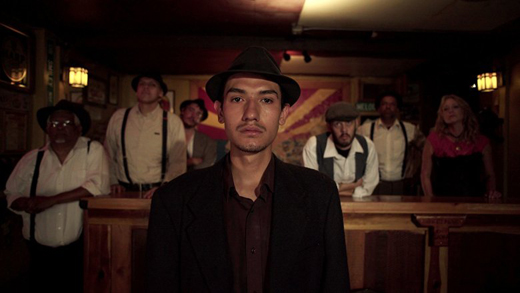
Bisbee '17 making its Canadian début at May 2018's, Vancouver-based DOXA Film Festival

Bisbee ’17. A Canadian première at next month’s 17th annual DOXA Documentary Film Festival, screening only once (so you’ll want to get your tickets now!), on Sunday, May 13th, 6pm at SFU Goldcorp Cinema, filmmaker and writer Robert Greene will be in attendance to present his latest film, and participate in a post-screening Q&A, responding to audience questions about a film that has variously been described as the “most talked-about documentary film of the year, an audacious, arresting dream-like mosaic”, Greene’s film focused on a traumatic 1917 immigrant deportation, when an Arizona sheriff —&#32backed by union-busting thugs hired by the mining companies —&#32rounded up striking workers, exiling them to the New Mexico desert … never to be heard from again. Greene’s film, while confronting an ugly truth, discovers a measure of healing and solidarity. See Bisbee ’17 next month at DOXA, or miss out on it forever.

2018 DOXA Documentary Film Festival

C’mon back next Wednesday for more DOXA Documentary Film Festival coverage, which will fit nicely into our ongoing Vancouver Votes 2018 coverage. We’ll look forward to seeing you back here next Friday for feature coverage of DOXA 2018, and an interview with the tough, the brilliant, the wonderful, our friend, Selina Crammond, who this year succeeds the near irreplaceable Dorothy Woodend, as the festival’s new Programme Director.

Black Friday Almost Over, Cyber Monday On Its Way

The Google Home Mini and the Acer Aspire i5 desktop computer

In 1957, my mother gave me a transistor radio for my 7th birthday!
We lived at 2165 East 2nd Avenue in Vancouver, just off Garden Park, on Vancouver’s eastside. I knew my neighbours, a polyglot amalgam of “displaced persons” (displaced from WWII), refugees from a Europe of destruction who had arrived in Canada to pursue a life for their families.
Although the television had been around for almost a decade in common use by the more well-to-do among the population, no one on our block had a TV — there were doctors, plumbers, nannies, seniors, construction workers, and no one thought to purchase a television, particularly given that TVs were going for around $400, or about 10% of a man’s average annual wage (the average hourly wage for women: 35¢). When times were tight, and families were large, and folks were just simply trying to find a way to scrape by, purchasing a $400 TV (with an outlay of another $50 for a rooftop aerial) was simply beyond the means of the common folks.

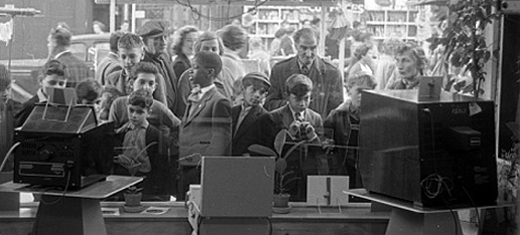
1957. Watching television through a shop window.

If we wanted to watch television, we’d head up to Commercial Drive, and watch the TV in the Magnet Hardware window.
Of course, all the kids on our block clamoured for a new TV (not that any of their friends owned one, mind you) — but, alas, that was not to be. Fortunately, the price of a black-and-white TV dropped dramatically in 1958 with the introduction of the colour TV (introduction of a new technology always results in a price cut for “older” technology), and most families, including mine, bought their first television that year, parents finally capitulating to the incessant, heart-rending pleas of their gentle children.

1957. Transistor radio and leather case.

1957. I was about to go into Grade 2 at Lord Nelson Elementary School. My birthday fell on the 223rd day of that year, on August 11th, an otherwise inauspicious Sunday, except for the fact that at midday, thanks to my mother, I found myself in the possession of a brand new $49.95 (plus tax) leather-cased transistor radio! That’s right, my mother worked more than 150 hours to get me my much-prized 7th birthday present — making me the only boy on the block with a portable transistor radio. I was thrilled!
On another day, I’ll tell you what the impact of being the first to own a new tech toy had on me, what it meant for a career that I would pursue less than a decade later, and how it came to be that over the past 40 years, I have continually found myself on the cutting edge of new technology, as an early adopter. As I say, though, I’ll leave that story for another day.

Black Friday 2017

All of which brings me to Black Friday, a day I cannot resist even if it is Buy Nothing Day. On Friday, I purchased a new Acer Aspire Intel Core i5 desktop computer (even though I can’t afford it, cuz I’m a pauper) — as a consequence of my 8-year-old, once state-of-the-art custom-built computer having been on its lasts legs for some months now. A friend assured me today that my new computer is a piece of junk. Oh goodie.

A fairly mundane picture of my new, much-needed computer may be found at the top of today’s column — alongside my brand spanking new Google Home Mini which, truth to tell, I don’t really need but it was half price at only $39.95, and I’ve been falling behind on my cutting edge tech persona. At about $40, I think I can indulge my techy side this holiday season.
As you may know, I love radio (even to this day). Just by saying, “Hey Google, play BBC Radio One“, within seconds BBC Radio One will begin playing through the Google Home Mini speaker. The same is true of hundreds of other radio stations. I’ve used my Google Home Mini to set alarms and reminders, check sports scores, stream music from Spotify, or from my iTunes library (of more than 5000 songs) employing Bluetooth.
If I purchase a Logitech Harmony Hub I could control my home theatre by voice command. Or, if I purchase the Phillips Hue Starter Kit, I could also control all of the lights in my house, and set the lights to turn on at a specific time, so when I enter my Co-op apartment, I won’t be entering into darkness. I could even set each individual light to a specific colour.

Yep — an indulgence. I won’t be purchasing the Phillips Hue system or the Harmony Hub anytime soon, but it’s nice to know that they’re available.

Arts Friday | Lori McKenna | America’s Finest Roots Songwriter

In the late 1960s and early 1970s, I was head over heels in love with the music of Joni Mitchell — so much in love, in fact, that I turned around and married a woman (Cathy) who looked just like Joni Mitchell.

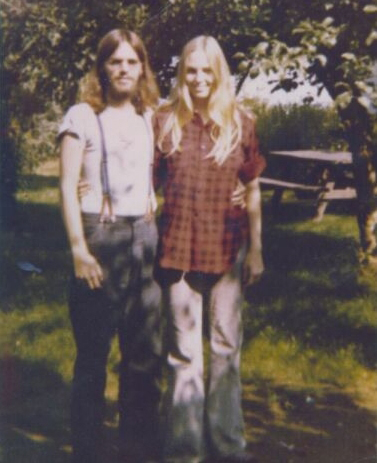
Raymond Tomlin and Cathy McLean, circa 1972

By the time the late 1970s rolled around, my woman singer-songwriter allegiance had switched definitively to Rickie Lee Jones — whose music became the soundtrack of my life through the late 1970s and 1980s, so much so, that Rickie Lee Jones also became the soundtrack of my children’s lives — that’d be Jude and Megan — as well. In the times to come, I will write about my love for Rickie Lee Jones, which has not abated to this day.
Being a callow fellow, as time rolled on my allegiance to a woman singer-songwriter of melancholy countenance switched to Iris DeMent in the early 1990s — for me, there is no better, more reflective and more melancholy album that has ever been recorded than Ms. DeMent’s 1993 release, My Life. Please find the entire album directly below. Have a listen …

As I say, though, I am a callow fellow, and by the late 1990s I had found a new love — a Boston-suburb-based housewife, mother to five children, wife of a Boston firefighter and, by far, the best roots songwriter this century. On another day, I’ll write about Lori McKenna at greater length. Today, you’ll find four of her songs at the top of the column — four of my favourite songs written by and sung by Lori McKenna … well worth a listen.
Recently, my friends and next door neighbours, Shirley Ross and Bill Tieleman celebrated their 25th wedding anniversary — I looked all over for Lori McKenna’s Stealing Kisses somewhere online, but until a couple of days ago, I couldn’t find it (and, truth to tell, I bet the video below won’t last long online — you’ll want to listen to Stealing Kisses while the opportunity is provided to you). Here is one of my favourite Lori McKenna songs.
Dedicated to Bill Tieleman and Shirley Ross, Happy 25th Anniversary