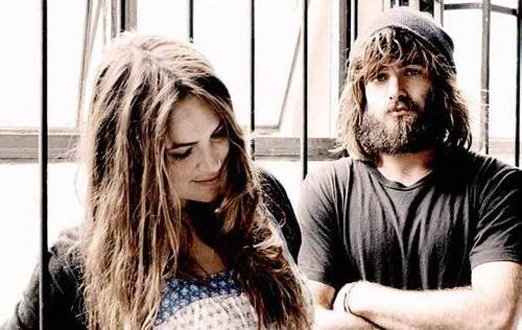
Julia Natasha Stone was born on the 13th of April 1984 in Sydney Australia.
Julia’s parents, Kim and John Stone, were both well-regarded Australian folk musicians who played locally. Two years later, on April 27th 1986, her brother Angus was born. At family gatherings, it was not uncommon to see the two siblings perform — all was well until, in 2000, their parents split.
After finishing secondary school and while on a holiday with her brother in South America, Julia was impressed by her brother’s musical talent, “Angus was writing amazing songs … he had shown me how to play guitar when we were traveling in Bolivia, and those songs had gotten me through that year (Julia had, earlier that year separated from her boyfriend, from all reports a turbulent relationship, which left Julia emotionally devastated)”.
Within a year, in 2004, Julia began writing her own songs.
By 2005, and back in Sydney, Angus and Julia began to play gigs at open mic nights, with Angus performing backing vocals for Julia, as in time Julia did for Angus, on the songs he wrote. Finally, in 2006, the two formed a duo, Angus and Julia Stone. In March of that year the pair recorded their début extended play, Chocolates and Cigarettes, a remarkably chill amalgam of songs written and recorded live at home.
The EP, released in August, went on to win the ARIA (Australian Recording Industry Association) 2006 Best Album award, with Angus and Julia also taking home the Best New Group prize. The rest, as they say, is history.
Chocolates & Cigarettes directed by Angus and Julia Stone — from their 2006 début EP.
Angus and Julia Stone’s second album, Down the Way (March 2010), débuted at number one on the ARIA Albums Chart and was certified 3x platinum in 2011, It was the highest-selling album by an Australian artist for 2010. At the 2010 ARIA Music Awards the duo won ARIA Album of the Year for Down the Way and ARIA Single of the Year for Big Jet Plane, attaining the number-one position in the Triple J Hottest 100 in 2011, as voted on by radio station listeners across Australia.
Angus and Julia Stone last played in Vancouver on November 28th 2017, to a sold-out audience of 1280 fans at The Vogue.
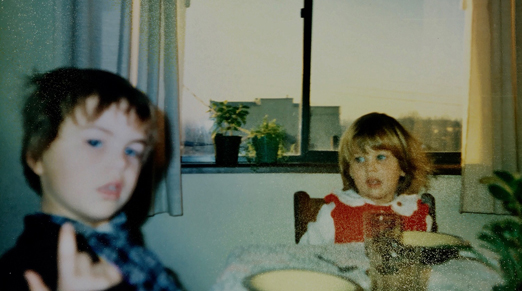
1978. Jude, at age 3½, and Megan at 2 years of age. At the kitchen table for breakfast.
A couple of weeks ago, when I was extolling the virtues of my Instant Pot to a friend, in a lull in the conversation, she turned to me and said, “You like to cook, don’t you?”
The short answer: I derive pleasure from both cooking and baking.
Here’s the story behind my love for the culinary powers of the kitchen.
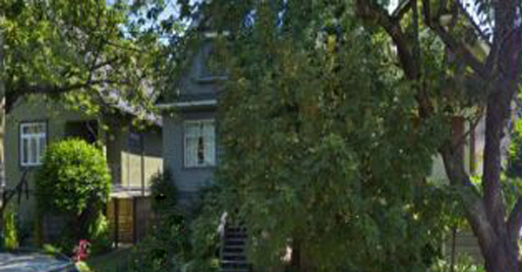
1616 Semlin Drive, at E. 1st Ave. in Vancouver. One of the homes I lived in growing up.
From my earliest days, I fended for myself. My mother worked three jobs, and my father worked the afternoon shift at the Post Office. When I arrived home, although my father often left a stew bubbling away in the slow cooker, from age seven on, for the most part if I wanted to eat, I’d have to make breakfast, lunch and dinner for myself and for my sister.
So, being somewhat industrious, I learned to cook — well, make sandwiches and, for dessert, Jello, at least for the first few years. I loved turkey growing up (all that triptiphan), so with the help of my mother, I learned to make her delicious turkey, stuffing, gravy, mashed potatoes and vegetables. For the most part, though, my cooking skills were rudimentary — but I didn’t starve, and more often than not there was food in my belly.
When in 1970 Cathy and I moved in together, marrying soon after, I was responsible for most of the cooking. Cathy’s mom sent her out $1000 a month (she didn’t know we were living together), visiting every three months, taking us to the local Woodward’s grocery floor, where she dropped in excess of $300 at each visit. With Cathy’s mother money, we ate a fairly staple diet of generously thick T-bone steaks and baked potatoes.
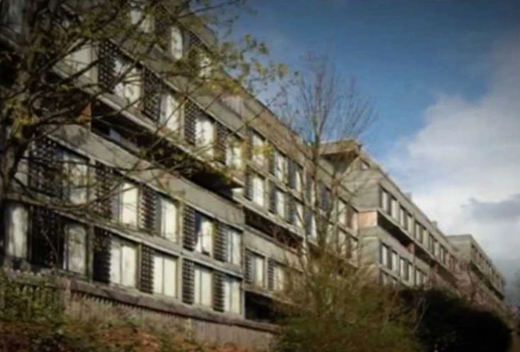
Simon Fraser University’s Louis Riel House, student family 1 + 2 bedroom residence.
Soon after moving into the Louis Riel Student Residence at Simon Fraser University in 1971, Cathy joined a women’s group, who met every Wednesday evening. Among the decisions that were taken by the women’s group was this: men shall participate in all household chores, and share in all food preparation. As we often ate together with other of the students in the residence, my specialty became salads — all different kinds of healthy, nutritious salads, chock full of vegetables, nuts, sunflower seeds, and more.
At this point, Cathy still hated to cook — there was immense pressure placed on Cathy by her peers to develop culinary skills, but she refused. All that changed in the summer of 1973, which is a story for another day.
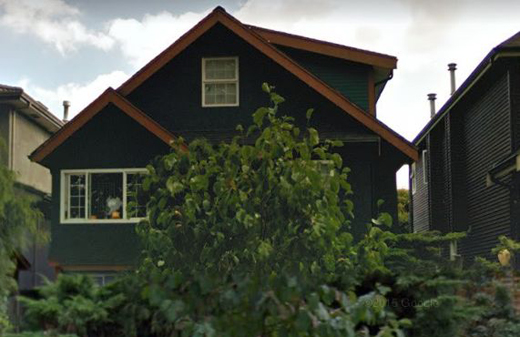
2182 East 2nd Avenue, in the Grandview Woodland neighbourhood of Vancouver.
When Cathy and I separated in 1978 — Jude and I lived in the home above, before Jude, Megan and I moved to Simon Fraser University and Louis Riel House, when I began work on my Masters degree — the thought occurred to me one morning when making breakfast that I was now the lone parent, and the sole person responsible for ensuring the children ate nutritious foods at each meal in order that they might grow up into healthy adults. I took on the task of learning the art of cooking (and baking), in earnest.
There was, however, a quid pro quo involved.
After returning from a day of larnin’ and T.A.’ing at SFU, after picking up the children at daycare at 4:30pm, and walking the relatively short distance to our two-bedroom apartment at Louis Riel House, while the children played with their friends on the lawn in front of our apartment, I prepared dinner, calling them in about 45 minutes after dinner preparation had begun. The kids were famished, and so was I.
Here’s where the quid pro quo came in: at the end of each meal, each of the children had to turn and say to me some version of, “Daddy that was a good dinner. It was mmmm, delicious. Thank you for making dinner for all of us, and all the work you put in to feeding us healthy and nutritious breakfasts, lunches and dinners, and all those wonderful desserts we love!”
I needed the incentive provided to me by both children, so their gratitude — which, in time, they came to acknowledge as their own — and the kids felt good about encouraging me, as I encouraged them in all of their endeavours. We were a happy family & all was well with the world for us.
Now, I was an adventuresome cook, and not everything I made turned out to the liking of each one of us.
Being a dedicated democrat, Jude, Megan and I made a deal with one another in respect of dinner. Both children had to eat at least two bites of each food item I prepared: after all the work I put into preparing a dish, the least they could do was try out the dish to see whether they might like it. Most of the time they did, but sometimes not.
One night, I made cream of escargot soup. Honestly, it wasn’t bad. But at the end of the soup entrée, I turned to the children and asked them what they thought, to which they replied almost in unison, “It was all right, tasty enough I suppose, but I’m not sure if I’d ever want to have it again.” I agreed with them. We never ate cream of escargot soup ever again.
Each of us were allowed to have three foods on a list of our creation, foods we did not have to eat, no matter what. Megan had three foods, Jude had three foods, and I had three foods — those foods changed over a period of time. In order to add a food to our individual “nah, I don’t want to eat that food” list, some food on each of our lists had to come off. Took some thought on the part of the children as to whether they wanted to remove a food. Megan, for a great long while didn’t like avocados — but one day, while placing a new food she didn’t like onto her “don’t eat” list, she took out avocados, eventually coming to love avocados, as she does to this day.
Watching me prepare meals all the time he was growing up caused Jude to want to become a chef — he worked in the food industry throughout his late teens and twenties, before getting into teaching, which paid better, and was overall less stressful, with “more honourable people”, he’d say to me.
In her teens, Megan became a vegan — there’s a story there, too, which I’ll leave for another day — and, for the most part, took on the preparation of her own meals, as did Jude over a period of time. After the summer of 1973, Cathy became a great cook — there’s not much I miss about that tumultuous marriage, but I sure miss Cathy’s avant-garde cooking, her culinary craftsmanship, spicing & phenomenally delicious cooking. Ah well.
In the early 1970s, I attended Simon Fraser University. Early on in my student career, I met the head of Medical Services at SFU, Dr. Ed Lipinski, one of the most impressive men I’ve ever met. He asked if we might meet from time to time, that given my various political involvements of the day, he said he found me “fascinating”, and would like to get to know me better.
Now, as it happens, Dr. Lipinski was a psychiatrist, a dedicated and gifted therapist, for a long period of time the head of the World Psychiatric Association, and someone that every person of influence, in administration and among the student body at SFU, saw on a regular basis. Ed made things happen.
For me, that meant bursaries and scholarships, and paving the way for whatever I needed. In addition, as a journalist / editor at the student newspaper, The Peak, Ed Lipinski ensured that I had access to senior administration officials, who almost inevitably became “unnamed sources” for a series of provocative articles I wrote over the years.
Had Ed not died in a car accident along the Algarve in Portugal in 1981, my life would have been much different. Ed was 100% on my side, he had influence with the Courts, and in the political, banking, and corporate worlds — apart from being a first-rate psychiatrist, Dr. Ed Lipinski, British Columbia’s first forensic psychiatrist knew how to connect influential people to get things done. Dr. Lipinski was, then, our province’s trusted figure.
In 1972, as was occurring more frequently, Cathy and I were experiencing one of several episodes of turbulence in our marriage — I was giving serious thought to leaving her, calling it quits. Here’s what Ed said to me …
“Raymond, imagine that you’re 63 years of age, it’s 3 a.m. on a chilly winter’s morning, and you’re lying in bed all on your own. You’ve been on your own for awhile now. No marriage. No relationships with women who you love. No one to share your life with, just you taking responsibility for yourself. Ask yourself, ‘Do I want to be alone as I approach the latter third of my life, or do I want to share my life with a woman I love?’ Raymond, should you leave Cathy, is that a decision that you will regret? Do you honestly want to face the prospect of lying their at 3 a.m. alone, with no one to turn to, and no one with whom you can share your life?”
The impact at the time of Ed asking me those questions was to return home to Cathy, and make a renewed effort to preserve our marriage.
Now, of course, I am just shy of 69 years of age, and alone. But not lonely.
Would I prefer to be in a relationship with a woman I love? Yes, I would — and you only have to know me to know that for me, hope reigns eternal. I am an optimist about love, as I am about my political involvement, and almost every aspect of my life. When I reflect on my life now, I believe I am, overall, satisfied with my life.
Still & all, when I’m lying in bed at 3 a.m., I think back to that conversation with Ed Lipinski in 1972, and reflect on the fact that I am alone.
In respect of the matter of regret, up until 1997 I was, every moment of the day, as I had been for years, filled with regret and, as it happens, self-loathing. There was so much that I regretted about my life, things I wished I had done differently. Fortunately, I had another gifted therapist, Max, in my life who was able to present to me a logically consistent argument as to why I should look forward and not back, that the decisions I had taken in the past that I had come to regret were things I could do nothing about.
What I could do was each and every day work towards becoming a better, more sensitive and thoughtful, more whole and more generous person.
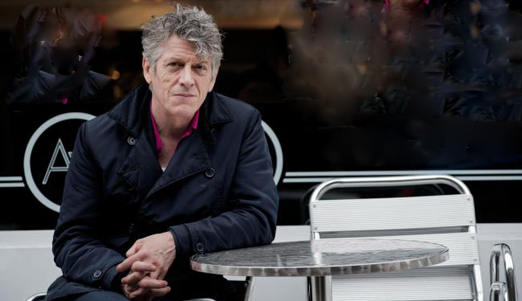
Glaswegian Paul Buchanan, lead singer and founder of the Scottish trio, Blue Nile.
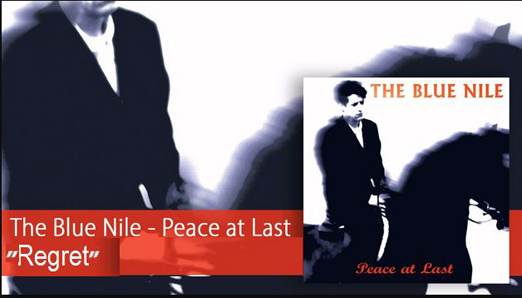
Still and all, I do reflect from time to time on the regrets of my life, and the better decisions I might have made. As such, the music of Glaswegian Paul Buchanan and his two band mates in the 90s Scottish trio, The Blue Nile, speaks to me in the early hours of the morning, and when I am feeling in a melancholic mood, the song Regret speaks to the deepest part of my soul.
In the spring of 1974, Cathy and I traveled to Europe for a three-month vacation across the vast expanse of the European continent, something Cathy had insisted on — and when Cathy wanted something, she got it.
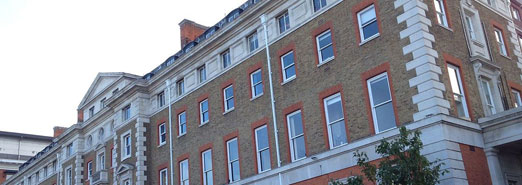
Within 48 hours of our arrival at Heathrow Airport, and after snuggling down in a small hotel, Cathy — who was two months pregnant at the time, her pregnancy not in any way proving a deterrent to her desire for a summer European sojourn — fell “ill”. Cathy and I took a taxi to the hospital, where she ended up staying a week, miscarrying our child.
In the two months prior to our departure, Cathy and I had talked about whether we should follow through on our summer plans, given that when we had traveled to San Francisco to visit her mother’s cousins, she had miscarried. But Cathy’s mind was set, and the doctor signed off, so …
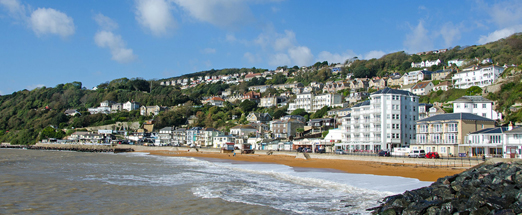
After leaving the hospital, Cathy needed rest, so we traveled down to and vacationed on the Isle of Wight for a week, before continuing our vacation on the continent, taking a luxury cruise ship from Southampton to Lisbon.
The vacation was everything and more that we both thought it might be, and by the end of our vacation in the latter part of August, upon returning home (landing in Edmonton, where her mother and sister lived), we were both thrilled to discover that Cathy was pregnant once again!
Over the course of the nine months Cathy was pregnant this time, Cathy took every precaution to preserve her pregnancy: changing her diet to organic foods, plant-based proteins, and upon the advice of the doulas who worked with us during the pregnancy, a great many foods with Vitamin E, including almonds, sunflower seeds, spinach and broccoli, wheat germ and safflower oil, in order that Cathy’s uterus might become more supple.
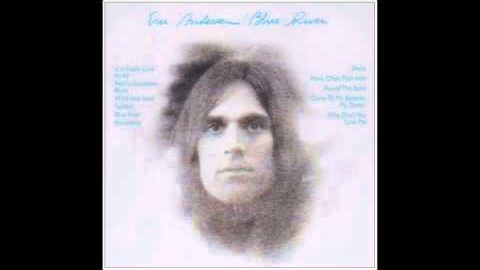
On Friday, May 16th, 1975, just two days before Jude’s date of birth, Cathy and I took in a concert at the Queen Elizabeth Theatre, with Eric Andersen opening, and Phoebe Snow as the headliner. As it happened, our doctors — Roy, our primary physician, and his wife Dr. Patricia Blackshaw, who also saw Cathy during her pregnancy — were sitting in the row right behind us.
When Eric Andersen took the stage, Cathy went into labour, no Braxton Hicks contractions this time. We spoke with Roy and Patricia during the intermission — Patricia examining Cathy in a private room — with both advising us that it would be fine for the two of us to remain at the concert.
We called our doulas to inform them that Cathy was in labour, and that we’d be home around 11:30pm. Our son to be was on his way, and about to announce himself to the world!
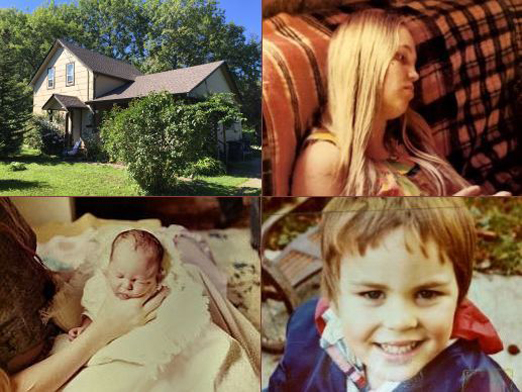
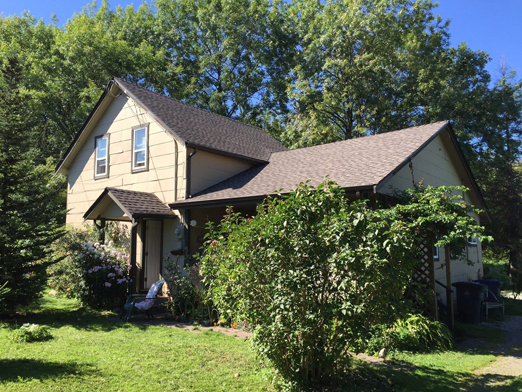
16343 96th Avenue, in the Tynehead area of Surrey. In the early 1970s, a decision had been taken by the GVRD to acquire all the land from 160th to 176th streets, and from 96th Avenue to Highway #1, in order that the regional district might create a large regional zoo. While discussions were ongoing, the GVRD acquired all of the land, renting it out to any who applied — which Cathy and I did early in 1973, living on the farm until August 1975, after which we traveled into the Interior for me to begin a teaching job.
At the time Cathy and I were living on a five-acre farm in the Tynehead area of Surrey, renting our farm home (pictured above) from the Greater Vancouver Regional District, for $125 a month. Between boarding horses and selling hay (and the eggs from our chickens out back), we ended up living rent free on the property for more than two years.
Upon arriving home, our doulas were waiting for us, taking Cathy up to our bedroom to examine her. Cathy was only 1cm dilated, and birth didn’t seem imminent. We had prepared for a home birth and kept up our communication with Dr. Roy Blackshaw (who visited the next day), as Cathy’s labour continued throughout the Saturday, and into the evening.
Cathy’s mother called on Saturday morning, the phone answered by a friend of ours (who we had instructed not to tell her of the pending birth — Myrtle was opposed to the home birth, despite our precautions, and we felt sure that were she present, she’d harass us into going to the hospital).
Myrtle knew that something was afoot. When she hung the phone up at 10am, she almost immediately had friends take her to the Edmonton airport. By 2pm, she was bursting through the front door of our house, all but screaming, “Where’s my daughter? Where’s Cathy? I want to see her now,” yelling this in a packed front room of 20 of our closest friends.
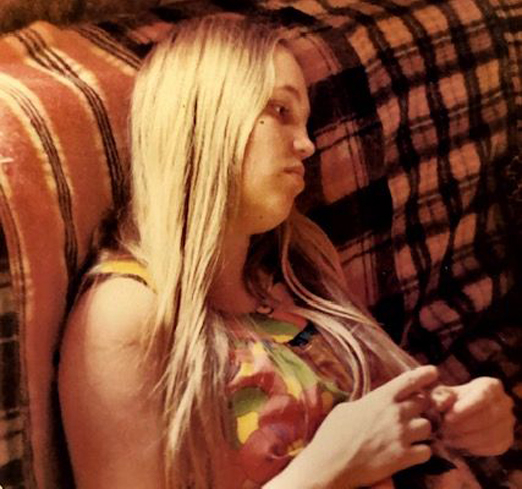
Now, you can see a picture of Cathy above in the week before Jude’s birth — Cathy gained massive weight, going from 110 pounds to 185 pounds. By the time her labour pains started, she was more than ready to give birth — but truth be told, both a little uncertain and a little scared at the prospect.
We had made the decision for a home birth in large measure because: Cathy wanted me present and in the room for the birth, which at the time no hospital would allow, and because we didn’t want drops placed into our child’s eyes, and his care taking place in an antiseptic hospital setting.
From the time Myrtle arrived on Saturday til noon on Sunday, she was like a broken record: “Get Cathy to the hospital now. What are you trying to do, kill my daughter?” Myrtle threatened to sue the doulas, and have me charged if any harm came to her daughter. To be fair, had I the opportunity to do it all over again, I would opt for a hospital birth, despite the attendant “problems” that a hospital birth would have conferred on us, and our baby.
Finally, at noon on Sunday, after speaking with the doulas and on the advice of Roy Blackshaw, we made the decision to have the birth at Surrey Memorial Hospital, who were ready for us upon our arrival, placing Cathy in a wheelchair and whisking her to the maternity ward, and into a surgical room where Roy and three nurses were waiting for us.
The room was brightly lit (not what we wanted), the nurses overly officious and insisting that everything be “done by the book”, ordering me out surgical room with Cathy screaming, “No, no, no! He stays!”
Roy took charge, and ordered the nurses out of the delivery room, telling me to stay, and asking that I dim the lights. By 1pm, Jude was ready to announce himself to the world, with Cathy’s screams of pain piercing the room, with me not knowing what the heck was going on, and Roy keeping the both of us calm, and focused.
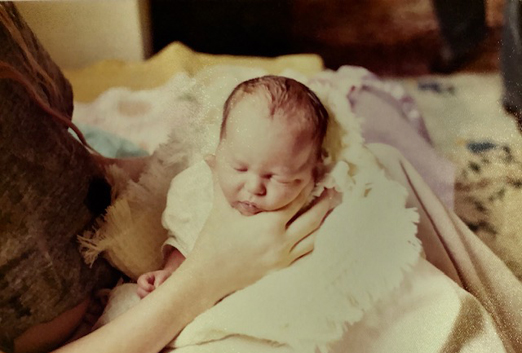
At 1:42pm, on a warm, sunny and wondrous Sunday, May 18, 1975 afternoon, Jude Nathan Tomlin was born — the single most transformative and most joyous moment of my life (and Cathy’s, too, as within seconds of Jude’s birth, Cathy looked at me to say, “I want another baby right away!”).
Roy recommended keeping Cathy in the hospital overnight, with Cathy and I discussing a middle name for our new baby boy. Earlier, we had decided on the name Jude — one sunny afternoon while visiting friends a couple of months prior to our son’s birth, as we were conversing around the dinner table about what we would name our child, something miraculous occurred: at the very same moment, the song Hey Jude came on the radio, the recently drafted Montréal Canadiens centre Jude Drouin, scored a goal (the hockey game was playing on the TV, which could just be heard in the background), and at the very same moment, Cathy and I simultaneously spotted a copy of Thomas Hardy’s Jude the Obscure on a side table. Almost in unison, Cathy and I screamed out, “Jude, we’ll name our child Jude!”
And so we did.
In her hospital room early on Monday, with me by her side, Cathy and I discussed what name we would choose for Jude’s middle name. At the time, Cathy was reading Nathaniel West’s Miss Lonelyhearts, West’s widely regarded masterpiece, the book on the table by her bed (Cathy had asked me to bring the paperback to the hospital later on the Sunday afternoon of Jude’s birth). I suggested to Cathy, “How about Nathaniel as the middle name?” Cathy considered my suggestion for a moment before saying, “Nathan, let’s choose Nathan, instead, for his middle name.” And so we did.
By 2pm on Monday afternoon, just 24 hours after Jude’s birth, Cathy and I left the hospital to return to our home (Myrtle traveling in a taxi, right behind our car). Once home, Cathy rested, and I assumed Jude’s care, along with his maternal grandmother, who was now calmer, and … elated!
Cathy’s mom stayed only through Tuesday afternoon (Cathy insisted she leave — Cathy wanted the experience to be ours, sans her mother). On Wednesday, we left our farm house to go shopping at the Woodward’s food floor at the nearby Guildford Shopping Centre, Jude’s first foray into his bright new world — from the time we got out of the car, until we reached the entrance to the food floor, at least a dozen people stopped us to look at our newborn son, with Cathy & I beaming like the proud parents we were!
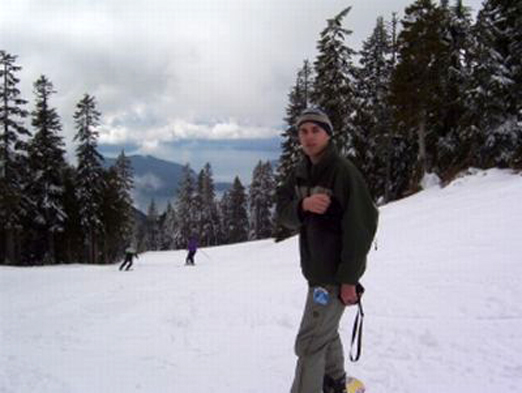
Jude Nathan Tomlin, the boy now man, in the winter of 2017, snow boarding up on Grouse Mountain. Happy 44th birthday, my most beloved, precious and much-loved son.