Category Archives: Cinema

VIFF2012: With Our Film Fest Shuttered, The Oscar Season Begins

Oscar season 2012 begins

With Vancouver’s International Film Festival fading into memory, what do cinephiles have to look forward to when it comes to cinema?
Fortunate for us, the end of VIFF harkens the beginning of Hollywood’s serious season, that time of year when Paramount, Universal, Disney, Sony and the Weinstein Company release their catalogue of Oscar-contending great cinema into the darkened theatres located in neighbourhoods near to us. Yes, it is true that attending movies at our local multiplex can be a dear financial experience, and yes it is also true that theatre attendance, and movie box office, are down, way down from years past — fewer than half as many people go to movies today as was the case in the 1930s, and our population is two and a half times what it was then — but for lovers of cinema, the communal experience of seeing and feeling great movies while surrounded by our neighbours and friends and family emerges for us as an experience that is so deeply woven into the fabric of our lives that we would no sooner forego the experience than forego the act of breathing.
Today, we will begin a review of the 20, or so, fine films that are either currently resident at a local multiplex near you, or are due to arrive to much fanfare in our humble little village by the sea over the coming 2½ months, as we point you in the direction of films that’ll contend for Oscar, worthy of your most precious resource: your time and money and attention.
First up today, those well-reviewed, well-conceived Hollywood-funded artistic endeavours that have already found their way into our local multiplexes (Hollywood-funded art, almost a contradiction in terms, huh? … but Hollywood does produce a few cinephile-friendly films each year, despite the mind-numbing corporate nullities they release through much of the rest of the year). The most-talked about artistic film endeavour of 2012 is …

Both the most controverial and the most celebrated film of the year, Paul Thomas Anderson’s The Master has been referred to reverentially as a cinematic masterpiece, “mesmerizing in word and deed” (Kenneth Turan, LA Times), and “one of the great movies of the year — an ambitious, challenging, and creatively hot-blooded but cool toned project that picks seriously at knotty ideas about American personality, success, rootlessness, master-disciple dynamics, and father-son mutually assured destruction.” (Lisa Schwarzbaum, Entertainment Weekly). A certain Oscar contender, with Best Actor Oscar nods for Joachim Phoenix and Philip Seymour Hoffman (who may drop down to Best Supporting Actor) a certainty, and a likely Best Supporting Actress nod for the wonderful Amy Adams a strong probability, this “brilliant, exasperating, challenging and unmissable” film (Michael Phillips, Chicago Tribune) demands the attention of any serious cinephile. Currently booked into Leonard Schein’s Fifth Avenue Cinemas, as well as Cineplex-Odeon’s Scotiabank downtown.

Argo. “A superbly crafted and darkly funny real-life political thriller, with pitch-perfect performances (Claudia Puig, USA Today), “a skilfully made grownup entertainment, combining an incredible true story with crafty thriller conventions (Tim Grierson, Screen Daily), who also writes …

Based on the 1979 takeover of the US embassy in Iran by militants, which forced six staff members to seek refuge in the Canadian embassy. With the Iranian Revolution raging and the American staffers in danger, CIA operative Tony Mendez (Ben Affleck) hatched a desperate plan: Work with a Hollywood producer (Alan Arkin) and Oscar-winning makeup artist (John Goodman) to concoct a fake sci-fi movie and convince the Iranian authorities that the Americans are actually part of a Canadian film crew in Iran to scout locations. As preposterous as that plan sounds, Argo documents real events.

Runner-up for the Audience Award at this year’s Toronto International Film Festival, with a Canadian-based, previously unknown to much of the world, story, superbly acted, well-conceived, placing Affleck in the first rank of American directors (he’s been called “the new Clint Eastwood”), apart from all the Oscar foofaraw surrounding the film, Argo is a damn good entertainment. Screening at Scotiabank Theatre downtown, and at cinemas across Metro Vancouver. Clearly, Argo is very much a must-see film.

star.jpg star.jpg star.jpg

While we’re on the subject of must-see films, there are two more cinematic works of art that are playing in Vancouver that are likely to garner Oscar recognition, and given the reviews and the reception for the films must be considered films worthy of your time, both superbly constructed films screening at Cineplex Odeon’s International Village Cinemas, in Yaletown.

A smash-hit at Sundance when it débuted in Park City, Utah earlier in the year, critics are of one mind about Arbitrage, whether it be Roger Ebert

Arbitrage represents a radical revision of traditional values. It is an attack on a new American mentality that values wealth above morality. Many of us may regard Robert Miller (Richard Gere) as an example of financial executives who knowingly sell worthless investments to people who trust them and then bet against them themselves. This was one of the Wall Street crimes that brought about the 2008 collapse. Charges were never filed against those thieves. They’re still at work. Arbitrage is not only a great thriller, but a convincing demonstration about how the very rich can, quite literally, get away with murder.

Or any one of a dozen other reputable critics, all of whom agree that Arbitrage gives the audience a vital emotional workout (Owen Gleiberman, EW), offers an insanely gripping tale of high finance and low ethics (Bilge Ebiri, Vulture), and that début feature writer/director Nicholas Jarecki has created a refreshingly candid film, a combination of intelligent, grown-up writing, and an entertaining, audience-pleasing film of the first order.

One of the best-reviewed, most critically-acclaimed films of the year, with breakout performances from Logan Lerman, Emma Watson and Ezra Miller — all of whom you’ll being hearing about and watching on screen for years to come — you should take in a screening of Stephen Chbosky’s self-
adapted (from his 1999 best-selling novel) début feature, The Perks of Being a Wallflower, a film celebrated as “honest and unsentimental, with a revelatory finale (Steve Persall, Tampa Bay Times), and “tough-minded, an ecstatic expression of the beautiful solidarity of youth.” (Owen Gleiberman, EW, who gives the film a full, and extremely rare rating for EW, Grade: A).
VIFF2012: What To Do Now That the Film Festival is Over

Mubi, your online cinema, anytime, anywhere

The most frequent despairing question patrons attending the 31st annual Vancouver International Film Festival queried VanRamblings about over the 16 day course of the Festival was this: once the Festival is over, where do we find the kinds of films we are gifted with seeing during our beloved VIFF?
The answer to that question is multifaceted.
Mubi: Co-founded by Ebert Presents at the Movies, and Mubi, film critic and essayist, the impossibly young, Russian-born Ignatiy Vishnevetsky, who also founded Chicago’s online guide to independent and underground cinema, Cine-File.info, Mubi bills itself as “your online cinema, anytime, anywhere,” while suggesting at the same time that it is the première online cinema website, and community, for people who love film. Intrigued?
For only 99&cent to $2.99 per film, or $6.99 for a monthly subscription which allows unlimited film viewing, subscribers may gain access to award winning festival gems, classics and cinephile favourites. What’s on tap at Mubi? Surf here and scroll down to see some of the hundreds of titles that you may stream onto your computer (and then to your big screen HDTV), films like Luis Buñuel’s 1929 classic, Un chien andalou, 2010 festival award-winner, Apichatpong Weerasethakul’s altogether wonderful, Uncle Boonmee Who Can Recall His Past Lives, or Caroline Link’s Nowhere in Africa, which is VanRamblings favourite film of the first decade of the new millennium. All for free, or 99&cent or $2.99, or as we say above, $6.99 for a full month of viewing unlimited movie classics, foreign films, and festival award winners.
You didn’t know about Mubi? Now you do. Your welcome.

star.jpg star.jpg star.jpg

Videomatica: Locally, of course, there’s Graham Peat’s foreign film and classic film emporium which, although rentals are no longer available, does a bang up online sales business, as well as great in-store video sales at their new location — at the back of Zulu Records, 1972 West 4th Avenue, in Vancouver. Surprisingly, many of the films that can be purchased may be had for as little as $15. You’ll find a nifty “previously viewed” section in the store, as well, where videos may be purchased very much on the cheap. Correction: In an e-mail from Videomatica proprieter Graham Peat, the estimable Mr. Peat corrects that Videomatica is a “bricks and mortar” store only, that online sales are not available. Our apologies for the mistake.

Pacific Cinémathèque, in Vancouver

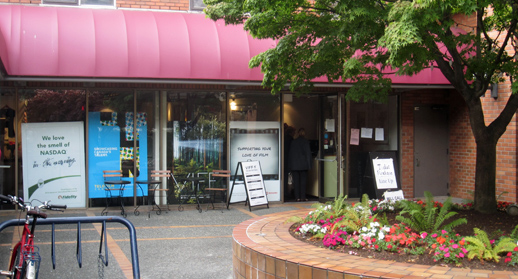
Cinémathèque: Chances are that you took in a VIFF screening, or three, at Vancouver’s beloved film lovers art house cinema, Pacific Cinémathèque, which throughout the year screens classics, the best of the best in foreign cinema, retrospectives of the work of cinema’s most celebrated auteurs, in house theme-based film festivals, student films, country-based film retrospectives, and so so much more. Here’s this month’s PC calendar.
Annual film festivals, other than VIFF: Where do we start? There’s the august DOXA Documentary Film Festival that takes place each spring, set in 2013 to run from May 3rd to 12th; DOXA screens films throughout the year, as well. There’s also Vancouver’s Latin American Film Festival that takes place approximately a month before VIFF begins, each year.
This past week, The Straight’s Craig Takeuchi wrote an online piece on the autumn film festivals, ranging from the 17th annual Amnesty International Film Festival (November 2 to 4) to the Jewish Film Festival (November 7 to 15), as well as five other ‘local’ film festivals. And that’s just this autumn. Cinephiles don’t have to go long between Vancouver’s many film festivals.

Vancity Theatre, Vancouver

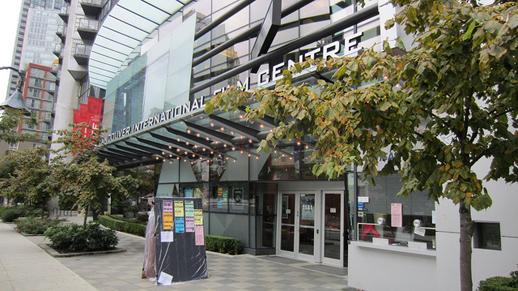
The Vancity Theatre: Tom Charity is the programmer for VIFF’s Vancity Theatre, ensuring that diehard local cinephiles never have to wait too long between screenings of great films at the super comfy film centre screening room. Once the VIFF Repeats have completed their run this Thursday, you can look forward to screening such films as the absolutely tremendous and moving Rebelle (War Witch), Canada’s Best Foreign Language Oscar nominee, and Tabu, both of which begin a one week run this Friday, October 19th. If you didn’t catch Rebelle, or the equally tremendous Tabu, during their brief VIFF run, here’s your opportunity to catch two of the year’s very best films. If you’re not on Vancity Theatre’s mailing list, make sure to add your name to the list the next time you visit the theatre.
Festival Cinemas / Cineplex Odeon International Village Cinemas: Leonard Schein’s Festival Cinemas has long been recognized as Vancouver’s première art house (we’re not sure that Leonard would like that construction of his cinema, and would probably wish that we would say fine cinema — and, let’s face it, he does book some very fine cinema). In recent years, Cineplex Odeon’s International Village Cinemas have given Leonard a run for his money. Between the two cinema complexes, most weeks a cinephile’s appetite for great film can be more than sated. Just take a look at the current lineup at the two cinemas: at The Village, Brandon Cronenberg’s Antiviral; one of the best reviewed films of the year, Arbitrage; End of Watch; and the film critics are going ga-ga over, Stephen Chbosky’s The Perks of Being a Wallflower. Over at Festival Cinemas’ Fifth Avenue Cinemas location, Leonard’s also booked The Perks of Being a Wallflower and Arbitrage, and adds Rian’s Johnson incredibly well-reviewed new film Looper, and Paul Thomas Anderson’s equally well-reviewed lock for Best Picture, Best Actor and Best Director Oscar nods, The Master.

star.jpg star.jpg star.jpg

In tomorrow’s VanRamblings’ post we’ll take a look at a few of the Oscar contenders currently playing around town — tremendous films all — and follow up that post, over the next couple or three days, with trailers for, and some insight into, the Oscar contender / film cinema that will open sometime before year’s end, or early in the new year, worthy of your time.
The bottom line: We live in a film lovers paradise in Vancouver. Although we miss 200 great films, each year, which fail to arrive on our shores (cuz they don’t have a Canadian distributor in place, so unless you’re willing to travel to Seattle, you’re out of luck), thanks to Tom Charity at The Vancity Theatre, Leonard Schein over at Festival Cinemas, Artistic Director Jim Sinclair at Cinémathèque, and all the fine folks who bring us tremendous cinema through the many focused Vancouver film festivals that dot our artistic cinema calendar throughout the year, those of us who live in La-La land will never want for great cinema (youse just gots to have the money).

VIFF2012: Revolutionary Docs That Moved and Transformed Us

Top Documentary Feature Films at the 2012 Vancouver International Film Festival

Yesterday, we published a list of our Top 10 favourite narrative features at VIFF 2012, all of the films we wrote about, revelatory, poignant, humane and human scale, films that moved us beyond words which might find expression to portray such, cinema which helped to provide us with a new and transformative direction forward in our lives, the path not only towards light and enlightenment, but a re-prioritization of our life’s goals and a focus on that which is most important — connection, fidelity, family, community activism, and the struggle in which we all must engage to bring about a better, fairer, more just and humane world for ourselves, our family, our neighbours, and all of us living in and across every far flung community — in every country of the world — across our globe.
Today, then, the 10 documentary feature films that screened at VIFF2012 that most moved and enlightened us, and most contributed to a rekindled appreciation of what is necessary to transform our world — not as naïve, unthinking projection, but real world, working with others, change. For only working together, we will find ourselves able to begin the long, hard journey towards a world that values us, our families, our neighbours, and every citizen, in every country, across our vast, complex planet.

star.jpg star.jpg star.jpg

1. Bay of All Saints: Far and away, our favourite doc at VIFF 2012, as is the case with the Top 5 documentary films on our list, Bay of All Saints pulled us in, gripped us like mad with phenomenally strong rooting interests, the film at all times one of the most poignant, revelatory and humane documentary films we screened this year. Filmed by Annie Eastman, Diane Markrow and Davis Coombe over a six-year period, from 2005 til 2011, at the three-quarter point in the film, when 9-year-old Rebeca goes missing, you are crushed, devastated, you almost can’t breathe, and you are angry, angry, angry with the filmmakers for creating such an indelible rooting interest in Rebeca, and then have her volatilizarse into … what? harm’s way? Unforgivable … until, until … Set amidst the waterfront palafita slums of Salvador, Brazil, this winner of SXSW’s Audience Award for best documentary, Annie Eastman’s potent non-fiction film paints an often tragic picture of life in the impoverished shantytown, yet manages somehow to offer a profound and moving expression of hope, through the fighting spirit and struggle of the film’s principles. Outstanding. Humane. Heartrending.
2. Stories We Tell: Groundbreaking, reverential truth-telling of the first order, a story of a life unraveled and somehow pulled back into coherence, where tough, tough questions are confronted and answered, Sarah Polley’s devastating documentary feature is nothing less than a cinematic work of art, a film that in exploring the dynamics of family, memory and truth, limns the ragged poetry of life. Shocking, melancholy, and lovely beyond words.

No Job For a Woman - The Women Who Fought To Report WWII

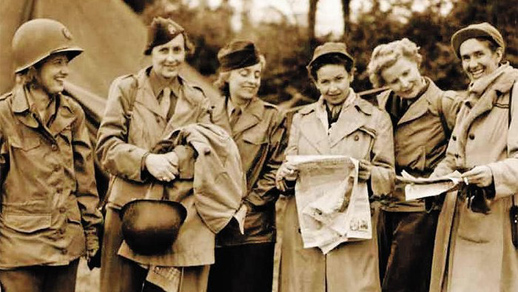
3. No Job for a Woman: The Women Who Fought to Report WWII: Offering a powerful indictment of the discrimination to which women reporters were subjected in reportial coverage of WWII, and a moving testament to the will, character and strength of purpose of groundbreaking reporters Ruth Cowan, Martha Gelhorn and photographer Dickey Chapelle. From sneaking aboard a hospital ship to be able to cover D-Day, as in the case of Gelhorn, or defying orders to capture photographs of wounded Marines from Iwo Jima — photos so powerful that Life magazine refused to run them — the legacy of these pioneers, who changed not only the role of women in journalism, but also how war was reported — by portraying its collateral damage on civilian populations rather than just tactics and battles — continues to this day to inform mainstream media news coverage of tragic circumstance and war, and news reporting on the human condition.
4. The World Before Her: One of the most involving, engaging and transformative documentaries screened at VIFF2012, the film presents the 20 finalists in the Miss India contest as informed, educated, feminist, near-revolutionaries working to overturn conventional norms and the social order vis-à-vis women’s roles in the society. Juxtaposing the stories of these women with that of a young fundamentalist Hindu Nation woman, Prachi, who has dedicated her life to preserving (even if by violent means) a social order that diminishes the humanity of women … well, this is powerful documentary filmmaking of the first order, a film that has it all — a powerful and involving story, ‘characters’ on screen who could not be more sympathetic, and in being such present wildly engaging rooting interests. A fully realized vision from the film’s director, Nisha Pahuja. A great doc!
5. Revolution: A recently released United Nations report states that should world powers fail to address the issue of the acidification of our oceans, seas, lakes and other water bodies, by the year 2048, the lack of government action on the matter will result in the extinction of all sea life, vanishing from the earth forever. Employing the most moving, non-didactic, wildly entertaining and humane means possible, filmmaker Rob Stewart has turned in a mighty doc, one that should be seen by everyone. Quite simply, Stewart’s entirely revelatory doc emerged as one of the most engaging and informative and heartfelt documentaries we screened at VIFF2012 (we were in tears at moments throughout the film). We went into the screening doubting that the film would be anything more than a rehashed diatribe, and came out believing that Revolution should be mandatory viewing for every student, in every school across the globe (for adults, as well). We even tweeted Vancouver Board of Education Chair, Patti Bacchus, with such suggestion. Hopefully Patti — and everyone who’s reading this — will take in this Thursday’s, 7pm screening at the Vancity Theatre, on Seymour.

Nuala, a documentary on the life of celebrated Irish novelist, Nuala O'Faolain. Winner, Best Int;d Doc, VIFF 2012

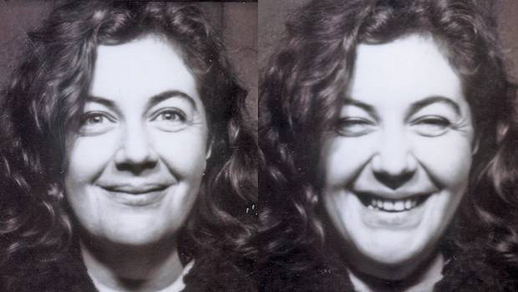
6. Nuala: Renowned Irish journalist, feminist TV producer and host, book reviewer, teacher and New York Times best-selling author Nuala O’Faolain, who passed on May 9, 2008, was the second eldest of nine children, the daughter of neglectful parents — a raffish social affairs columnist father, and a book-loving, alcoholic mother. Somehow, through her love of literature, a becoming and entrancing beauty which brought her many (many) lovers, and the undampened spirit she carried within her throughout her life, Nuala prevailed. As British poet Philip Larkin wrote, “They fuck you up, your mum and dad. They may not mean to, but they do.” Winner of VIFF’s 2012 Best International Documentary award.

Wang Bing's Three Sisters screened at the 2012 Vancouver International Film Festival

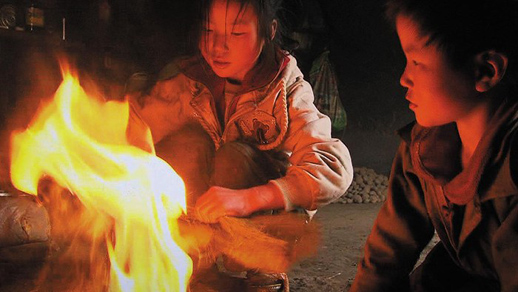
7. Three Sisters: Wang Bing’s documentary, third eye camera tracks infant children and their barely older cousin who, in the most impoverished circumstance possible, and against all reasonable odds, care for themselves, fend for themselves, in what was for us the most eye-opening, deeply human, strikingly lensed documentary film we screened at VIFF 2012. The three sisters of the title are Yingying (10), Zhenzhen (6) and Fenfen (4), daughters of Sun Shunbao, a peasant abandoned by his wife, who scrapes for work in the nearest town of Tonghai, leaving his young daughters alone, utterly alone for weeks or months at a time. That the sisters have distinct personalities — with Zhenzhen the mischievous giggler, Fenfen the slightly forlorn follower, and Yingying the sad one — isolated, stern-faced and unbearably lonely — carrying the burden of responsibility on her tiny shoulders, her village peers’ utter imperviousness emerging as the darkest of human interactions we saw on screen at this year’s Festival — was for us, nothing less than heartrending. One of VIFF 2012’s strongest docs.
8. The Flat: A subtle investigative document, an enquiry into one Jewish family’s ongoing relationship with the German Nazi state, the fictions that propel the stories of our lives, and centering on Hannah, the filmmaker’s mother, who comes to terms with what may have been her parent’s collusionary relationship with a senior Nazi official, before and after WWII, The Flat is a moving documentary film, providing historical insight and a needed reminder of the horrors of war. Revelatory, and quietly disturbing.
9. Room 237: Director Rodney Ascher’s whirling dervish of a film, an intriguing, arcane, jaw dropping, elliptical, gleefully mad and head-first plunge down the rabbit hole of Kubrickiana, posits with precision and unassailable — if verging on crazy — verisimilitude, that Kubrick’s 1980 film, The Shining, actually limns the genocide of Native Americans and, even more darkly, the Holocaust, the ‘evidence’ less a conspiracy theorist’s waking nightmare than an insomniac’s bruising, majestically labyrinthine puzzle picture of terrifically argued, impeccably constructed rumination.

Mirjam von Arx's non-judgmental observation of conservative Christianity

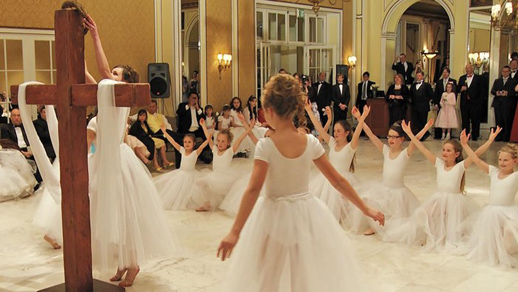
10. Virgin Tales: Focusing on Randy Wilson, the National Field Director for the ultra-conservative, U.S.-based Family Research Council, his wife, their five daughters, two sons and their spouses — ranging from ages 9 to 23 — this entirely fascinating, human scale exploration of conservative convention, ‘purity balls’ and ‘manhood ceremonies’ — the film centered on the utterly winning, broken heart of the film, eldest daughter Jordan — was at all times — even though it pissed off the audience that took in a screening of the film the last day of VIFF 2012 — moving, fascinating, warmly appreciative of the family, non-judgmental and entirely human scale in its introduction to a family whose core values we probably share, even if we might might find the societal engagement of the family members utterly abhorrent. This right wing family isn’t murdering doctors who perform abortions, they’re not blowing up public buildings or making the lives of others miserable. Hasidic Jews are allowed to raise their children as they see fit. Khalsa Sikh’s are given the same right. But not, somehow, fundamentalist Christians, about whom we are too ready to pass judgment, are not allowed anything close to the same freedom, as we tut-tut and wag our fingers and feel all superior. We thought the Wilsons, as presented on screen, were a lovely family; each of the family members sincerely loved one another. And at the end of the day, it is love — not misunderstanding and intolerance — that gives our lives meaning. We’re prepared to take this family at face value. A counterintuitive film to choose as one of the best, but you know what? Virgin Tales was one of the strongest, the best, the most joyous and heartfelt films we screened at VIFF 2012. No matter what anybody says. Sometimes you just have to go with your heart. And we are.

VIFF2012: VanRamblings’ Favourites at the 2012 Film Festival

Vancouver International Film Festival, VanRamblings' favourites at VIFF 2012

Over the course of the 16 days that the 31st annual Vancouver International Film Festival took place this year, there was much discussion as to which films were the favourites among those who were taking in more than 50 films. These films were the buzz films, the films that moved the audience to tears or to joyous ecstasy. The thing is, though, that what one person loves, the next may feel only meh about.
The above said, on this chilly autumn Monday, VanRamblings offers our favourites at this year’s Festival, in some sort of approximate order, and why it is these films have made our ‘best of’ list. Tomorrow, we’ll publish a list of our favourite VIFF 2012 documentaries, but first up today, our favourite 2012 Vancouver Film Festival narrative fiction features …


Santi Ahumada, the star of Dominga Sotomayor's Thursday Till Sunday


1. Thursday Till Sunday
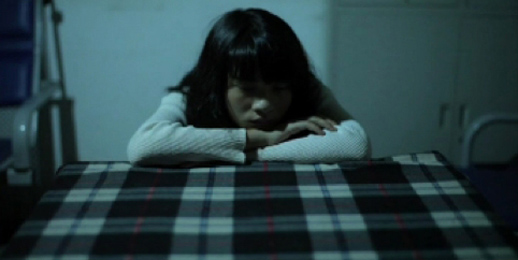
For VanRamblings, there was no other picture that screened at VIFF 2012 that so deeply rooted itself inside the experience of the character on the screen (11-year-old Santi Ahumada as Lucía, pictured left), than did director Dominga Sotomayor’s lovely, amazing, absolutely original and utterly devastating d&eacutebut film, Thursday Till Sunday. The viewer was provided the unique perspective of sensing every facet of the unfolding horror taking place in the front seat of Lucía’s parent’s car, as Ahumada, Sotomayor and ace cinematographer Bárbara Álvarez allowed us access to a place we’ve never been before — in this case — behind Lucía’s plangent, mournful eyes, and the catastrophic, unfolding horror she felt with her every sense, the wrenching disintegration of her parent’s marriage, the inexorable watershed movement towards pivotal and unrelenting change for 11-year-old Lucía. That the directorial decisions taken by Sotomayor, the camera work by Bárbara Álvarez, and Ahumada’s utterly natural performance fused to create the most affecting drama screened at VIFF 2012, means that for the viewer, apart from anything else we felt and witnessed while watching Thursday Till Sunday — an experience that can only be described as devastating — that we were witness, as well, to the emergence of a dynamic, signal new Chilean/Latin American directorial voice, and the birth of a major star in 11-year-old Santi Ahumada.

2. As Luck Would Have It: The film which touched us most deeply at VIFF 2012, the most devastatingly emotional film for us, with the most salient and honest expression of love we’ve ever seen expressed on screen.
3. When the Night: For us, on par with As Luck Would Have It, filmed as a Hitchcockian murder mystery (it’s the insinuating score), with a great, great romance anchoring the film, honest, with fully realized characters (those scenes in the upper chalet … omigawd), we saw it for a second time on Tuesday, and loved it again. We could watch When the Night again and again and again, and gain something more from it with each viewing.

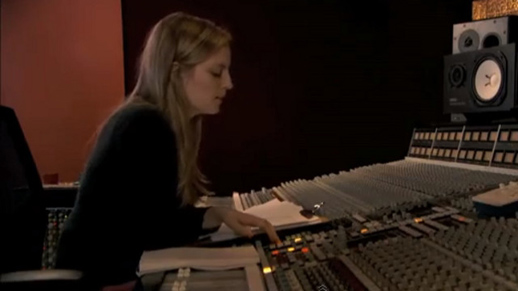
Sarah Polley sitting at the controls recording her father's narrative, in Stories We Tell

4. Stories We Tell: Groundbreaking, reverential truth-telling of the first order, a story of a life unraveled and somehow pulled back into coherence, where tough, tough questions are confronted and answered, Sarah Polley’s devastating documentary feature is nothing less than a cinematic work of art, a film that in exploring the dynamics of family, memory and truth, limns the ragged poetry of life. Shocking, melancholy, and lovely beyond words.
5. A Late Quartet: The finest independent American film of 2012, the most erudite film screened at VIFF 2012, with virtuoso performances from all involved, with a breakout performance by Imogen Poots — who holds her own in the august company of an absolutely amazing Christopher Walken, Philip Seymour Hoffman as you’ve never seen him before, with a transcendent performance by Catherine Keener, and a performance by, and character arc for, Mark Ivanir that rivets you to the screen — this at all times amazingly watchable, finely-tuned drama about an eminent New York string quartet, and the internecine, often destructive politics within the group — sexual and otherwise — offers a juggernaut of precise, insightful, humane and heartfelt filmmaking that in 2012 knows no equal.
6. Liverpool: The most audacious filmmaking of 2012, writer-director Manon Briand’s utterly original, of-the-moment, social media-flash-mob-infused delirium of a film announces the arrival of a new world class directorial talent, a new voice in film who in setting a new direction for film grabs us by the lapels and pulls us in, all the while informing us that, “This is the future of cinema, this is where we’re going. Come on along for the ride!”
7. Neighbouring Sounds: A masterwork. Kleber Mendonça Filho’s grasp of mise-en-scène is unparalleled — all at once benevolent, sentimental, melancholy, arresting and oddly oblique, and yet very much full of meaning, superbly constructed, beautifully shot, and infused with an aural landscape that serves, always, to inform our warm narrative appreciation of the film.

Yao Honggui, in Huang Ji's Egg and Stone, Vancouver International Film Festival

8. Egg and Stone: An absolutely remarkable début for writer-director Huang Ji, this Rotterdam Tiger Award winner represents the most auspicious début by an Asian filmmaker at VIFF 2012. The narrative offers a powerful indictment of male sexual privilege, the film an almost wordless, beautifully realized mood sense memory piece. Autobiographical, part of what will become a trilogy on the subject of the movement of young Chinese women towards empowerment. With one of the most wrenching choices by a filmmaker as cinematic material ever (the D&C), and a central performance by newcomer Yao Honggui that simply burns with intensity.
9. The Hunt: The most fully realized film at VIFF 2012, and the overwhelming Audience Favourite, human scale in every dimension, with superb performances by all concerned — the performance by 5-year-old Annika Wedderkopp, and the consistent relationship she maintains with Mads Mikkelsen throughout, and his relationship with her father — is central to the success of Thomas Vinterberg’s beautifully shot, bleak and chilling new psychological thriller. The Hunt is Scandanavian cinema, af ekspertise, with its lambently rural, autumnal mise-en-scène, and its great fidelity in character realization. In the first rank of 2012 international film releases.
10. Something in the Air: With a greater fidelity than one would have thought possible, Olivier Assayas’ new film captures what it meant to be a student radical in the late 60s and early 70s, as well as the milieu of the era — the protests, the marches, the casual nudity, frequent sex and changing of partners, the drug-taking, the focus on the arts as an agent for change, and the innumerable, deadening hours of debate relating to arcane points of radical political philosophy, where no one agreed on anything, when the worst thing someone could say about you was that you were bourgeoise. Reputedly an autobiographical account of Assayas’ work within the French student radical movement, circa 1971, this immaculately realized cinematic work, with its exceptionally attractive cast — we’d never heard of nor seen India Salvor Menuez previously, but we’ll be on the lookout for her now, not to mention how wonderful it was to finally see Lola Créton up on the big screen — emerges as a compelling cinematic entertainment, an historical document of a more hopeful and radical era, and so so much more.

star.jpg star.jpg star.jpg

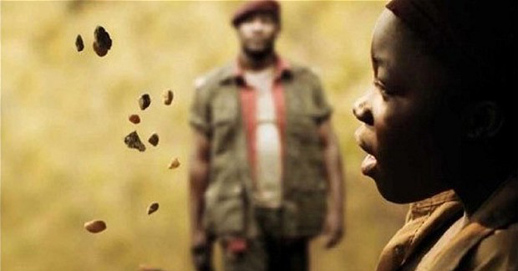
A scene from Canada's Best Foreign Language Oscar nominee, Rebelle (War Witch)

We also loved, and believe the following films to be in the first rank of films which were screened at the 31st annual Vancouver International Film Festival: Canadian Best Foreign Language nominee, Rebelle (War Witch); Tabu and Holy Motors (both due to return to the Vancity soon, both of which we loved); Michael Haneke’s Cannes’ award-winner, Amour, which as it did with Vancouver Board of Education Chair, Patti Bacchus, left us reeling; Abbas Kiarostami’s masterful Like Someone in Love; the feel-good hit of VIFF 2012, the exceptionally well-made Come As You Are; Sundance award-winner and certain Oscar contender, Ben Lewin’s, The Sessions; our first over-the-moon favourite at VIFF 2012 and one of the two best America indie films of the year, Any Day Now; the brutal and graphic ‘rape as a victor’s reparation of war’ historical drama, Rose; Cristian Mungiu’s delusional madhouse, yet austere, new film that transforms during its 153-minute running time into an intellectually acute and tragic tale of romantic heresy and religious dogma gone awry, one of VIFF 2012’s strongest films, Beyond the Hills; and our favourite animated film, the at all times wonderful (we wept at points throughout), Ernest et Célestine.

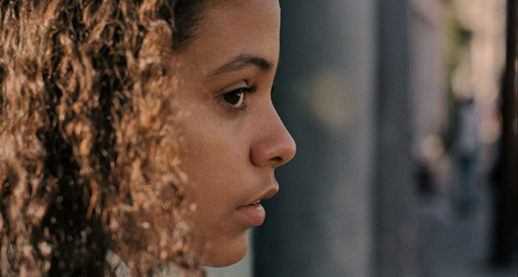
Anailìn de la Rúa de la Torre, in a scene from Lucy Mulloy's award-winning, Una Noche

And, in wrapping up today’s post, we would also express our appreciation for the craft of the filmmakers, who in putting their life blood into the making of their films, deserve yours and our appreciation for these very fine VIFF 2012 films: Lucy Mulloy’s wondrously delightful, heart in your throat Cuban narrative, Una Noche; Sacha Polak’s disturbing, entrancing and sexually twisted, Hemel; an early VIFF 2012 favourite, the at all times delightful Danish film, Teddy Bear (Denmark excelled at great films this year); Rodrigo Plá’s exceptional, La Demora; the extremely moving, almost cinema verité, Aquí y Allá; one of our two favourite films from Qu&eacutebec this year, Rafaël Ouellet’s exceptional slice-of-life character drama, Camion; Ken Loach’s Scotland-set kitchen-sink drama, as only he can make them (which is to say, hopeful at all times and teeming with life), The Angels’ Share; Sean Baker’s humane take on the porn industry, and aging in America (with a breakout performance by Dree Hemingway), Starlet; one of our early favourites, the kitchen-sink father-daughter drama, Maya Kenig’s exceptional directorial feature début, Off-White Lies; Nigel Cole’s verging on Bollywood, East London set, likable, working class dramedy, All in Good Time; the first breakout film for us in preview, the best of the ‘forbidden love’ pics we saw at VIFF 2012, Morocco’s, Love in the Medina; and, Hang Sangsoo’s elliptical, engaging Roshomon-style picture puzzle of a movie, starring the always wonderful Isabelle Huppert, In Another Country.

star.jpg star.jpg star.jpg

And, in closing today, please find a list of our favourite VIFF 2012 documentary films, humane and heartrending films of the first order.
(And, yes, we’re aware Stories We Tell is on both lists, we loved it that much, as we believe Sarah Polley’s new film to be both devastating narrative, and groundbreaking, heartrending documentary truth-telling)