Category Archives: Cinema

John Skibinski: Taken From Us Too Soon. May He Rest in Peace

John Skibinski (1956-2014) with a friend. Passed away, Nov. 12, 2014. May he rest in peace.John Skibinski (1956-2014) with a friend. Passed away Nov. 12, 2014. May he rest in peace.

John Skibinski was a great man, one of our city’s treasures, widely known among Vancouver’s cinema cognoscenti, a longtime manager at Festival Cinemas, and a friend to more people than could possibly be counted.
An attentive and empathetic listener, John had a way of burrowing in and identifying the source of one’s distress when a friend in pain came to him for succour and support — in no time at all, John would have you laughing, your desolate melancholy, heartbreak or angst relieved.
John Skibinski was a friend, always on your side, someone who could be counted on, and hold you close —&#32compassionate, non-judgmental and kind. Walter Winchell once wrote that a true friend is someone who walks in when the rest of the world walks out; that was John in spades, courageous and unwavering. “There is nothing I would not do for those who are really my friends. I have no notion of loving people by halves, it is not my nature,” wrote Jane Austen in Northanger Abbey —&#32 she may very well have been writing of John Skibinski, a great friend who will be very much missed.

Lund, British ColumbiaLund, the gateway to Desolation Sound. A view seen by John Skibinski while growing up

John was raised and went to school up Island on the Sunshine Coast, in the tiny rural village of Lund, a small craft harbour and unincorporated village in the Powell River District, and the gateway to Desolation Sound.
Ivana Thulin writes on the Celebration of John Skibinski Facebook page …

I met the Skibinski family when I was 15, and right from the start they were very special people in my life. So many memories and good times were had by all. We always looked forward to our visits with John when he would come home to Powell River during the holidays … his visits were never long enough! John was very close to his dad, Bill, and his mom, Ruth, John being the light of his mother’s life.

Upon graduation, John — a very good student — moved to our province’s capital, to attend the University of Victoria, in the late summer of 1974. On his very first day at UVic, John met fellow student, Karyn Segal, both of whom were enrolled in the theatre department, and both of whom went on to work at Cinecenta, UVic’s repertory movie theatre, initially in a volunteer capacity, and then as employees.
In time, John graduated into the position of programmer, taking on a share of the responsibility of booking independent, avant-garde and foreign film fare. By 1994, based on John’s work and that of Cinecenta co-founders, Michael Hoppe and Doug Sprenger, the informal film festival hosted annually by Cinecenta, transformed into the beloved Victoria Film Festival.
Although the focus of John’s academic work was geared toward acquiring a Bachelor of Fine Arts degree, in fact John never applied for his degree, leaving the university a few credits short of the requirement for graduation.
Instead, John’s love of travel and wanderlust took him to Europe, John returning to Canada to care for his father, who had been struck ill. After his father passed, John moved to Toronto for a short while, before returning to Victoria; soon after, in 1989, Karyn and John moved to Vancouver’s West End, sharing an apartment until the early 90s. John’s soon-to-become best friend, Lisa Doyle — who lived in the same apartment building as John and Karyn — discovered a common interest … a passion for and love of film, particularly independent and foreign film.
On her Facebook social media page, Lisa Doyle has written …

I met you at 17. I was young, full of ambition, movie ideas, and you gave me a job as a projectionist. You were patient and bemused by my wide-eyed. We experienced everything life has to offer, often side by side. Laughter, great films, food, the west coast, Victoria, Vancouver, San Francisco, Toronto. You loved life, travel and a good meal.

Films, oh the films you introduced me to: Stan Brakhage, Bruce La Bruce, Ken Loach, that crazy Hungarian landscape filmmaker, Tarkovsky, Gus Van Sant, Ozon, Michael Hanneke, the list goes on … I do not have enough room on Facebook.

Did I mention the laughter? One of the funniest people I have ever known.

The veiled kindness, masked by sharp wit. The deep devotion to your friends, and the loyal following you had. When you walked into a room, or a movie theatre, smiles lit up, because John had arrived. You were loved, the devotion back to you was 100 times what you could ever imagine.

Oh yes, few people know that he was a sort of dog whisperer. Dogs would come up to him and nuzzle him; somehow they gravitated to him, and knew he was a good one.

I will miss you Skibby. I am devastated, but I can hear you telling me to stop whining. And you are here, because whenever something funny happens in my day, I can feel you close, laughing along with me.

You are in the big cinema now, with the cushy seats, an unblocked view, free popcorn,the lights are dimming and the curtain is about to go up. You have an unlimited supply of films at your disposal. You are in your peaceful place.

It was in late 1991 / early 1992, that John first met Leonard Schein — who in 1977 had founded The Ridge repertory cinema, founded the Vancouver International Film Festival, and in the late 1980s was Director of the, then, Toronto Festival of Festival, also taking on the position of programmer with the Montréal Film Festival.
Upon returning to Vancouver, Leonard Schein converted the old Bay Theatre on Denman, into the newly-renovated Starlight Cinema. Soon after opening The Starlight, John applied for a job as a ticket taker and concession worker — which proved the beginning of a long and successful relationship based on love of cinema. Soon after, John became Manager of The Starlight Cinema, and along with Schein took on a programming responsibility, bringing in Ken Loach’s Cannes Fipresci award-winning film Riff Raff, contributing to the financial and artistic success of The Starlight.
Not longer after, with Schein in an expansive mood, a deal was struck with Canada Steamship Lines (owner: Paul Martin, who would two years later would become the federal Liberal Finance Minister), signing a lease for The Varsity Theatre on West 10th Avenue in Vancouver, the Dunbar Theatre, and the Plaza Theatre on Granville Street. Thus Festival Cinemas was born.
John Skibinski became the first Manager of The Varsity Theatre, where he set about to hire a young staff who loved film as much as he (including a young man by the name of Kevin Eastwood, who would go on to become an award-winning Canadian filmmaker).

In 1992, The Crying Game set international box office records for Vancouver's Varsity TheatreNeil Jordan’s Cannes’ Fipresci winner, The Crying Game. Jaye Davidson and Stephen Rea

Perhaps the most famous story involving John occurred in 1992, when John lobbied Leonard Schein to book Neil Jordan’s The Crying Game, which months later went on to win an Academy Award for Best Writing, Screenplay Written Directly for the Screen, at the 1993 Academy Awards ceremony, for the film’s writer-director, Neil Jordan.
Schein was not confident of the potential for the theatrical success of The Crying Game. After much back and forth, a deal was finally struck: Schein would book the film, but if The Crying Game was not a success, John would tender his resignation, and leave Festival Cinemas.
A resistant Schein booked the film in the fall of 1992, the film opening at The Varsity Theatre. The result? The Crying Game went on to 11 months of SOLD OUT shows, setting an international record for the film’s theatrical success, and in some measure creating success for the film’s director, Neil Jordan, and sparking the careers of actors Stephen Rea & Forest Whitaker.
Although Schein has dined out on the story of his business and artistic acumen as being responsible for booking the ground-breaking Neil Jordan film, in fact it was John Skibinski’s insistence that the film be booked, and his willingness to put his job and his livelihood on the line that was responsible for the film’s booking, and its subsequent tremendous success.
A short while after acquiring The Varsity Theatre, Schein closed The Starlight Cinema, singing a lease for The Park Theatre, on Cambie Street.

Festival Cinemas' Park Theatre, on Cambie Street at 18th Avenue, in Vancouver

John Skibinski became The Park Theatre’s first manager, a job he held until 1999, when Festival Cinemas was sold to Alliance Atlantis Films. In a shrinking theatrical market, and John not being a particular fan of Hollywood film-oriented cinema chains, Famous Players and Cineplex Theatre, John secured employment at video stores specializing in independent and foreign film, allowing John to share his encyclopedic knowledge of film with grateful patrons, many of whom came to develop a deep love of cinema.

Emily Carr University, located on Granville Island, in the heart of VancouverEmily Carr University on Granville Island, in darkness, a memorial to the late John Skibinski

At the time of John’s passing, John was working at Emily Carr University on Granville Island, a job he loved, and where his warmth, ready smile, incredible organizing ability and peerless dedication to doing the best job of which he was capable, led to a promotion for John to a job entailing greater responsibility, that was to have begun around the time of John’s passing.

Black Dog Video, on Cambie Street in Vancouver, a fine arts, and foreign film video outlet

As might well be expected, John supplemented his well-paying union job at Emily Carr, with work at Black Dog Video, on Cambie Street, almost directly across from The Park Theatre, now part of the Cineplex chain. John loved his job at Black Dog Video, and owner Darren Gay, the staff of Black Dog Video, and the store’s many grateful customers grew to appreciate John’s love of film; being around film is what John loved best. Darren and Black Dog Video staff have written a tribute to John, which may be found here.

John Skibinski at a recent Vancouver International Film FestivalJohn Skibinski’s Church of Cinema, at his beloved Vancouver International Film Festival

As is true of any cinephile located in the western Canada, or anywhere in the Pacific Northwest, John Skibinski loved film, and never missed a Vancouver International Film Festival, from the time he arrived in the city in the late 1980s through until last month’s 33rd annual Vancouver International Film Festival, where his friends were afforded the opportunity to share the sacred experience of the church of cinema, and the eternal and near invisible world that is all around us, that together as whole we sat with rapt attention in one or another of the festival’s venues, becoming one, and allowing us in the church of cinema to transcend the troubles of our lives.
For John Skibinski, as it is for many of us who love film, cinema delivers access to the new spiritualism, a place where we experience not merely film, but language, memory, art, love, death, and spiritual transcendence.
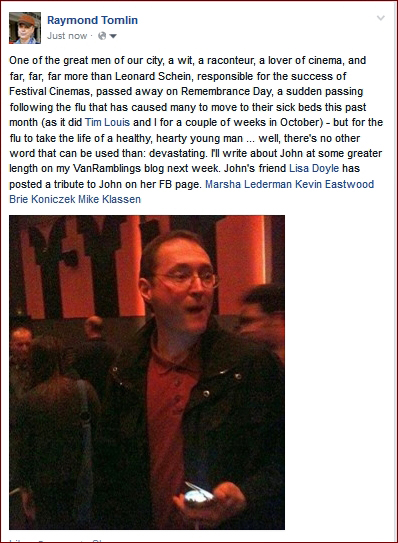
John Skibinski, raconteur, a wit, and a lover of cinema

John was an erudite and a very, very charming man, possessed of a considerable, and conspiratorial wit, just one of the many salutary and welcome traits John shared with the world.

John Skibinski Memorial, Thursday, November 20th, Black Dog Video, 3451 Cambie, at 18th

John’s encyclopedic knowledge of cinema history was easily the equal of the most learned professor, he knew every foreign, international and independent film worthy of attention — and they were varied, idiosyncratic and of great volume — every director of consequence, and every actor, actress and cinematographer, all of which knowledge he contextualized, and had at the ready to regale the anticipatory and enthusiastic cinéaste.
John will be very much missed. There was never anyone like John Skibinski, and we will never know his like again.
A humble man, a hero, a man who gathered friends around him like children run toward a puppy. John Skibinski may have been a dog whisperer, as Lisa Doyle writes, but he was as well a people whisperer, a loving, generous and kind-hearted man of the universe, once ours and now gone.
John Skibinski, may you rest in the warm embrace of eternal peace.

VIFF 2014: Vancouver’s Film Festival Wends Its Way To a Close

33rd annual Vancouver International Film Festival

Although only days remain until our beloved Vancouver International Film Festival shutters its doors for another year, there are still a great many recommendable films on tap that are worthy of your attention.
In today’s VanRamblings, a potpourri of items to intrigue your sensibilities.

VIFF Repeats 2014

VIFF Repeats: VanRamblings received a note from the splendidly wonderful VIFF and Vancity programmer, Tom Charity, this morning (there must be a very special additive that’s been placed in the water a VIFF HQ, for VIFF admin staff constitute an incredibly great group of folks!) where he informed that, “There will be 2 full days at The Cinematheque plus half days at SFU, and a couple more matinées on Monday.”
The Festival published the list of VIFF Repeats on Tuesday afternoon, films that will screen …

… over the long weekend, Saturday October 11th through Monday, October 13th. Festival passes, exchange vouchers and ticket pack redemptions are not accepted for these screenings. A VIFF or Vancity Theatre Membership is required.

Enjoy VIFF’s encore series. See ya there.

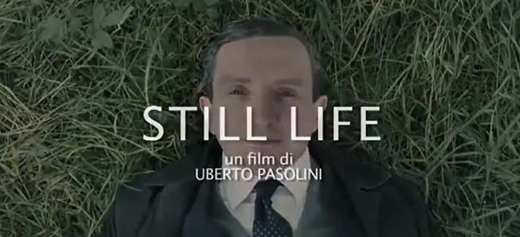
Still Life, Uberto Pasolini's new film starring Eddie Marsan

Still Life: To date VanRamblings has failed to give Uberto Pasolini’s new film, Still Life — by far the consensus best, under-the-radar English-language indie film at VIFF 2014 — its full due. Let’s rectify that: Still Life is an absolutely superb, low key wonder of film, the success of which emerges from the performance of the festival: Eddie Marsan not only plays his most sympathetic character to date, his emotionally-nuanced performance of humane integrity absolutely rivets the attention of the viewer to the screen.
The film’s synopsis reads, “As a modest council case worker in a London suburb, John May’s (Marsan) job is to find the relatives of those found dead and alone. Despite his efforts, he is always on his own at their funerals, having to write their eulogies himself. When his boss intends to fire him, John decides to double his efforts on a case that will change his life and prove that he hasn’t said his last word.”
That Still Life takes us on an utterly unexpected, yet always human-scale journey, and that Downton Abbey’s Joanne Frogratt (who plays the PBS series’ most sympathetic character, Anna Bates) is just as wonderfully tender on the big screen as she is the small, catapults this film into the first rank of VIFF 2014 entries, a film always of tremendous poignancy, a sublime and delicate story about loneliness, sadness and death, yet utterly inspiring and uplifting in a counter-intuitive way. Disarmingly emotional.
Go prepared: you’re in for an unexpected treat.
Still Life screens twice more, both times at The Playhouse, this afternoon at 4pm, and on Wednesday, October 8th, at 7:15pm. Not to be missed.

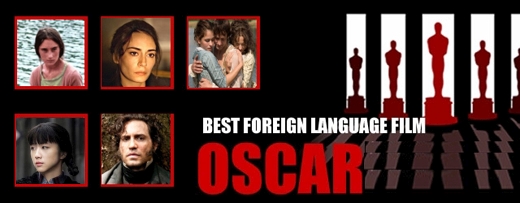
2015 Best Foreign Language Oscar Nominees

VanRamblings has updated our Best Foreign Language Oscar nominees post that provides insight into the nominees that are screening at our 33rd annual festival by sea. Click on this link to be taken to the updated page, or if you’re on the front page of VanRamblings, just scroll down the page.

flag.jpg

Perhaps the untold story of the 33rd annual Vancouver International Film Festival is the rampant homophobia, intimidation and discriminatory practices that has been directed towards VIFF volunteers working at The Centre, specifically those volunteers who have been perceived by members of the Westside Church (owners of The Centre) as living an “alternative lifestyle”, the volunteers made to suffer while working their shifts at VIFF’s Centre for the Performing Arts, which conduct by The Centre’s church members has led to multiple resignations of VIFF volunteer staff.
As readers may recall, an evangelical church purchased The Centre in the spring of 2013. In respect of homophobia, as reported in Xtra West

The pastor of the Westside Church (owner of The Centre for the Performing Arts) cautiously yet unambiguously reaffirmed the stance that homosexuality is a sin in his June 17 sermon … Norm Funk, 46, offered the sermon on homosexuality as part of a series titled “You Asked. Jesus Answers.” … Before founding Westside in 2006, Funk was youth pastor at Willingdon Church, whose members spoke out against the Burnaby school board’s anti-homophobia policy last year.

Evangelical churches, particularly Baptist churches, are notorious for their fire-and-brimstone message that homosexuals will go to hell … “It is never okay to respond in any way that is not loving to whomever, regardless,” he told followers. But Funk didn’t embrace gay people, either, grouping homosexuality with “temptations” like greed and lust.

In 2013, Vancouver City Council — at a meeting best remembered for the tears of the young children whose hopes to dance in the Goh Ballet’s Christmas production of The Nutcracker were dashed when the church purchased The Centre — ”forced” the Westside Church to allow the film festival and Goh Ballet to use The Centre for their scheduled programming.
In 2013, VIFF supplied all the volunteers at The Centre, during the Festival.
In 2014 it was reported to VanRamblings, the pastor insisted that church members join VIFF’s volunteer staff, VIFF never suspecting that such practice would lead to the present intolerable circumstance.
When volunteer staff at The Centre first apprised VanRamblings of the unconscionable situation described above, we approached VIFF admin staff to enquire as to what measures were being taken to rectify the improvident circumstance. Although VIFF admin were clear that “negotiations are ongoing to remediate the clearly unacceptable practices of some members of the church who are volunteering at The Centre this year”, as of this writing the situation has not been rectified; it seems doubtful that there will be resolution before the festival comes to a close on Friday evening.

2014 Vancouver International Film Festival Must-See Films

To wrap today’s post, before we head out to the festival for this evening’s screenings of Force Majeure and the French policier 24 Days, please find below a list of a few of the must-see films in the final days of VIFF 2014.

  • Force Majeure. A film that reportedly delivers what it promises, one of the buzz films at VIFF 2014, if you’re only seeing a few films, make sure that Sweden’s nominee for the Best Foreign Language Oscar is one of them. Screens for a final time tonight, 6:30pm at The Centre;
  • The Fool. VanRamblings can be hit and miss on our recommendations (fortunately, we’re right more often than we’re wrong, otherwise readers would stop coming to our site). We were a bit disappointed in Leviathan which, although a superb film, delivered less than what we’d been expecting. VIFF cinephiles to the rescue. Buzz on Yuri Bykov’s Russian drama is through the roof, Variety reporting that “Russian helmer Yury Bykov’s forceful social drama pits an idealistic plumber against a system of corrupt bureaucrats, putting his life and those of 800 unsuspecting citizens on the line.” The Fool screens for a final time this Wednesday, October 8th, 4:45 pm at The Cinematheque;
  • Hope and Wire. If you can’t get into what is sure-to-be a sold-out screening of Force Majeure tonight, then you’ll be doing yourself a big favour by catching tonight’s 6:45pm screening of Hope and Wire at the intimate Vancity Theatre. One of VanRamblings four favourite VIFF 2014 docs, Hope and Wire is not-to-be-missed, the film offering a devastating chronicle of the lead up to and after effects of the 2010 and 2011 Christchurch, New Zealand 6.7 earthquakes;
  • Here are a few more VIFF films on which we have heard very positive buzz, stating with those films on offer on Tuesday: Bruno Dumont’s Li’l Quinquin; Australia’s 52 Tuesdays; this upcoming Wednesday, if you haven’t already seen it, Cannes award-winner Mr. Turner is not-to-be-missed; on Thursday, the second-to-last day of the Festival, Germany’s Best Foreign Language Oscar nominee Beloved Sisters ranks as yet another must-see film at VIFF 2014.

Of course, there are many more Vancouver International Film Festival films that VanRamblings will take in over the course of the next few days, but the films above offer a starting point for superb VIFF films to consider.

VIFF 2014: A Note On, and Recommendation, Re: Tinseltown

2014 Vancouver International Film Festival

Here we are in the final stretch of the 33rd annual Vancouver International Film Festival, and VanRamblings has let down our regular VIFF followers.
To some degree we’ll try to make amends with a longer than usual VIFF post tomorrow. Today’s post attends to VIFF logistics “business” that may, or may not, be of interest to readers looking for rave film reviews.
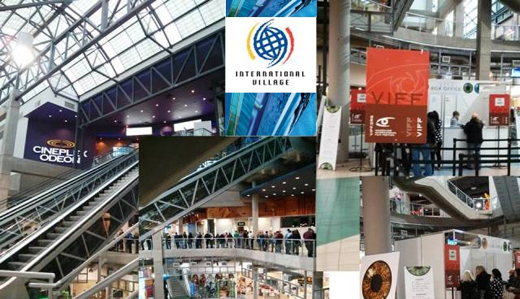
Could Still Very Well Be: Paradise at VIFF’s Cineplex Tinseltown Site

VIFF at the International Village

Note: The following represents a note to VIFF Tinseltown exhibition staff.
Prelude. Honest, warm, human communication involving volunteer and VIFF theatre management staff at the Cineplex site has been at a premium in 2014; which is to say, palpable human connection has been, thus far, an uncommon feature of the interaction of staff and patrons. In the final five days of VIFF at the Cineplex site, that unholy circumstance must change.
Trust. VIFF exhibition staff must trust that patrons have the best interests of the Festival at heart, that patrons and staff are in this whole big VIFF schmozzle together — that all of us want the experience to be as pleasurable, memorable, efficient and friendly as is humanly possible.
VIFF staff at Cineplex: patrons are not your enemy; they’re your allies.
[Note to VIFF admin, esp. Mickey and Brie: you’ve got a darn wonderful management person in Kaen, and Aubyn seems to connect surprisingly well, given how such friendliness seems not to be supported this year and, oh yeah, when it comes to volunteers Janet Smith is just aces]
[Note to VIFF admin, Part II: Congratulations on appointing Sean Wilson as Exhibitions Manager. I cannot imagine a better choice than Sean]

star.jpg star.jpg star.jpg

instructions.jpg

As VIFF exhibition management staff your primary duty is to see patrons gain entrance into the theatre complex in as reasonably efficient a manner as possible. And on that level, VIFF Tinseltown logistics has worked fairly well, outside of the first couple days (which is, of course, to be expected).
In response to a litany of concerns expressed to VanRamblings by VIFF patrons (for some time now, we’ve been VIFF’s unofficial Ombudsperson — something thrust upon us, & not assumed), please find recommendations intended to enhance your experience, and lighten your load.

1. Smile. That’s right, no matter how busy you are, take a moment to recognize that the patrons who are in the lines, or are making their way in or out of the theatre are real, live human beings, moms, dads, brothers, sisters, members of familes of every description. No matter how busy you are, no matter how stressed you feel, smile — it’ll lighten your load, and vastly improve the patron experience. Honest …;

2. Trust. Expanding on the paragraph on trust above: most of the VIFF exhibition staff at the Cineplex are new this year to the maelstrom that is the VIFF exhibition experience at Tinseltown (just ask the hero of VIFF Tinseltown 2013, Mr. Human Dynamo himself, Alan Franey — I’m not kiddin’, Iulia and Alan working together last year was nothing short of wondrous!). Please keep top of mind always that most of the patrons in the lines love the film festival, have been attending for years and years and years (even before many of you were born!), travel hundreds of miles to get here in many cases, and have lives that revolve around our 16-day film festival each year. Trust always that VIFF patrons have the best interests of the Festival at heart. Think about it, incorporate it into your management style. And smile, actually look at people & smile;

3. Communication. When you’re speaking with someone, smile, a genuine smile, a warm and warming smile, a reassuring and calming smile. Make eye contact. Seriously, make eye contact. Connect. And never forget to let the patrons know what’s going on: communicate with them, keep them in the loop — that’s part of your job.

Acknowledge the patrons’ humanity. Look for their names on the pass, or if they have tickets, ask for their name, and say hi. Remember their faces so that the next time you see them, you can greet them. Ask the patrons if there’s anything you can do for them. Humanize the management experience for yourself — you’ll be glad you did, & you’ll get the job done even better.

Now, I know you’re thinking to yourself, “Is he out of his cotton pickin’ mind? Does he have no idea about how busy we are, how many different facets of exhibition management for which we are responsible?” Yes, I do, and I say: smile, be friendly, be welcoming, smile some more, connect, hear what patrons have to say, acknowledge that we’re all in this together, that your primary responsibility revolves around ensuring the best patron experience possible, and part of achieving that goal involves consciously acknowledging the humanity of the patrons you see milling about the Tinseltown complex each and every day;

4. Emulate Brie Koniczek, your boss, well-experienced VIFF exhibition management staff person, and provider to VanRamblings of the most transcendently wonderful experience of exhibition management to which we have been witness in our 33 years of attending the Vancouver International Film Festival — and that’s going some, because VanRamblings loves, I mean really loves, Iulia Manolescu’s exhibition style — in the centre of an early morning storm at the Cineplex site one morning this past week Brie, and Brie alone, working with volunteer staff, remained calm, always smiling, always genuine (utterly, utterly genuine and humane), always lovely and engaging beyond words, communicative, warming, welcoming and reassuring.

VIFF's faboulously wonderful Brie Koniczek
No wonder Brie’s smiling: with the most beautiful baby, and wonderful husband, in the world

Brie Koniczek. How one assumes the onerous responsibility of taking virtually sole responsibility for overseeing the ingress of three long lines of patrons, distributes the tickets, directs volunteer staff quietly, efficiently, and humanely, all the while interacting with and re-assuring patrons (who would seem to be at the bottom of the list of priorities for some other of the exhibition management staff) in all three lines, and down in the will call / rush line-up, that all was well, outlining the exhibition dynamics of the morning, working towards the movement and ingress of patrons into the theatre, all the while smiling — it wasn’t just the warm, reassuring smile that lit up Brie’s face and her whole countenance, it was the near magical transfer of that warm, reassuring and calming energy into the crowd, an Alan Franey-like zen countenance, a warm Iulia Manolescu communication style with everyone she ran across, and a commitment to and the actual achieving of a logistically pristine exhibition management experience.
Honestly, if I attend the Vancouver Film Festival for another 30 years, I am sure I will never be witness to as transcendently lovely a VIFF exhibition experience as was the case one morning this past week, involving Brie Koniczek’s utterly in control, and utterly humane exhibition management.

VIFF 2014: Best Foreign Language Oscar Contenders at Our Festival

2015 Best Foreign Language Oscar Contenders screening at VIFF 2014

The criteria that cinephiles set for which 40+ films they’ll take in at our annual autumn Vancouver International Film Festival varies.
Some folks want to make sure that they see every one of the films that took the 2014 Cannes Film Festival by storm, while other folks feel that taking in all of the screenings of award winning films arriving from festivals that span our globe — Sundance, San Sebastián, Tribeca, Instanbul, Seattle, Shanghai, Karlovy Vary, Berlin, Newport Beach, and Venice, just to name a few — rank as must-sees at our beloved festival by the sea.
Others, looking ahead to the 2015 87th Academy Awards — set for Oscar Sunday, February 22, 2015 — want to ensure that they’re part of the “in crowd” that has seen more than a handful of the films that have been nominated by their respective countries for the prestigious Best Foreign Language Film Oscar. And thus we set our VIFF task for the day …
Best Foreign Language Oscar Contenders Screening at VIFF 2014
Haemoo (South Korea)


Turning a real-life human trafficking tragedy into a comment on social inequality and the cost of survival, Haemoo dramatizes a stark nautical ordeal fraught with tension, the meticulously crafted production having generated widespread critical acclaim and healthy domestic box office, even if the subject did spark associations with the Sewol ferry disaster. Produced and co-written by internationally recognized Korean auteur Bong Joon-ho (Snowpiercer, The Host) this directing debut by helmer-scribe Shim Sung-bo echoes Bong’s trademark cynical vision of human nature. A gripping cinematic ride, with powerful imagery, a simple and accessible story and a stellar performance from Kim Yoon-seok, Haemoo is set in 1998, three years before the Sewol incident, and offers a journey into darkness that begins when trawler captain (Kim) finds himself broke (and broken), his fortunes hit hard by the fallout of the Asian financial crisis.
Living Is Easy with Eyes Closed (Spain)

In David Trueba’s whimisical feature début, a trio of misfits set out to meet the Beatles, traveling across Spain in 1966 to meet their idol John Lennon on the set of How I Won the War, in hopes of clarifying some lyrics they couldn’t quite understand. Inspired by the true story of Spanish schoolteacher Juan Carrión Gañ án, as Stephen Farber writes in the Hollywood Reporter, “This small gem offers a lovely evocation of Spain as well as a touching tribute to an unforgettable moment in time when the Beatles seemed to offer brand new possibilities, the idea that strawberry fields might indeed go on forever.”
To Kill A Man (Chile)

A quiet drama that cares as much about familial alienation as with getting away with murder, Alejandro Fernandez Almendras retells a true story of last-ditch self-defense, about a timid man who does what he must to protect his family. To Kill A Man is a grim, fat-free revenge thriller that extracts an impressive degree of moral equivocation from its exceedingly simple premise of a family man, tormented by neighborhood thugs, who resorts to unseemly measures when the authorities fail him. Almendras’ début feature is a slow burner, bearing some of the eerie social disquiet of pre-eminent Chilean auteur Pablo Larrain’s work. A grand jury prize winner at Sundance, this hard-edged best foreign film nominee has emerged as one of the early favourites at VIFF 2014.
The Golden Era (Hong Kong)

Ann Hui’s ambitious, lustrously mounted biography of eminent feminist Chinese novelist, poet and essayist Xiao Hong declares its intentions right from the outset, opening with a black-and-white shot of Xiao Hong (played with gleaming intelligence by Tang Wei), who directly addresses the audience, stating her name and when and where she was born and died. Crucially, it is the only time Xiao herself breaks the fourth wall. The Golden Era’s title refers to a more introspective sense of time and opportunity, but can also be taken as an ironic comment on the 1930s, an especially tumultuous period in Chinese history that saw the rise of the Communist party and the invasion by the Japanese. Handsomely mounted with a score that resists a ripe opportunity for excess romanticism, The Golden Era offers sophisticated storytelling, narrative and historical sweep, and a meticulous re-creation of a China long since passed.
The Gambler (Lithuania)

A feature début so self-assured as to really only ever only be marred by its show-offiness, the Latvian/Lithuanian co-production, The Gambler, which played in competition at the Marrakech Film Festival earlier this year, marks director Ignas Jonynas’ emergence on the scene as a talent to keep an eye on. Taking a skewed, and ever so slightly surreal story about a team of emergency medics who develop a highly successful and lucrative game involving betting on when patients are going to die, and basing the odds on complex and arcane analyses of the medical information to which they have access, the film, to its credit, is less interested in this high concept than it is in its lead character, the bearlike Vincentas (Vytautus Kaniusonis), his moral descent and eventual redemption.
Rocks in My Pocket (Latvia)

A very personal animated film that explores depression and suicidal tendencies with wit, surreal invention and insight, New York-based Latvian director Signe Baumane (Teat Beat of Sex) gets personal in her depression-themed feature that combines paper-mache sets and hand-drawn animation. This partially autobiographical tale chronicles the lives of three generations of Baumane’s family, covering roughly a century of history, during which the small Baltic state (current population: just under 2 million) was occupied several times. But though the film’s historical-political background provides texture and interesting parallels — since depression could be seen as an undesired subjugation of the mind — Rocks in My Pockets is mainly concerned with a very subjective personal history of three generations of women, all prey to depression and dark thoughts. Animated in a striking combination of real paper-mache sets and props and hand-drawn 2D figures, the film explores with wit, surreal invention and insight something left far too often undiscussed.
The Liberator (Venezuela)

An impressively mounted, but perhaps overly truncated take on a great historical figure about whom much more needs to be known, the extraordinary story of Simon Bolivar onscreen in two hours represents a Sisyphean struggle of the first order. This physically impressive Venezuelan-Spanish co-production clearly lays out both the ideological forces at play in the early 1800s and the nature of the physical challenge of pushing the Spanish out of South America after 300 years of control. Edgar Ramirez does an entirely respectable job limning Bolivar’s idealism, bravery and natural leadership qualities, although the man himself remains elusive , more icon than flesh-and-blood being. Still, a compelling film to watch, and a VIFF film the audience appreciated with rapt attention, and appreciation.
Two Days, One Night (Belgium)

In this impassioned and moving new film by Belgian sibling directors Jean-Pierre and Luc Dardennes brothers, another excellent social-realist working-class drama, Marion Cotillard appears in every scene as the frantic Sandra, who learns in the opening minutes that she’s been laid off from her job at an energy plant just before the weekend. Fighting off tears in the mirror, she discovers a semblance of hope in the promise of a new vote among her co-workers come Monday. A mesmerizing odyssey, with no soundtrack or melodramatic confrontations, the Dardennes plunge viewers into a terrifying world of unknown variables. Two Days, One Night emerges as another hugely admirable entry in the Dardenne canon: thoughtful, humane and superbly composed.
Sorrow and Joy (Denmark)

Danish auteur Nils Malmros (Tree of Knowledge) revisits a personal tragedy, turning the camera on his own tragic backstory in Sorrow and Joy, a deeply personal auto-biography about how the director’s wife murdered their infant daughter in 1984. In this drama starring Jakob Cedergren and Helle Fagralid, Malmros paints an unflinching portrait of himself as critical and emotionally neglectful, the story told through the device of a psychiatrist’s questioning, and in flashback to the start of the couple’s relationship. At the same time, we watch the director attempt to ensure his wife receives treatment in a psychiatric hospital rather than a prison.
Mommy (Canada)

A funny, heartbreaking and utterly original work from 25-year-old Canadian enfant terrible Xavier Dolan — the writer and director of five critically acclaimed movies, and co-recipient of a jury prize at Cannes — Mommy is a blast of pure cinema, an intense, intimate drama about a harried mother and her troubled teenage son that vividly captures a range of exhilarating emotions from elation to despair. Dolan plays with well-chosen music and strategic silence, demonstrating a more experienced filmmaker’s technical proficiency, coupled with the bold exuberance of youth. With Mommy, Xavier Dolan has solidified his standing in the pantheon of great directors with his new work, a film of explosive freshness, offering a delicate balance between humour and tragedy that’s simply intoxicating. Dolan’s Mommy is a beautifully realized film that is certain to speak to the VIFF crowd.
Corn Island (Georgia)

A virtually wordless, elegant tone poem — and all the more captivating for its quietness — Georgian director George Ovashvili’s top prize winner at Karlovy Vary is, as Variety’s Peter Debruge suggests, “an astonishing feat of cinema”, a life and death fable that tracks the lives of an aging Georgian farmer (Ylias Salman) and his innocently flirtatious granddaughter (Mariam Buturishvili), who work together to build a rudimentary wooden shack and plant a crop of corn on a temporary island in the middle of the Inguri River, amidst the warring factions of Georgia and the republic of Abkhazia. Audacious, powerful, utterly compelling, and melancholy, Corn Island represents the best of foreign language film at the 2014 Vancouver International Film (we saw it in preview), and is a must-see at our festival.
Winter Sleep (Turkey)

Palme D’Or winning Turkish photographer, screenwriter, actor, and film director Nuri Bilge Ceylan can do no wrong, his latest — Winter Sleep — masterful and multi-layered, inspired by a Chekhov short story, the film — at three hours and sixteen minutes (not an unusual length for a Bilge Ceylan film) — offering a richly detailed, subdued and mesmerizing depiction of the full spectrum of the human condition.
Novelistic in structure, Winter Sleep revolves around Aydin, a retired stage actor (Haluk Bilginer) — a bearded, middle-aged grouch who operates a hotel in Cappadocia, high on a hill above inherited land owned by his late father — and his much younger wife, Nihal (Melisa Söezen), who spends her days gazing out the window, bored with their empty, privileged lives.
From Eric Kohn’s review on Indiewire

Winter Sleep contains a few surprising moments of levity, from scenes of drunken men dueling with Shakespeare citations, to the peculiar nature of Aydin’s relationship with a disadvantaged horse. At one point, a rabbit-hunting session leads to one of the movie’s darker signifiers, while conveying a strange feeling of existential uplift on the character’s terms. Such signifiers are never forced, however, as each telling moment arrives in the context of the movie’s enthralling pace.

In its broadest terms a character study, as Ben Croll writes on Twitchfilm:

The film can be easily criticized as being too talky, overlong and a tough sit. All of which is entirely true! But there is some kind of cumulative value in the stacks of minutes and words that pile up and topple onto each other. Something that is also reflected in Ceylan’s rather agoraphobic decision to keep things mostly indoors for the duration of the film. Twisting the familiar, a simple interaction or the inside of a living room, into something heightened and uncanny highlights the film’s final verdict on Aydin. To turn the idiom around, he is proof of the evil of banality.

Winter Sleep. Another can’t miss at our Vancouver International Film Fest.
Beloved Sisters (Germany)

An exquisitely detailed period piece, as Variety’s Scott Foundas writes

An enthralling, gorgeously mounted depiction of the complicated relationship between the post-Enlightenment writer and philosopher Friedrich Schiller and the sisters Charlotte von Lengefeld (who would become his wife) and Caroline von Beulwitz (his eventual biographer), Beloved Sisters maintains novelistic narrative density in its enveloping canvas, as director Dominic Graf sets about to create an unusually intelligent costume drama of bold personalities torn between the stirrings of the heart and the logic of the mind, all the while casting his revealing gaze upon Western Europe’s bumpy transition from the 18th to 19th century.

Be forewarned: another long sit (171 minutes), but very much worth it.
Force Majeure (Sweden)

One of the key films about which VIFF’s Director of Programming, Alan Franey, waxed poetic at the opening press conference of the 2014 Vancouver International Film Festival, as Boyd van Hoeij writes in The Hollywood Reporter, “An avalanche does no bodily harm but leaves a Swedish family entirely wrecked nonetheless” in Force Majeure, an ice-cold Swedish drama about a family torn apart by cowardice. Director Ruben Östlund’s new film comes across like Ingmar Bergman with a wicked streak.
Writes Peter Debruge in Variety

In its very calculated way, the film serves to document all that will inevitably be omitted from the family’s official record of their five-day ski vacation, as suggested from the first shot, in which this seemingly perfect clan — father Tomas (Johannes Bah Kuhnke), mother Ebba (Lisa Loven Kongsli), son and daughter (real-life siblings Vincent and Clara Wettergren) — poses for a contrived group portrait on the slopes. Whereas they self-edit their memories to fit their own narrative, Östlund observes the minutiae, right down to the bathroom breaks.

The film uses the daily structure of life on vacation to show us small variations in how things work between Tomas and Ebba. Once the fractures begin to appear in their marriage, things fall apart very quickly over the five-day skiing holiday in the French Alps, a pricey-looking getaway for a well-heeled couple.
Theatrically structured, yet a bracingly cinematic film, Force Majeure takes the family, and us, on a ski trip down a black run into a blacker chasm.

star.jpg star.jpg star.jpg

Vancouver International Film Festival

Have we mentioned that the film festival is not about force-fed, mindless Hollywood pap, but is rather all about offering an honest reflection on the human condition (ain’t no passive-aggressiveness goin’ on here), and that chances are the films screening at VIFF are likely not to be an easy sit?
Bottom line: either you love film, or you don’t. Either you’re willing to confront your demons (the characters on screen often represent a disturbing, and often unexplored, aspect of the deepest, inner core of your being, your id), or you’re not. VIFF as therapy: you better believe it.
Final note: we’ll update the list of Best Foreign Language Oscar nominees screening at VIFF 2014 as the information becomes available, and point you back in this direction periodically over the course of the next four weeks.