Category Archives: Cinema

VIFF 2020 | Mind Expanding, Savagely Feminist & Hitchcockian

2020 Vancouver International Film Festival

Only three days to go until the start of the 39th annual Vancouver International Film Festival, when most films will be available through your computer at home, your laptop, or on your TV, employing Apple TV, Roku, an Amazon Firestick, or Chromecast, any of which will allow you access to the 100+ films VIFF programmers have scheduled virtually in 2020.
Now, VanRamblings has been doing our bit to bring you up-to-speed on VIFF 2020, but there are others out there who are also working to prep you for the big event.
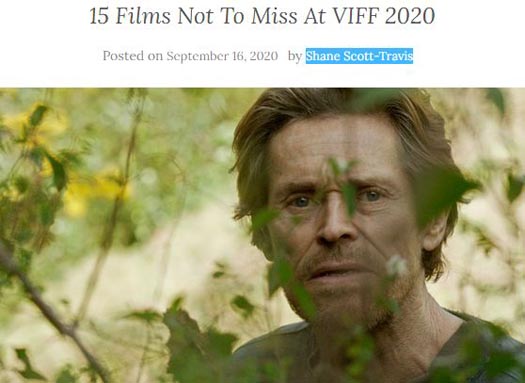
Shane Scott-Travis outlines 15 films not to miss at VIFF 2020

For instance, Shane Scott-Travis at Taste of Cinema has prepared his annual list of 15 VIFF films he believes you should not miss, explaining in cogent and convincing detail why that is the case.
For instance, in no particular order, the following three films …

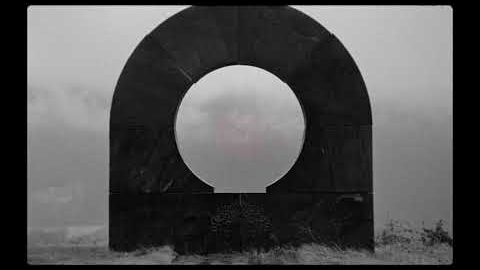
Last and First Men (directed by Jóhann Jóhannsson, Iceland). Mr. Scott-Travis writes, in part, “… the ambitious and sadly posthumous release from composer Jóhann Jóhannsson that has drawn comparisons to Kubrick and Tarkovsky, as challenging and creative as it is mind-expanding and moving. Narrated by Tilda Swinton, and presented as an immersive monolithic artifact from the future, irrevocably connected to our past.”

Violation (directed by Madeleine Sims-Fewer and Dusty Mancinelli, Canada). Says Mr. Scott-Travis, “This nerve-jangling revenge picture, set in the deceptively pastoral Québec Laurentians, is one of the most explosive genre film directorial débuts in some time. The writing and directing team of Dusty Mancinelli and Madeleine Sims-Fewer (who also leads the exceptional cast) cut their teeth making several memorable and menacing short films now make a feature length début most people will be enjoying online through VIFF Connect.
Violation is an elegantly filmed and disturbingly savage feminist revenge film that actually is feminist, and at VIFF 2020 essential viewing.”

Sanzaru (directed by Xia Magnus, USA). Says Mr. Scott-Travis, “While paying homage and taking visual cues from 70s horror films, not to mention the gloomy Gothic sensibilities of Henry James’ pitch black classic The Turn of the Screw, Sanzura promises to be more than your typical creaky old haunted house yarn. The first feature from Xia Magnus, the Texas-set chiller begins as Filipina caregiver Evelyn (Aina Dumalo) moves into the large country estate of Dena Regan (Jayne Taini); it’s here, in this perfectly eerie setting, that the troubles begin.
Already garnering promising notices from the festival circuit, Sanzura has been praised for its Hitchcockian story elements, suggesting parallels to recent genre breakout films like Hereditary and Relic. Just the sort of perfect midnight fare you require for your next injection of nightmare fuel.”

The Georgia Straight, Vancouver's oldest alternative newspaper

Year in, year out for 39 years, Vancouver’s alternative newspaper has emerged as the ‘go to’ media outlet for reliable, informed, out of the box and engaging Vancouver International Film Festival reviews. In 2020, during VIFF Virtual, such once again proves to be the case — with a difference this year, given that most of The Straight’s VIFF reviews were first printed in their sister paper, Toronto’s Now magazine.
Still and all, writerly élan makes for a wondrous read no matter the source of the original film reviews, and there are a great many reviews this year to aid you in putting your VIFF 2020 virtual film festival online schedule together, to completely consume your life over the 14 days commencing this upcoming Thursday, September 24th.
VIFF 2020 | Compassion, Class, Isolation & Humanitarianism

The 2020, 39th annual Vancouver International Film Festival

In the midst of our globe’s current COVID-19 pandemic, VanRamblings has chosen to present “previews” only of films that will be offered for screening online, and leave the In Cinema films on offer at the 39th annual Vancouver International Film Festival to other “critics”, all in the interest of keeping you safe from any harm, and any potential exigency of COVID-19.
Today, for your edification and enjoyment, four more well-curated VIFF 2020 films for you to consider, even as you traverse the rocky shoals of the upcoming 42nd British Columbia provincial election.

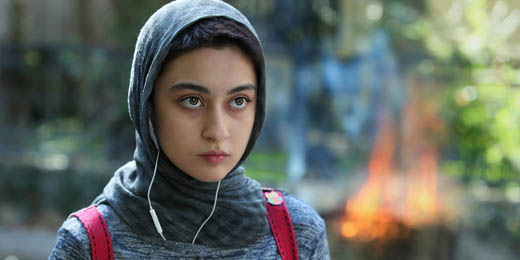
There Is No Evil (Germany/Czech Republic/Iran). Winner of this year’s top prize, the Golden Bear, at the Berlinale, Iranian filmmaker Mohammad Rasoulof could not attend the ceremony in Berlin, due to an Iran-sanctioned travel ban and possible prison sentence for his politically charged film.
Long banned from filmmaking in Iran but still active, screenwriter and director Rasoulof returns to the great moral themes that underlie all his work, as he orchestrates a cautionary tale comprised of four discrete chapters, creating a powerful moral case against Iran’s death penalty, tracking four military men tasked with executions, where to resist Iran’s authoritarian regime brings dire consequences, each compassionate story a standalone short film exploring a different facet of the subject.
Slow burning, at times enigmatic, one quasi-escapist tangent morphs into a sentimental romantic drama. But even so, overall Evil offers troubling film fare, sometimes didactic but always tension-filled and enthralling, the underlying moral conundrum of the film percolating through each chapter of There Is No Evil, set to emerge as one of VIFF 2020’s must-see films.

Citizen Penn (USA | Documentary). On January 12th, 2010, a devastating 7.0 earthquake struck Haiti, altering the landscape and lives of millions. Aid workers from around the globe descended on the island, along with one unlikely leader — actor and filmmaker Sean Penn. What began as a brief relief attempt turned into a decade of dedicated effort on the part of Penn to not only save lives but to revitalize a community.
Citizen Penn chronicles the moment Penn arrives on the island, and the ten years since, as Penn the humanitarian carts supplies, builds tents, procures medicine, and calls on his Hollywood friends to join with financial support. Acclaimed documentarian Don Hardy (Pick of the Litter), with unprecedented access to this once very private figure, offers an intimate look at the challenges faced when one man decides to do something in the face of adversity. — Deborah Rudolph, Programmer, Tribeca Film Festival.

My Wonderful Wanda (Switzerland). Award-winning Swiss director Bettina Oberli’s entry this year to the Tribeca Film Festival, My Wonderful Wanda offers a story about an underpaid personal nurse from Poland, Wanda (Agnieszka Grochowska), who works for low wages for a well-to-do-family, who live in a spectacular Swiss villa alongside a picturesque lake.
Wanda’s job is to care for Josef (André Jung), the patriarch who is recovering from a stroke. As his 70th birthday approaches, in addition to nursing Josef, Wanda takes on some cleaning chores, while deriving yet another source of income from Josef that no one else knows about.
Originally set to début at Cannes this year, although the pandemic changed that plan, My Wonderful Wanda emerges as a caustic satire and comedy of errors, tackling issues of class, family, complacency, reputation, and money — which contrary to the belief of some, does not buy you happiness.
Anchored by Teen Spirit’s Grochowska, Downfall’s Birgit Minichmayr, with a brilliant turn by Marathon Man’s always wonderful Martha Keller, My Wonderful Wanda keeps the twists and turns coming, especially when Wanda’s father Pawel Kowalski (Cezary Pazura) steps into the chaos.

Siberia (Italy/Germany/Mexico). On the one hand, Siberia is a traditional story of an aging, existentially tortured artist who grapples with the decisions he’s made, a character who almost certainly serves as an avatar for the director, played by regular Ferrara leading man Willem Dafoe.
On the other hand, Siberia is an experiment in dream logic, filled with unhinged, almost Lynchian imagery and symbols. Yet, even so, the film is often quite evocative and affecting, Siberia the latest rumination on life from agent provocateur Abel Ferrara. As VIFF programmer Tom Charity writes on VIFF online, “This is pure cinema that takes no prisoners, and the darkest trip that 2020 has offered up — either on-screen or off.”
Visually striking, meticulously composed and a self-mythologizing existential journey, Wendy Ide writes in Screen Daily, “the film looks like the insta feed of a well-traveled psychopath, lacking honesty or meaning. Perhaps the Ferrara name and the extreme response to the picture following its première in Berlin might be enough to secure further festival bookings, and perhaps even sales to VOD platforms based on oddity value.”
Abel Ferrera. You either love him and his oeuvre, or he’s decidedly just not your cup of tea. British film critic Guy Lodge writes in his review in Variety, “There’s certainly feeling and fury in its study of disaffected masculinity left to fester in isolation, as the viewer is pulled along by the film’s strong, seductive, dreamlike current. As we are woken from our reverie when the darkness lifts, as a viewer we are left to wonder, “What just happened?”.

VIFF 2020 | Nostalgia, Dystopia, Malfeasance, and Hydrous Myth

The 2020, 39th annual Vancouver International Film Festival

Today, four more films brought to you by the fine folks who programme the Vancouver International Film Festival, two documentaries, a France-German co-production from an acclaimed director, and the auspicous début of a young Japanese director. VIFF ticket and pass sales continue online.

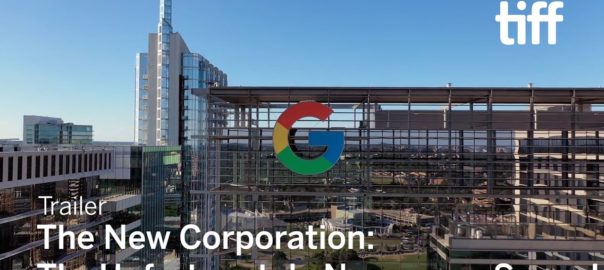
The New Corporation: The Unfortunately Necessary Sequel (Canada). As Norman Wilner writes in his Georgia Straight review of Joel Bakan’s and Jennifer Abbott’s follow-up to their 2003, made in BC-made documentary, The Corporation, “The New Corporation concludes we’re all pretty much screwed.” The 2003 doc was that rare political film with the power to remove the scales from our eyes, not simply asserting that big companies were destroying the world, but looking at the legal frameworks that created corporations that consistently placed profit over social or ethical concerns.
Investigating the evolution of corporate greed, in The New Corporation Bakan and Abbott provide a dense yet fast-paced exposé on how corporations profit from the carnage they’ve created both environmentally and politically, and their embrace of nihilism as an economic raison d’être, as elucidated by the MAGA folks who’ve latched onto the fear-mongering these corporations promote, those who march in the streets denying our current pandemic, all the while allowing Charles Koch and his cohorts to profit through the misery of others while netting profits through privatized prisons and schools — and working to make our lives as miserable and disconnected as possible — not just in North America, but across the globe.

Undine (Germany/France). Winner of the Silver Bear (Best Actress) for Paula Beer at the Berlinale this year, Undine represents an odd new beauty from German auteur Christian Petzold (Transit) who explores and updates the myth of the water nymph who has to kill her lover should he betray her.
Unsurprisingly, water plays an important role throughout the film — Undine comes from the Latin word for “wave,” suggesting both water & movement — and there are several beautifully shot underwater scenes that work on a visual level while making room for Petzold’s usual thematic concerns, capturing frantic characters doomed by dark obsessions. At its core, a haunting, fantastical and passionate female-centred supernatural romance revolving around a doomed love, Undine also questions the fixed nature of human behaviour in a world whose borders are constantly shifting.

The Town of Headcounts (Japan). One of the five Canadian premières that represent a constituent element of this year’s VIFF Gateway Asian series, Japanese director Shinji Araki’s The Town of Headcounts — a chilling, beguiling and electrifying thriller — makes its international début at the 39th annual Vancouver International Film Festival.
One of the most politically astute films to come out of Japan in years, as well as a potent and disturbing sci-fi classic, Headcount offers viewers an allegory of a dystopian Japanese society dedicated to keeping its citizens docile and dependent on sexual abandon, instant gratification and transactional sex — where rules of etiquette are nonetheless strictly enforced — in order that the state might direct the attention of the populace away from the near constant threat of terrorism, the incessant intrusion of the surveillance state, the unrelenting malaise that has the globe in its grip, and the decimation of democratic institutions.

“With contributions from our programme consultants — Maggie Lee for Japan & Korea, and Shelly Kraicer for China, Hong Kong & Taiwan — the Gateway series offers VIFF members an intimate window into the vibrant cultures of East Asia,” avers PoChu AuYeung, VIFF programme manager and senior programmer. “This year’s eclectic collection of cinematic experiences is at times sentimental, inquisitive, and occasionally even shocking — but what unifies them is the authenticity of voices and beauty of expression from one of the film world’s most exciting creative regions.”

The Town of Headcounts is Shinji Araki’s riveting directorial début.

Jimmy Carter: Rock & Roll President (USA). The Canadian première of director Mary Wharton’s infectiously charmingly and wistful remembrance of an earlier and, perhaps, more sane time in American politics, in its 96-minute running time tells the tale of an enlightened U.S. commander-in-chief who was a true aficionado and lover of American popular music.
Jimmy Carter: Rock & Roll President is more than just a record of Carter’s knowledge of our musical history. This lively documentary explores his belief that American music reflects the country’s soul: “I think music is the best proof that people have one thing in common no matter where they live, no matter what language they speak.” Director Mary Wharton, in collaboration with writer Bill Flanagan, help make Carter’s case by weaving together interviews with entertaining, at times inspiring, archival and concert footage. The film will make you nostalgic for great music and for a return to true spiritual leadership down south. The Man from Plains was not a mere peanut farmer who stumbled into the country’s highest office; he was a principled leader whose spiritual beliefs and southern roots brought youthful passion and moral direction to the presidency.
After the misery, cynicism, and division of the past four years in America, Jimmy Carter: Rock & Roll President is a breath of fresh air.

VIFF 2020 | Intoxicating, Terrifying, Celebratory & Priceless

The 2020, 39th annual Vancouver International Film Festival VIFF Connect

One hundred plus award-winning films in 14 days, what’s a person to do?
Today, the first instalment of VanRamblings’ informed insight, into three films set to find their way onto your home screen through VIFF Connect, the celebration of the best in homegrown and international cinema, that will commence just a week this Thursday, on September 24th.

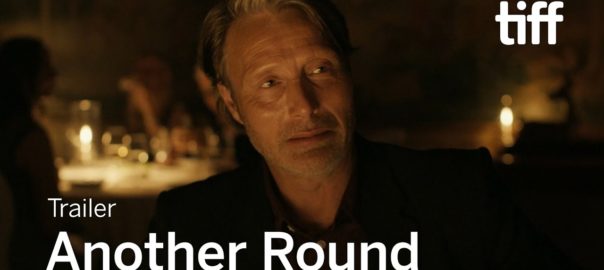
Another Round (Denmark). The Danish title is Druk, a term which is maybe best translated by adding the letter N before the one at the end.
Originally slated to play at Cannes this year, and currently screening at the Toronto International Film Festival, director Thomas Vinterberg reteams with his The Hunt star, the always engaging Mads Mikkelsen, for a darkly comic referendum on intoxication. Compelling, and more than a little sobering, Vinterberg takes aim at his home country’s drinking culture, in a film that resonates far beyond Denmark’s shores. Mikkelsen plays a high-school teacher beginning a reckless experiment with alcohol, in this tragicomic and bittersweet portrait of midlife crisis and alcohol abuse.

Another Round is sweeter, lighter and more conventional than most of Vinterberg’s past work, eschewing the bleak social commentary that underscored films like The Celebration, Submarino and The Hunt. Even so, it makes for an appealing ensemble piece, as well as a great vehicle for Mikkelsen’s vulpine beauty and nimble dance moves. For anyone who has ever craved seeing this former gymnast doing his finest Gene Kelly impersonation to pounding Europop, your dream movie has finally arrived.

Capturing the gleeful, anarchic euphoria of being merrily drunk in the company of good friends, Another Round — although it doesn’t have much profound to say about intoxication and addiction — does offer an engaging tribute to friendship, family and bacchanalian hedonism in moderation.

The Forum (Germany/Switzerland). In his latest documentary, German filmmaker Marcus Vetter takes a look behind the scenes of the World Economic Forum in Davos. As the first independent film director to get such access, Vetter’s fascinating documentary gives rare behind-the-scenes access to the World Economic Forum. Providing an admirably balanced deep dive into the organization that brings together the elite from the worlds of politics, big business and beyond is something to be celebrated, and more than justifies its near two-hour running time.

At the heart of the film is Professor Klaus Schwab, the 81-year-old whose brainchild the WEF was and who displays such incredible diplomatic skills that you wonder what he might have achieved as a head of a country. His aim is to further social cohesion across the globe by creating dialogue between those who might not otherwise listen to one another. There are plenty who are skeptical about how successful the WEF has been at improving the world, however, and they are given a voice here too. That includes Greenpeace International’s executive director Jennifer Morgan, who talks about the “mega group-think” of elites that is “99 per cent status quo” rather than a movement for change. (Screen Daily)

One attendee who insists Schwab, not to mention the 3,000 global figures he gathers annually, must do more, is Greta Thunberg. The young climate activist from Sweden attends with her father and is regarded unseriously as a quaint novelty by many of the other participants until her stark address hits home. “It feels like I’m at a firefighters’ conference, and no-one is allowed to speak about water,” she says of the hypocrisy of a conference that prizes success stories but is unwilling to admit their terrible price.
The final part of the film is focused on the 2019 Davos event, which is very different from the previous one. This time around, there is no May, Trump nor Macron; instead, Bolsonaro and Thunberg are there, and an exchange between the Brazilian president and Al Gore is surely one of the most priceless moments in documentary cinema captured in recent years.

Yalda, A Night for Forgiveness (Iran). Grand Jury Prize winner in the World Dramatic Competition at the Sundance Film Festival this year, filmmaker Massoud Bakhshi (A Respectable Family), who wrote and directed this suspenseful exposé of Sharia law, tells the story of a young woman convicted of murder who goes on Iranian TV to try to win a pardon.
The way religious law penetrates every aspect of Iranian life, from a murder case to how a TV show is run, is probably the most striking aspect of the film. The perverse logic of temporary marriage, inheritance laws favouring boys and homicide laws stacked against wives, not to mention the practice of paying one’s way out of a hanging with “blood money” to the victim’s relatives, become casual plot elements in Bakhshi’s well-shot melodrama.
As the story of the “murder” comes out, one outrageous fact follows another. To begin with, the wealthy husband Nasser Zia was 65 and married when he decided to implore innocent young Maryam, his driver’s daughter, convincing her he loved her and getting her to agree to the infamous practice of “temporary marriage,” which avoids sin along with permanent commitment, although not Maryam’s pregnancy, causing the two to fight, resulting fatefully in Zia’s death, for which Maryam is held accountable.
Grippingly paced, opulently shot in muted colour by cinematographer Julian Atanassov, with precise and always fluid editing by Jacques Comets, the film’s bold method of addressing themes of maternal sacrifice, and what determines both legal and religious rights in a country where the Western concept of feminism is inherently offensive, Yalda is timely and terrifying film fare, available only at the 39th Vancouver International Film Festival.

star.jpg star.jpg star.jpg

2020 Vancouver International Film Festival: Contemporary World Cinema

Click here for VanRamblings’ introductory coverage to western Canada’s gloriously west coast, this year largely virtual edition, of our homegrown and keenly spectacular 39th annual Vancouver International Film Festival.