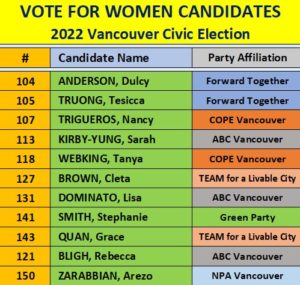
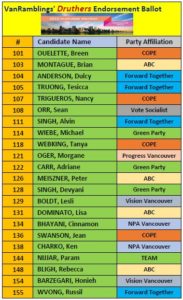
The Druthers Endorsement Ballot you see above represents the names of 22 fine, skilled and hard-working candidates for Vancouver City Council, all of whom would make great City Councillors but, sadly, whose names will not appear on VanRamblings’ official endorsement ballot, to be published next Wednesday.
Still and all, each of the candidates we write about today are well worth considering casting a vote for, at the advance polls, or on Election Day, Saturday, October. Meet the 22 fine candidates for Vancouver City Council we write about today.
l – r: COPE’s Breen Ouelette, ABC Vancouver’s Brian Montague, and Forward Together’s Dulcy Anderson
Number 101 on the ballot you’ll receive when you enter the polling station to vote, Breen Ouelette is running with Vancouver’s second oldest political party, the Coalition of Progressive Electors, Mr. Ouelette is a a Métis man, and as he describes himself, a “father, activist, and lawyer” who is also works in the labour movement as a union counsellor. Mr. Ouelette is running for Council to ensure there are …
“Renter redevelopment protections, universal vacancy control, the prioritization of non-market development, placing affordable housing levies on developers, while working to densify all detached housing zones.”
Number 103 on the ballot, ABC Vancouver’s Brian Montague served with the Vancouver Police Department for over 28 years until his recent retirement.
As a sitting member of Vancouver City Council, Mr. Montague commits to …
“Addressing the major challenges facing Vancouver residents, including increases in crime, and Vancouver’s out-of-control cost of living.”
Brian believes it is important to take pride in the places where we live and work. He wants to see City Hall revitalize neighbourhoods, build livable communities, and ensure Vancouver is a clean, safe, and welcoming place, for all families.
Number 104, Forward Together’s Dulcy Anderson holds degrees in Women’s Studies and City Planning from Harvard, and the Massachusetts Institute of Technology. Ms. Anderson is running with Mayor Kennedy Stewart’s new civic party, and should she be elected to City Council — which from the polling VanRamblings has seen, she would seem to be all but assured of gaining a seat at the Council table. Dulcy Anderson has committed to work on resolving …
“Generational housing issues, working to build a healthy and vibrant community, responding to our climate emergency, ensuring more child care spaces are made available, while working with senior levels of government to ensure investment in housing, childcare, climate action, and transportation.”
Ms. Anderson has much work cut out for herself. Achievable, if you know Dulcy.
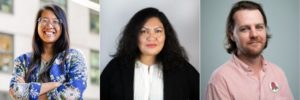
l – r: Forward Together’s’s Tesicca Truong, COPE’s Nancy Trigueros, and Vote Socialist’s Sean Orr
Number 105. All but assured a seat on Vancouver City Council, the former provincial New Democratic Party Vancouver-Langara candidate has emerged as one of the bright lights on the 2022 campaign trail, heartbreakingly eloquent, tough and on track to become a British Columbia Premier down the road. For now Ms, Truong’s candidacy involves getting youth involved. Make no mistake, though, Ms. Truong’s appeal spans demographics, as she has emerged as a woman who connects with the issues that are of most concern to you: affordable housing, responding to our climate emergency, and working co-operatively with senior levels of government to fund initiatives that will improve the quality of your life.
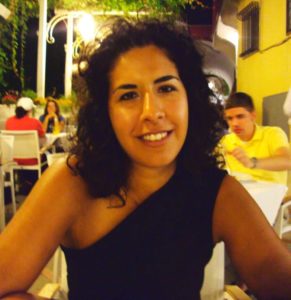
Number 107. VanRamblings wants working class women on our next City Council. Enough of the holier-than-thou virtue signalers we’ve currently got, the elitists who’ve never missed a meal. No, we want an immigrant, an émigré — immigrants comprise half of Vancouver’s population — a community advocate for immigrant rights, civil rights, and labour rights, an activist who believes that politics is a route to empowering the disenfranchised into action, must be placed in the hands of everyday citizens, rather than current crop of well-meaning but elitist do-gooders.
Number 108. Here’s what Vote Socialist Council candidate Sean Orr has to say …
“We can rebuild the City of Vancouver — for all of us, not just the wealthy few. In doing so, we can make our shared home the most livable, equitable, and sustainable city in the world. How do we get there from here?
Tenants can and should write housing policy. Workers can and should run their workplaces. Drug users should write drug policy. Public transit users can and should run our public transit system. People with disabilities can and should make decisions about building codes and accessibility.
We know what’s best for us; let’s fight for it.“
Vote for Sean Orr, the transformative candidate for Council in #VanExln2022.
l – r: Forward Together’s’s Alvin Singh, Green Party’s Michael Wiebe, and COPE’s Tanya Webking
Number 111. For the past four years, Alvin Singh — a longtime, much respected community activist — has taken on the arduous role of Director of Communications in Mayor Kennedy Stewart’s office — a job of critical importance — where’s he’s had to deal with media jerks like … hmmm, VanRamblings, which Alvin has always carried off with aplomb and a commitment to professionalism rarely found at the all-too-often partisan municipal level, but not with Mr. Singh, who personifies grace, wit, humanity and intelligence always. In 2022, Alvin Singh has joined the political fray, as a key Forward Together candidate for Vancouver City Council. Alvin Singh says his key priorities when he’s elected to Council would include …
Continuing his work as Chair of the City of Vancouver’s first-ever Renters Advisory Committee, where he fought to expand affordable housing and protect renters’ rights. During my time with the David Suzuki Foundation, Mr. Singh worked to secure a constitutional right to live in a healthy environment.
Clearly, after four years of working inside City Hall, he has come to possess an intimate knowledge of how municipal politics functions. Supporting Mayor Kennedy’s vision for an affordable, sustainable, caring, and prosperous Vancouver. Alvin Singh looks forward to serving you.
Now it’s all up to you. All you have to do is mark your ballot for Alvin Singh, at spot 111 on the ballot you’ll receive when approaching the appropriate table within the polling station, where you’ll cast your ballot to elect Vancouver’s next Council.
Number 114. The Green Party of Vancouver’s Michael Wiebe has transformed into the most serious-minded, feet-on-the-ground and near our streams, the hardest working, most detail-oriented — and, dare we say, most independently-minded — member of Vancouver City Council. Mr. Wiebe should be assured of re-election to a 2nd term, but polling results see him in the 12th spot, which to VanRamblings is little short of unbelievable. How is it that Michael Wiebe is not topping the election polls? Well, you can change that by not only casting a vote for Michael Wiebe, but telling all your friends, family, neighbours and colleagues to vote for Michael Wiebe, and darn it to heck, donating to Michael Wiebe’s re-election campaign.
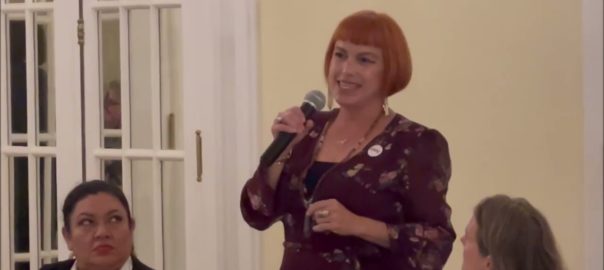
Number 118. Tanya Webking is Dene/German from the Tlicho Nation, who began working in the Downtown Eastside 25 years ago. With a background in mental health and addiction issues, counseling, advocacy, mediation, research, and grassroots community organizing, Ms. Webking is currently employed as the Indigenous Health Promotion Case Manager at AIDS Vancouver. In addition, Ms. Webking is Co-Chair of the City of Vancouver’s Renters Advisory Committee, and another VanRamblings favourite, a working class heroine and woman of the people if there ever was one. At last Wednesday’s Women Transforming Cities campaign event, she just blew everyone away with her expression of heart, commitment to building a better world, and a better city for all.
The key issues that Tanya Webking would address as a City Councillor …
- Responding to the toxic drug overdose rates have gone up over 400% in the past seven years;;
- Removing property tax exemptions on all churches and directly allocate those funds towards decolonizing housing and eradicating homelessness;;
- Transitioning our current policing model to a community-led model of safety; and
- Working at the forefront of an Indigenous-led revolution.
In this era of Indigenous reconcilation, Tanya Webking’s voice as a Vancouver City Councillor is absolutely critical to our collective future.
l – r: Progress Vancouver’s Morgane Oger, Green Party’s Adriane Carr, ABC Vancouver’s Peter Meiszner
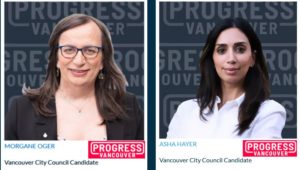
Number 121. Long one of VanRamblings favourite candidates for office and accomplished beyond all measure — Morgane Oger, a former Vice President of the BC NDP, Ms. Oger fights tirelessly for human rights, and is recognized across Canada as a champion of LGBTQ rights and representation. Morgane Oger is a powerful voice for safer communities and transformative government.
In 2022, Morgane Oger’s priorities should she be elected to City Council:
- Housing affordability so our kids can afford to live here
- Addressing the opioid crisis
- Making Vancouver more livable for families
Number 122. Adriane Carr is Vancouver’s longest serving Vancouver City Council, first elected in 2011, and topping the polls in both 2014 and 2018. At present, Councillor Carr chairs Council’s Policy and Strategic Priorities Committee, represents Council on three advisory committees, and continues her work on Vancouver’s UNDRIP Task Force, and Metro Vancouver’s Zero Emissions Innovation Centre. Ms. Carr also represents Vancouver on Metro Vancouver’s Board of Directors and Finance Committee, and Chairs Metro’s Climate Action Committee.
When Adriane Carr is re-elected to a fourth term on Vancouver City Council — take our word for it, it’s a given — Councillor Carr plans to continue the work she has lead tp improve housing affordability, reduce our city’s greenhouse gas emissions to achieve what scientists say is required to avoid a pending climate catastrophe, while continuing to genuinely engage with the citizens of Vancouver towards the creation of a vibrant, resilient and livable city.
Number 126. Peter Meiszner is a name you may have run across previously, during his employment as an online news producer and reporter with Global BC — when pretty much anytime between 2008 and 2014 when you surfed to the Global BC website, you’d find Peter’s name atop a story. At present, Mr.Meiszner is publisher at Urban YVR, and senior Digital Strategist at the University of British Columbia.
As an architecture buff, Peter Meiszner has served as the vice-chair of the Gastown Historic Area Planning Committee. Peter’s priorities when he’s elected to Vancouver City Council includes tackling the affordable housing crisis, working with senior levels of government, and cutting permit wait times and red tape to deliver the housing Vancouverites need.
As a West End resident, Mr. Meiszner downtown resident, he is committed to a strong advocacy for downtown residents and businesses, with a focus on improving our neighbourhoods, ensuring public safety and creating vibrant public spaces that animate our city.
l – r: Green Party’s Dr. Devyani Singh, Vision Vancouver’s Lesli Boldt, and ABC Vancouver’s Lisa Dominato
Number 128. VanRamblings first ran across Dr. Devyani Singh — climate scientist, and an economist with expertise in energy and climate policy, energy transitions, natural climate solutions, environmental finance, and sustainable forestry — when she was running with the provincial Green Party to unseat Vancouver Point Grey MLA David Eby in 2020, and scared the beejuzus out of him that she might very well do so — given that she is the energy bunny of British Columbia politics — if you’ve never heard Dr. Singh speak, you’re in for a treat — tireless in her devotion to transform British Columbia into a greener province.
“We are in the middle of multiple crises — climate crises, a global pandemic (it’s not over yet!), and housing affordability. The past few years have shown us how societal inequalities have a disproportionate impact on marginalized communities — BIPOC, LGBTQ2+, seniors, people living in poverty, and those with disabilities.
As a climate scientist, an immigrant, a woman of colour, and a renter in Vancouver, I understand the struggles faced by us all, and will dedicate myself as an elected Vancouver City Councillor to collaborating across party lines to build a sustainable city which is affordable and livable for all.”
You’ve got your marching orders: save a spot on your ballot for Dr. Devyani Singh.
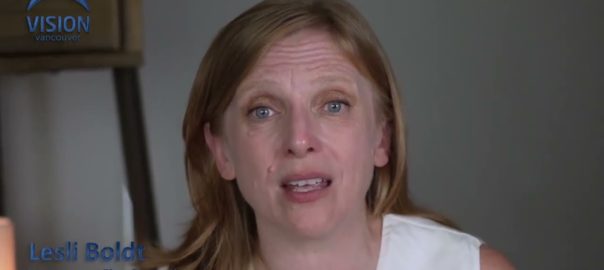
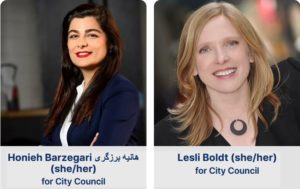
Number 129. A seasoned marketing communications and public affairs professional with over 20 years of experience in the industry, and over a decade of consulting experience for clients in the public, private and not-for-profit sectors, Lesli Boldt founded her own boutique communications agency, Boldt Communications, in 2001. Over the years, Lesli has taken on municipal government-related roles, including managing Vancouver’s 2010 Winter Games-related communications, and communications for the Vancouver Public Library
Before founding Boldt Communications, Ms. Boldt worked in public affairs with the Vancity Credit Union, and held several progressively senior communications positions with the B.C. government in Victoria and Vancouver, when the New Democratic Party was in power, between 1992 and 2001.
Living yours values. Lesli Boldt is passionate about environmental protection and climate action. Between 2012 and 2020, she was a member of the Board of the Georgia Straight Alliance, a B.C.-based environmental advocacy organization, serving two years as president. In her professional life, she’s also worked with leading environmental and climate action organizations like the David Suzuki Foundation, Clean Energy Canada, Climate Smart and more. As is the case more and more these days, and is the case with VanRamblings, future Vancouver City Councillor Lesli lives without a car, and walks, cycles, takes transit or as the situation warrants uses the popular local car share services of Modo, or Evo (or hitches a ride).
Why is important for you to consider when casting your ballot for Lesli Boldt when you decide who will sit on Vancouver’s next City Council? Because Lesli Boldt lives like we do, frugally yet joyfully, the pace of her life is slow and considered while getting a tonne of stuff done, Ms. Boldt is do-er, committed as she is to responding to and actually doing something to rectify the often times quite dire climate emergency in which we increasingly find ourselves, she communicates and resonates like mad when you meet her in person, as she would as a City Councillor — and gawd knows it’s critical to communicate if you’re an elected official, for whom it’s a duty of obligation to constituents. We urge you: cast your vote for Lesli Boldt.
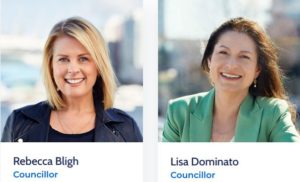
Number 131. ABC Vancouver’s Lisa Dominato has served with distinction, first as an outstanding Trustee of Vancouver’s Board of Education, and over the past four years, as a Vancouver City Councillor. On Council, Councillor Dominato has proved an effective collaborator and a community champion, bringing Vancouver citizens together on the complex issues of our time and their impact on the city we love, facilitating authentic engagement with citizens that has lead to positive solutions. Lisa Dominato currently serves as Chair of the Pacific National Exhibition (PNE), and also serves on the Metro Vancouver Board, in her roles as Chair of the Performance and Audit Committee, and Vice-Chair of Metro Vancouver’s Liquid Waste Committee.
With a Master of Arts in Leadership from Royal Roads University and a Bachelor’s Degree in Psychology from the University of British Columbia, as well as a Bachelor’s Degree from University of Burgundy in Dijon, France, Lisa Dominato is fluent in both of Canada’s official languages, and a past recipient of the Premier’s Annual Innovation and Excellence Award. Did we mention that she is a role model and mom to two girls, soon to be women (kids just grow up way too fast), and stepmom to an outstanding young woman. When not changing the world, Lisa Dominato enjoys the outdoors, and whenever possible opts for two wheels or transit, runs a pretty decent marathon, is a swimmer (her favourite pool at New Brighton park), and on the rare days when she’s not too busy, even manages to squeeze in a hike along one of Metro Vancouver’s many trails, or up into the mountains. And, oh yeah, did we say: re-elect Lisa Dominato to Vancouver City Council!
l – r: NPA Vancouver’s Cinnamon Bhayani, COPE Vancouver’s Jean Swanson, and the NPA’s Ken Charko
Number 134. A member of the Vancouver Métis Community Association and the Urban Indigenous Peoples’ Advisory Committee, to which she was appointed by Vancouver City Council, Cinnamon Bhayani takes great pride in her Métis Heritage. In addition, her family is active in her husband’s Ismaili Muslim community.
Holder of a degree in Criminology from Simon Fraser University, a graduate of the Executive Development Programme at Columbia University, who completed work with the Postgraduate Certificate Programme for Women in Leadership from Cornell University, Ms. Bhayani’s passion for knowledge is one she hopes to pass down to her children, and put to good use when she is elected as a Vancouver City Councillor on Saturday, October 15th. Cinnamon Bhayani lives in the Grandview-Woodland neighbourhood with her two children, husband, and jack russell, Griffin.
Number 136. What is there to say about Jean Swanson that hasn’t already been written? Champion of the underprivileged — of which there are far too many in our city — when you speak with her, Jean Swanson doesn’t sound like a rabble-rouser, her voice quiet and cautious, her words becomingly self-deprecating. A mainstay among anti-poverty activists in Vancouver who has spent more than 40 years sparring with property developers, SRO-managers and politicians, Jean Swanson with COPE Vancouver, for a second term on Vancouver City Council.
Over the past four years, Councillor Swanson has introduced motions for tenant protections, rent control, social housing, free transit, workers’ rights, anti-racism, safe supply, and decriminalizing poverty. In 2016, she was awarded the Order of Canada, the country’s highest civilian honour, for “her long-standing devotion to social justice, notably for her work with the residents of Vancouver’s Downtown Eastside.” Jean Swanson’s voice on City Council is critical and necessary. When you cast your ballot, please save a vote for Jean Swanson.
Number 138. VanRamblings has known and liked Ken Charko, dating back to 1996, when he purchased the lease on the Dunbar Theatre, on Vancouver’s west side. In 2011, when running for Vancouver City Council he fell just shy of being elected to Council. Running on a platform of investing in new and existing community centres, developing a comprehensive public safety plan, and building affordable housing co-operatives across the city.
Ken is convinced that in 2022, the Non-Partisan Association (NPA) — the city’s oldest electoral organization — has a winning campaign theme around the twin issues of safety and affordability. Crimes affecting small businesses, especially break and enters has emerged as an issue of importance to this potential Vancouver City Councillor.
“Crimes against small businesses hurt hard-working Vancouverites,” Ken recently told Carlito Pablo, in an interview published in The Georgia Straight.
“No one in city hall cares about crime and small businesses,” he told Mr. Pablo.
There’s a level-headed, grassroots, plain spoken appeal to Ken Charko that resonates with Vancouver voters. If you want a champion at Vancouver City Hall, cast a vote for Ken Charko!
Many years ago, UBC political scientist Paul Tennant, when asked what it takes to get elected to Vancouver City Council, said the following …
“The first five slots on the ballot,and the final five slots on the ballot, are the golden ticket to getting elected as a City Councillor in the City of Vancouver.”
And over the years, such has proved to be the case again and again and again.
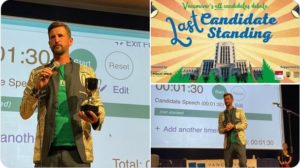
To conclude today’s Vancouver City Council’s Endorsement List post of candidates for you to consider casting a vote for in the 2022 Vancouver municipal election,
Russil Wvong is running with Mayor Kennedy’s Forward Together civic party …
https://youtu.be/2GTBje6HODU