Category Archives: A & E

Arts Friday | The 72nd Annual Cannes Film Festival | Winners!

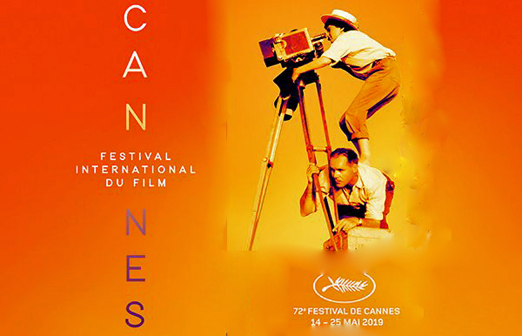
The 72nd annual Cannes Film Festival | 2019

Saturday night, the 72nd annual Cannes Film Festival draws to a close.
Why should that matter to you?
Well, if you love film, and foreign cinema in particular, the award winning films that will be announced Saturday night in Cannes highlight the most important films made outside the North American continent this year, and most probably predict this year’s Oscar award contenders for what used to be called Best Foreign Language Film but for the 2020 Oscar ceremony will be renamed the Best International Feature Film. Not to mention, for aficionados of the Vancouver International Film Festival, a raft of Cannes films will arrive on our shores this upcoming September and October.
Here’s IndieWire chief film critic Eric Kohn’s wrap up column on the 72nd annual Cannes Film Festival, Class War & the 2019 Cannes Film Festival.
WINNER, Palme d’Or | Director: Bong Joon-ho
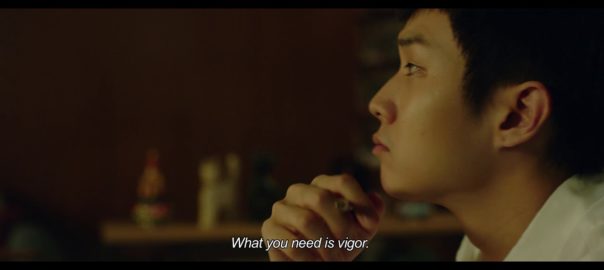
Parasite | South Korea

The fearlessly and fiendishly well-crafted new film from director Bong Joon-ho (The Host, Snowpiecer) offers a masterful dissection of social inequality, in a film that while a diabolically fun watch is also resolutely political, the film’s tonal shifts clearly in service of its class politics, infecting Parasite’s breezy dark-comedy with notes of rage and melancholy. Bong delivers a stunning return to form with this newest venture, which takes bold leaps between tenors and tone, the film entertaining and intelligent, and an unsparing social indictment of class inequality — a roaringly raucous, blood-spattered social satire that is also luxuriously watchable, suspenseful, uproarious, and a brilliant return to form for South Korean auteur Bong.
For background on how the Cannes Jury chose Parasite, click here.
WINNER, Grand Prix | Director: Mati Diop
Atlantics | Senegal

Mati Diop entered the Official Competition at Cannes with plenty of attention, as the first black woman with a film in the section across the festival’s 72 years. But, according to IndieWire film critic, Eric Kohn …

“The real reason to pay attention to Atlantics is its singular vision of the migration crisis. Diop’s gorgeous, mesmerizing feature directorial début focuses on the experiences of a young woman named Ada (Mama Sané) stuck in repressive circumstances on the coast of Dakar after her boyfriend vanishes en route to Spain. But the film is less fixated on his departure than with the community around her.

Diop’s enigmatic, lyrical narrative left audiences dazzled by its cinematic textures and haunting atmosphere. The peculiar allegorical nature of its story, and a supernatural twist that creeps into the plot, could make it a tough consensus choice for this year’s jury. But it’s quite the impressive début, and could very well wind up with some sort of prize by the end of the festival.”

There was a tie for the next category …
WINNER, Jury Prize | Tie
Les Misérables | France | Director: Ladj Ly

The directorial début of Ladj Ly offers a relentless tale of mounting tension between tough police officers and an oppressed Muslim population in modern-day Paris. Ly’s jittery, naturalistic style spends much of its running time focused on several officers as they clash with the neighborhood youth, and one conflicted new recruit (Damien Bonnard) with a moral conscience. The suspense builds to an anxiety-inducing showdown involving the bubbling frustrations of a local Muslim boy (Issa Perica) whose pithy crimes receive a nasty comeuppance in the film’s wrenching finale, causing audiences to draw thematic parallels to Spike Lee’s Do the Right Thing.
Bacurau | Brazil | Directors: Kleber Mendonça Filho Juliano Dornelles

A bracingly confrontational commentary on the direction his home country of Brazil is taking in the Trump-like era of Bolsonaro, Bacurau’s propulsive storytelling doesn’t come at the expense of the vividly sketched personality of Brazil, in this often strange fever-dream Jacobean-style bloodbath of a film, all at once densely layered and rich, ruthless and clear-minded, a film that divided the critics, but not this year’s Cannes Jury, it would seem. Mendonça Filho has scored before at the Vancouver International Film Festival, with his absolutely brilliant Neighbouring Sounds, which took VIFF 2016 by storm, emerging as an audience favourite.
Best Screenplay | Writer / director: Céline Sciamma
Queer Palm (Feature) | Céline Sciamma
Portrait of a Lady on Fire | France

Acclaimed French director Céline Sciamma makes her long-overdue Competition début with this vivid period drama, which focuses on an 18th century lesbian romance about a painter (Noémie Merlant) hired to create a portrait of a woman from a wealthy family (Adèle Haenel) without her knowledge. In the process, the two women fall in love, against the backdrop of a magical seaside landscape. Sciamma’s sharp, picturesque imagery meshes with the palpable erotic sparks between her two stars, who transform this emotionally resonant two-hander into a riveting portrait of hidden sexuality, a film Hollywood Elsewhere’s Jeff Wells writes is “as close to perfect as a gently erotic, deeply passionate period drama could be,” while The Guardian’s Peter Bradshaw writes in his five-star review …

Céline Sciamma has brought a superbly elegant, enigmatic drama to Cannes that compels a shiver of aesthetic pleasure and fear, demonstrating a deeply satisfying new mastery of classical style to go with the contemporary social realism she showed in Girlhood (2014) and Tomboy (2011).

The setting is 18th-century Brittany, where an Italian noblewoman (Valeria Golino) has engaged what is officially a ladies’ companion for her beautiful daughter, Héloïse (Adèle Haenel), who has just come out of a convent and is recovering from the loss of her sister. The companion, Marianne (Noémie Merlant), is actually an artist, and the countess wishes her to paint a portrait of Héloïse in secret, to be shown to a wealthy prospective husband in Milan, because headstrong Héloïse would never consent to sitting for any such picture.

Sciamma brings the erotic together with the cerebral. The final scenes set in the art gallery and the opera house are gripping: a past obsession simultaneously sour and yet vividly alive. What did it remind me of? De Laclos’ Dangerous Liaisons? Nicolas Roeg’s Bad Timing? I don’t know.

But what a story of desire.

From the reviews out of Cannes, Portrait of a Lady on Fire is a sure-fire contender for the Palme d’Or, with a seeming Best Actress nod for the luminous Adèle Haenel [2017’s BPM (Beats Per Minute)] a near certainty.
Best Actor | Antonio Banderas
Pain and Glory | Spain

A beautiful, full-hearted celebration of the craft of filmmaking, Pain and Glory is one of the most meditative of Pedro Almodóvar’s career, an especially personal work, anchored by the director’s on-off muse Antonio Banderas in perhaps his greatest performance, as he sweeps through the Spanish maestro’s recurrent themes: high melodrama and kitsch comedy, piety and carnal lust, sex and death, human pain and transcendent glory.
Best Actress | Emily Beecham
Little Joe | France

An artfully unnerving, austerely hypnotic horror movie about a very sinister plant, visually Little Joe is a total feast for the eyes, contrasting art-deco pinks and mint greens against sterile, symmetrically framed expanses of white, vaguely evoking the aesthetic of some lost sci-fi film of the ’70s. Another film that divided the critics, with CineVue critic John Bleasdale writing, “compared to the sophisticated and nuanced horrors of Black Mirror, Little Joe feels like a fairly straightforward riff on a very familiar idea. Nonethless, because it won an award at Cannes, because it’s a horror film (and outside of the hothouse of the Cannes Film Festival, the film will receive stronger reviews), Little Joe will likely arrive on our shores at some point this summer or autumn.
Best Director | Jean-Pierre & Luc Dardenne
The Young Ahmed | Belgium

Camera d’Or
Our Mothers | Guatemala | Director: César Díaz

From the military dictatorship established in the late 1970’s in Guatemala was born a civil war that only ended some twenty years later, leaving in its wake more than 200, 000 victims, and burying the memories of 40, 000 missing people. With Our Mothers, selected in the Critics’ Week section of this year’s Cannes Film Festival, César Díaz offers a film of remembrance and resilience, Our Mothers erupting like a shout in the darkness that surrounds this often overlooked massacre that cost mostly Indian lives, the film a heartbreaking portrait of a mother and her son.

star.jpg star.jpg star.jpg

Otherwise, the following films garnered praise at Cannes 2019 …

An American film, but director Quentin Tarantino and his all-star cast of Leonardo DiCaprio, Brad Pitt, Margot Robbie, Al Pacino, Lena Dunham, Kurt Russell, Dakota Fanning, James Marsden, Tim Roth, Timothy Olyphant and a host of other actors, stepped onto The Croisette at Cannes for the international début of his latest film, Once Upon a Time in Hollywood, which more than lived up to its hype in advance of the film’s much-anticipated mid-summer (July 26th) release in theatres across the continent.
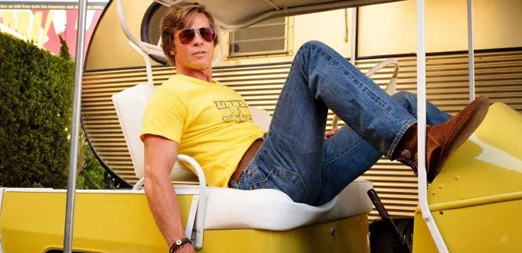
The buzz out of Cannes 2019 for a Best Oscar nomination for Brad Pitt was very strongStrong buzz out of Cannes 2019 for Brad Pitt as a potential Best Actor Oscar winner in Quentin Tarantino’s enthusiastically received Once Upon a Time in Hollywood..

At screening’s end, Once Upon a Time received a rare 7-minute standing ovation, with both Brad Pitt and Leonardo DiCaprio scoring great reviews and buzz for the two as potential Best Actor Oscar nominees.

Another film emerging from Cannes with immense positive buzz for probable Best Actor Oscar nominee Taron Egerton, in the title role, is Dexter Fletcher’s Rocketman, the story of Elton John’s life, from his years as a prodigy at the Royal Academy of Music through his influential and enduring musical partnership with Bernie Taupin, a film that the critics raved about, writing that Rocketman “explodes with the kind of colour and energy that only Elton John himself could invoke.”

“Freddie Mercury may have had the better voice,” writes the New York Post’s Johnny Oleksinski. “but it’s Elton John who gets the better movie. Rocketman, director Dexter Fletcher’s trippy new biopic about the flamboyant rocker is braver, deeper and more enlightening than last year’s slobbering piece of Queen propaganda Bohemian Rhapsody (which he also partly directed), a flashy fantasia of a movie that will have you both cheering and in tears in the film’s phenomenally moving pivotal scene.”

We’ll know soon enough — Rocketman opens in theatres next Friday.
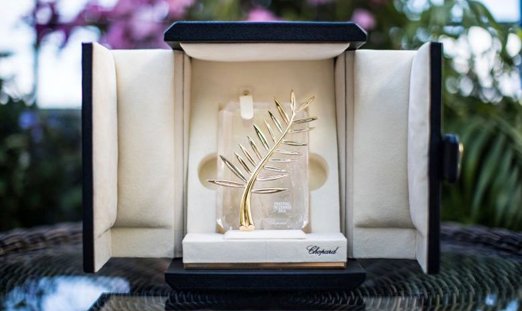
Films striving to winner the coveted Cannes 2019 Palme d'Or

Since 1955, the Cannes Film Festival has awarded the coveted Palme d’Or to the greatest filmmakers of our age, from Frances Ford Coppola to Michael Haneke, Terrence Malick, Abdellatif Kechiche, Costas Gavras and Jane Campion. While Oscar season involves thousands of voters and aggressive, months-long campaigns, the Palme d’Or race among the 20, or so, films selected for Official Competition is often difficult to predict.
This year’s Cannes jury stands out for being particularly filmmaker-centric, with Cannes veteran Alejandro G. Iñarritu serving as president, joined by fellow directors Kelly Reichardt, Alice Rohrwatcher, Maimouna N’Diaye, Yorgos Lanthimos, and Pawel Pawlikowski — as well as Elle Fanning, the youngest Cannes juror in history. All have screened work at the festival, this year’s jury composed of particularly complex & disparate sensibilities.
Today’s update: the winners, and more, at the 2019 Cannes Film Festival, some of which will receive a Best International Film Feature Oscar nomination, most of which will screen at the 38th Vancouver International Film Festival, running from September 26th through October 11th, 2019.
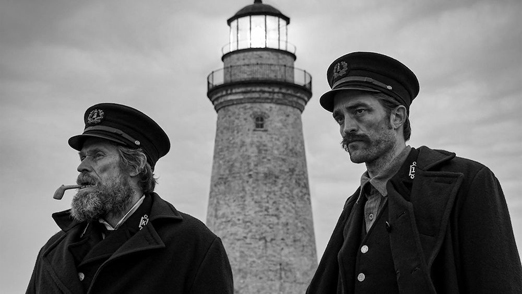
Robert Eggers' The Lighthouse, starring Willem Dafoe and Robert Pattinson Wins Fipresci Critics Awards At Cannes Film Festival

Just announced: The Lighthouse has won the Fipresci Critics Awards at Cannes, about which the Deadline website writes …

“A story of two lighthouse keepers who drive each other to madness, won the Cannes Film Festival critics’ award for best first or second features in Directors’ Fortnight and Critics Week. The award was announced Saturday by the International Federation of Film Critics (Fipresci).

Robert Eggers The Lighthouse was shot in black and white and starred Willem Dafoe and Robert Pattinson.


Fipresci also honoured Elia Suleiman’s It Must Be Heaven as the best film in competition and Kantemir Balagov’s Beanpole as best film in the sidebar Un Certain Regard.

Terrence Malick’s Cannes competition entry, Hidden Life, won the Prize of the Ecumenical Jury.

The Lighthouse sees ‘two lead actors give stormy, career-best performances,” according to the statement from the Fipresci jury. It described the Eggers film as “a brutal work of art, all shot in beautiful black-and-white cinematography and fueled by a soundscape that echoes like a foghorn.”

The full list of winners at the 72nd annual Cannes Film Festival.

Music Sundays | Early ’60s | Phil Spector | The Wall of Sound

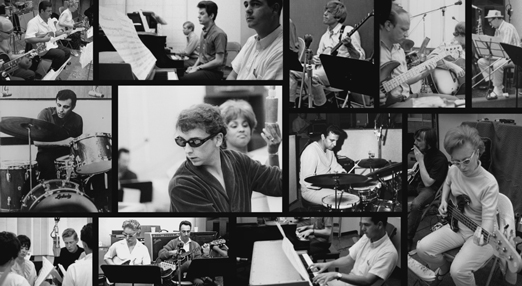
Phil Spector's Wall of Sound, employing musicians commonly referred to as "The Wrecking Crew"

Growing up in the ’60s, in the era of Phil Spector and the Wall of Sound, The Beachboys, The Beatles — and all the groups who were a part of The British Invasion — was to feel vibrant and alive, hopeful for a better world for all, within a revolutionary era of societal change that spanned the globe.
Music served to awaken a younger generation to the possibility of change, to define an era for themselves, and be moved to work collectively for the betterment of society. And as anarchist Emma Goldman was wont to say, “If I can’t dance, I don’t want to be part of your revolution.” There was no music better to dance to than the music of Phil Spector’s Wall of Sound.

An excerpt from Danny Tedesco’s very fine 2008 documentary, The Wrecking Crew, in which Cher, American record producer and recording engineer, Bones Howe, bassist Carol Kaye, drummers Hal Blaine, and more, exclaim about Phil Spector and the Wall of Sound.

To attain the Wall of Sound, Spector’s arrangements called for large ensembles (including some instruments not generally used for ensemble playing, such as electric and acoustic guitars), with multiple instruments doubling or tripling many of the parts to create a fuller, richer tone.
For example, Spector would often duplicate a part played by an acoustic piano with an electric piano and a harpsichord. Mixed well enough, the three instruments would then be indistinguishable to the listener.
Additionally, Spector incorporated an array of orchestral instruments (strings, woodwind, brass and percussion) not previously associated with youth-oriented pop music. Reverb from an echo chamber was highlighted for additional texture, which he characterized as “a Wagnerian approach to rock & roll: little symphonies for the kids”. The intricacies of the technique were unprecedented in the field of sound production for popular music

Imagine being 12 years old, turning on the radio and hearing Darlene Love and The Crystals, The Ronettes, Smoky Robinson and The Miracles, The Beatles, Marvin Gaye, The Zombies, The Righteous Brothers, The Kinks, The Beach Boys, Diana Ross and The Supremes, Mary Wells, The Drifters, Chris Montez, Dionne Warwick, Martha and the Vandellas, Otis Redding, Roy Orbison, Ray Charles, and more, so much more — in the early ’60s, the hits really did ‘keep on comin‘, Vancouver’s CKLG part of the musical revolution.
Today on VanRamblings, a musical tribute to Phil Spector’s Wall of Sound, which in an era of one track studios embodied a revolutionary approach to the recording of music, setting a standard that prevails to this day, in the complex arrangements of your very favourite progressive bands and artists.

Arts Friday | Are Things Getting Better For Women In Hollywood?

Feminist | A person who believes in the social, political, and economic equality of the sexes

From the earliest days of Hollywood, women were stage managed and manipulated by older men in powerful positions. And it remains clear that, although Harvey Weinstein, Les Moonves, John Lasseter, Luc Besson, among a host of other male predatory Hollywood executives who have been outed, little good has been achieved still for women in the film industry.
In the Hollywood dream factory, trauma surfaces as light entertainment.
In 2013, introducing the list of best supporting actress nominees during the Oscar ceremony, actor and comedian Seth MacFarlane quipped: “Congratulations, you five ladies no longer have to pretend to be attracted to Harvey Weinstein.” What was chilling was that no one got the joke. The idea that female stars and aspiring, often young, female stars are required to accept the attentions, at the very least, of older male studio executives, producers and prominent male stars, is as old as the Hollywood hills.
Given the profile that the #MeToo movement has brought to sex discrimination, why does sexism continue to prevail in Hollywood?

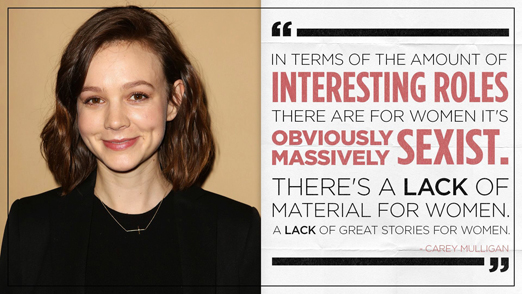
Actress Carey Mulligan on sexism in the film industry

According to San Diego State’s Center for the Study of Women in Television and Film, women made up only 7 per cent of directors on the top 250 films of 2018, which was actually a 2 per cent decline from 2017. The same study found that while women made up higher percentages of other fields in the industry — 24% of producers, or 17 per cent of editors, for example — they only accounted for 17 per cent of the workforce of all the jobs surveyed. And that too, was a 2 per cent decline from the year before.
The University of Southern California’s Viterbi School of Engineering’s Signal Analysis and Interpretation Lab (SAIL) revealed how sexism is embodied by characters on the silver screen. If female characters are taken out of the plot, it often makes no difference to the story the study found.
Analyzing 1000 scripts, the study found that there were seven times more male than female writers & twelve times more male directors than women.
The biggest impact in counteracting the gender imbalance was if female writers were present at script meetings. If this was the case, female characters on screen was around 50% greater.
Inherent in these observations of the film industry are powerful messages about what it means to be female.
In our “post-feminist” era, where we are frequently told the problems of girls are yesterday’s news — that girls are awash in the largesse of civil rights, and it is boys who really require our attention — it is worthwhile to consider the conduct of male Hollywood writers and executives.

Actress Geena Davis, founder of the Geena Davis Institute on Gender in MediaActress Geena Davis, founder of the Geena Davis Institute on Gender in Media

The problem is so glaring that in 2005, the actress Geena Davis, who would go on to start her own gender institute, commissioned Stacy Smith, a researcher at the University of Southern California, to study the issue and help push the studios beyond the staid male-centred film industry.
From 2007 through 2017, according to Smith’s research, women made up only 30.2% of speaking or named characters in the 100 top-grossing fictional films.

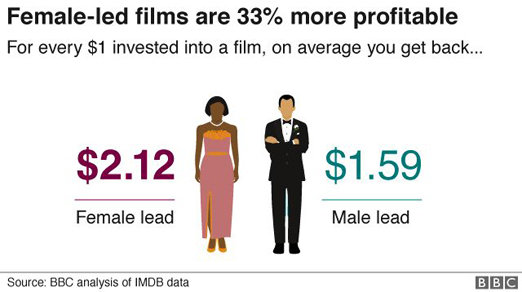
Female lead films make more money than films led by males.

The Geena Davis Institute on Gender in Media reports that films featuring women are financially profitable. “Guess what, Hollywood? Female-led films consistently make more money, year over year,” Madeline Di Nonno, the Institutes chief executive has reported to the heads of Hollywood studios.
Hollywood actor Charlize Theron has criticized the movie industry for gender bias. Promoting her film Atomic Blonde, she told feminist Bustle magazine: “Fifteen, ten years ago, it was almost impossible to produce female-driven films, in any genre, just because nobody wanted to make it.”

The Bechdel Test, the role of women in film

A quiz that was designed to find out how sexist a film might be was developed by Alison Bechdel and Liz Wallace in 1985. To pass, the film needed three positive answers to these questions: Does it have more than two named female characters? Do those two talk to each other? Is that conversation about something other than a man?
The Hollywood Reporter applied the Bechdel-Wallace test to the top-selling movies of 2018, finding that only around half of the films passed the test.

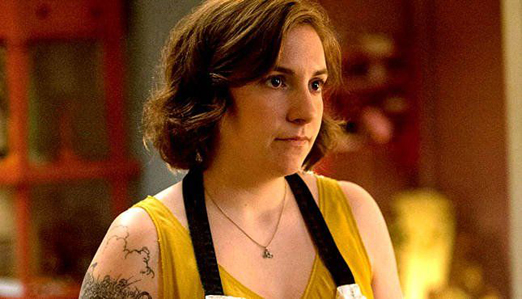
Actress-writer-director Lena Dunham, creator of the HBO series, "Girls"Actress-writer-director Lena Dunham, creator of the HBO series, "Girls"

Female directors are in what “Girls” creator Lena Dunham calls “a dark loop.” If they don’t have experience, they can’t get hired, and if they can’t get hired, they can’t get experience. “Without Googling it,” Dunham asked a recent Sundance panel, “Ask anybody to name more than five female filmmakers who’ve made more than three films. It’s shockingly hard.”

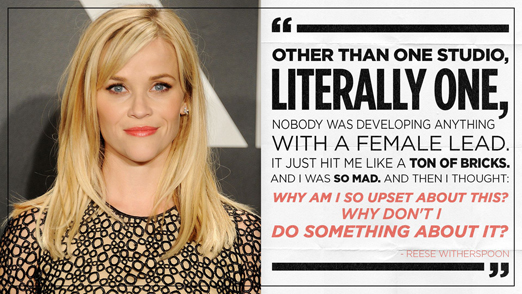
Actress Reese Witherspoon confronting sexism in the film industry

The sheer scale of rampant Hollywood sexism is daunting, the stories of what actresses have to put up with disturbing, the tales of pay inequity and pushing for more female-led stories are instructive.

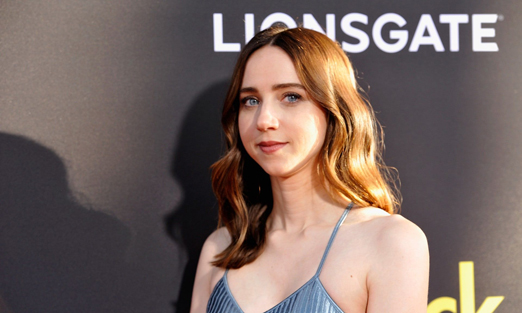
Actress-writer-producer Zoe KazanActress-writer-producer Zoe Kazan, star of the Oscar-nominated film Big Sick, and writer and executive producer of the films, Ruby Sparks and Wildlife (the latter now on Netflix)

Actress Zoe Kazan (The Big Sick) told IndieWire reporter, Kate Erbland, “There’s so much sexual harassment on set. And there’s no HR department, right? We don’t have a redress. We have our union, but no one ever resorts to that, because you don’t want to get a reputation for being difficult.”
The Oscar winner and star of The Favourite, Rachel Weisz, told Out Magazine that a number of her male co-stars have taken lower salaries in order to match her own. “In my career so far, I’ve needed my male co-stars to take a pay cut so that I may have parity with them,” she said.
Actress Emmy Rossum sounded off during a recent Hollywood Reporter roundtable about her experience with overt sexism in the industry.

“I’ve never been in a situation where somebody asked me to do something really obviously physical in exchange for a job, but even as recently as a year ago, my agent called me and was like, ‘I’m so embarrassed to make this call, but there’s a big movie and they’re going to offer it to you. They really love your work on Shameless. But the director wants you to come into his office in a bikini. There’s no audition. That’s all you have to do.'”

If the dynamic of older men and younger, submissive women greases the wheels of Hollywood production offices repeats itself on screen, it is not an accident, but the desires of the producers and directors who create these films played out on the biggest stage of all: Hollywood cinema, the world’s most effective propaganda machine. Who is Hollywood trying to kid?

Music Sundays | Allison Moorer | Transcending Tragedy

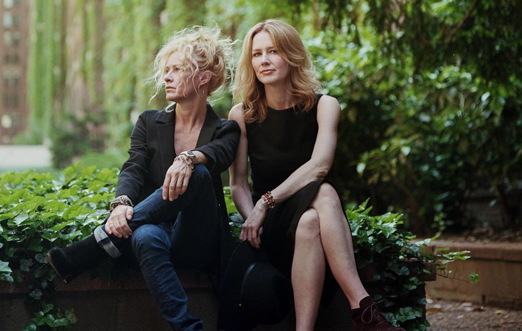
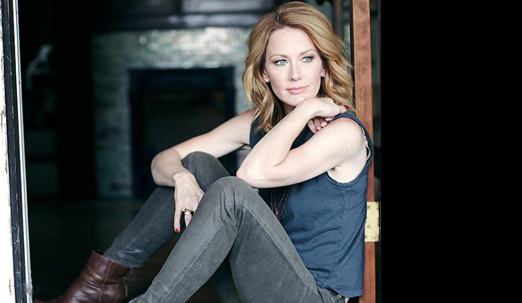
Sisters and successful country artists Allison Moorer and Shelby Lynne share the pain of tragedySisters & country musicians Shelby Lynne (l) & Allison Moorer share the pain of tragedy

When Allison Moorer was but a young strip of a girl, just turned 14 years of age and in Grade 9 at Theodore High School in Mobile, Alabama, and her older sister, Shelby Lynne, who was at age 17 preparing for the prom and her upcoming graduation, their estranged father, Vernon, an itinerant musician and English teacher at the girls’ school, turned up at their home.
Outside the house, he and the girls’ mother, Laura Lynn Smith — who had long had an intensely loving yet troubled relationship with Vernon — became involved in a heated squabble. Vernon wanted to return to the family home, a prospect Laura Lynn told him she was unwilling to consider.
Meanwhile, with their mother ordering the two girls to stay in the house, with Shelby and Allison now cowering inside their home just by the bay window looking out onto the front lawn, Vernon pulled out a gun and shot their mother dead, turning the gun on himself and taking his life, as well.
It’s the kind of horrifying loss that, as Moorer has said, some teenagers might not have survived. But Moorer and Lynne did more than survive. Both went on to successful careers in the music industry, becoming huge names and best-selling progressive artists most closely associated with the country music genre, each with their own, distinctive & stellar solo careers.

Progressive country music artist Allison Moorer still going strong at age 46.

Allison Moorer, 46, is hardly the first artist to emerge from Nashville with songs defined by darkness and desperation; one recalls the brief lives of Hank Williams, addicted to painkillers & booze, dead at 29; and Patsy Cline (‘Oh Lord, I sing just like I hurt inside’) who at 30 died in a plane crash.
With the help of her grandparents and her sister, Allison Moorer completed high school, going on to attend college at the University of South Alabama, where she graduated with a B.A. in Communications in June of 1993.
Having grown up in a musical family, where she started singing harmony as early as age 3, throughout her time at university Moorer earned tuition and living expenses by working as a backup singer to various Nashville artists, along the way meeting and falling in love with a guy, Doyle “Butch” Primm, who became her collaborator, co-writer, co-producer, and husband.

In 1998, with Doyle producing, Allison Moorer recorded her début album, Alabama Song, which went on to become the best-selling progressive country album of the year, the first song released from the album, A Soft Place to Fall, chosen by writer / director / actor Robert Redford as feature song on the soundtrack of his Oscar-nominated film, The Horse Whisperer.
Subsequently, the best-selling A Soft Place to Fall went on to a receive an Academy Award nomination for Best Original Song, with Moorer singing her hit song on the Oscar telecast in March 1999, trying not think about the then one billion people who were tuned in to watch the Academy Awards.
Over the years, both Allison Moorer and Shelby Lynne have found a place of significance in my music collection, for nigh on 20-plus years now.