
All posts by Raymond Tomlin

About Raymond Tomlin

Raymond Tomlin is a veteran journalist and educator who has written frequently on the political realm — municipal, provincial and federal — as well as on cinema, mainstream popular culture, the arts, and technology.

VIFF 2019 | Late Summer Early Autumn Film Festival Season

Autumn 2019 film festivals

Although many believe that the Oscar season begins in mid-May at the Cannes Film Festival, in fact the Oscar race officially kicks off at the end of August with the Telluride (Aug. 30 – Sept. 2), Venice (Aug. 28 – Sept. 7), Toronto (Sept. 5 – 15) and, at the end of September, both the New York Film Festival (Sept. 27 – Oct. 13) and our very own homegrown film festival (VIFF 2019, Sept. 26 – Oct. 11), where most of the upcoming Oscar contenders will make their auspicious and much-anticipated débuts.

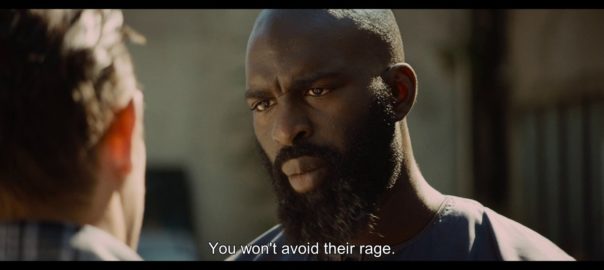
Winner of the Jury Prize at Cannes this year, Ladj Ly’s Les Misérables — débuting at VIFF 2019 as part of the Spotlight on France series — emerged as one of Jeff Wells’ (Hollywood Elsewhere) favourite films at Cannes this year, a film he describes as “explosive, urgent, furious, riveting, breathless and impactful,” and about which VIFF’s festival guide says …

Set in the same suburban Paris neighbourhood, Montfermeil, used by Victor Hugo as the location for the Thénardiers’ Inn in his Les Misérables, débuting director Ladj Ly’s gripping, incendiary police-thriller gives us a young cop, Stéphane (Damien Bonnard), who joins an Anti-Crime Squad team led by loose cannon Chris (co-writer Alexis Manenti, superb) and is soon immersed in a world of poverty and internecine power struggles. When images of police brutality start circulating, the shit hits the fan…

The full VIFF 2019 festival guide will be online two weeks from today, on Friday, September 6th, on the same day the glossy cover programme will be available at libraries and various other outlets across Metro Vancouver.
With the summer silly season of dreaded movie sequels having drawn to a close, with box office down 19% this summer over last, the failed popcorn blockbusters are about to give way to the more serious fare all cinephiles cherish, all of which are ready to elbow their way into the Oscar derby.
At the various film festivals that will unspool future Oscar award winners over the course of the next month and a half, new films from Pedro Almodóvar, Noah Baumbach, Terrence Malick, Edward Norton, and more will launch into the awards season or fizzle out.
In respect of VIFF 2019, as more information about the 38th annual Vancouver International Film Festival becomes available, we’ll publish our idiosyncratic take and insight into the information with which we’re provided. In the meantime, take a look below for films that will début at one or more of the above-mentioned film festivals, including our own illustrious Vancouver International Film Festival

Writer-director-producer Edward Norton has transplanted the main character of Jonathan Lethem’s best-selling novel Motherless Brooklyn from modern Brooklyn into an entirely new, richly woven neo-noir narrative: a multilayered conspiracy that expands to encompass the city’s ever-growing racial divide, set in 1950s New York.


Portrait of a Lady on Fire

On the cusp of the 19th century, young painter Marianne travels to a rugged, rocky island off the coast of Brittany to create a wedding portrait of the wealthy yet free-spirited Héloise. An emotional and erotic bond develops between the women in Céline Sciamma’s Cannes-awarded subversion of the story of an artist and “his” muse.

In this richly burnished, occasionally harrowing rendering of the persistent scars of war, two women, Iya and Masha (astonishing newcomers Viktoria Miroshnichenko and Vasilisa Perelygina), attempt to readjust to a haunted post-WWII Leningrad.

Noah Baumbach’s new film is about the rapid tangling and gradual untangling of impetuosity, resentment, and abiding love between a married couple — played by Adam Driver and Scarlett Johannson — negotiating their divorce and the custody of their son. It’s as harrowing as it is hilarious as it is deeply moving.

Pedro Almodóvar taps into new reservoirs of introspection and emotional warmth with this miraculous, internalized portrayal of Salvador Mallo, a director not too subtly modeled on Almodóvar himself and played by Antonio Banderas, who deservedly won Best Actor at this year’s Cannes Film Festival.

A searing exploration of the consequences of upholding one’s convictions in a time of terrifying upheaval, this latest work from Terrence Malick (The Tree of Life) mines the themes of spirituality and engagement with the natural world that have permeated so much of the American auteur’s late-period renaissance. Set in Austria during the rise of the Third Reich, A Hidden Life movingly relays a little-known true story of quiet heroism.
Music Sundays | Angus and Julia Stone | Sibling Folk

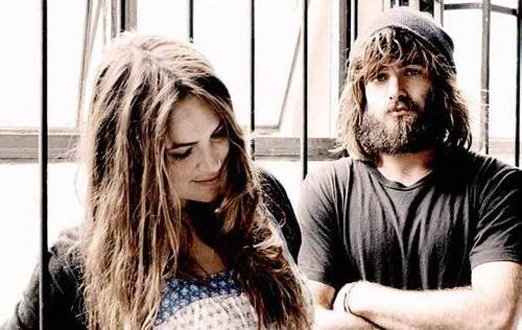
The Australian folk duo, Angus and Julia Stone

Julia Natasha Stone was born on the 13th of April 1984 in Sydney Australia.
Julia’s parents, Kim and John Stone, were both well-regarded Australian folk musicians who played locally. Two years later, on April 27th 1986, her brother Angus was born. At family gatherings, it was not uncommon to see the two siblings perform — all was well until, in 2000, their parents split.
After finishing secondary school and while on a holiday with her brother in South America, Julia was impressed by her brother’s musical talent, “Angus was writing amazing songs … he had shown me how to play guitar when we were traveling in Bolivia, and those songs had gotten me through that year (Julia had, earlier that year separated from her boyfriend, from all reports a turbulent relationship, which left Julia emotionally devastated)”.
Within a year, in 2004, Julia began writing her own songs.
By 2005, and back in Sydney, Angus and Julia began to play gigs at open mic nights, with Angus performing backing vocals for Julia, as in time Julia did for Angus, on the songs he wrote. Finally, in 2006, the two formed a duo, Angus and Julia Stone. In March of that year the pair recorded their début extended play, Chocolates and Cigarettes, a remarkably chill amalgam of songs written and recorded live at home.
The EP, released in August, went on to win the ARIA (Australian Recording Industry Association) 2006 Best Album award, with Angus and Julia also taking home the Best New Group prize. The rest, as they say, is history.

Chocolates & Cigarettes directed by Angus and Julia Stone — from their 2006 début EP.

Angus and Julia Stone’s second album, Down the Way (March 2010), débuted at number one on the ARIA Albums Chart and was certified 3x platinum in 2011, It was the highest-selling album by an Australian artist for 2010. At the 2010 ARIA Music Awards the duo won ARIA Album of the Year for Down the Way and ARIA Single of the Year for Big Jet Plane, attaining the number-one position in the Triple J Hottest 100 in 2011, as voted on by radio station listeners across Australia.

Angus and Julia Stone last played in Vancouver on November 28th 2017, to a sold-out audience of 1280 fans at The Vogue.

Stories of a Life | 1978 – 1982 | Chief Cook and Bottlewasher

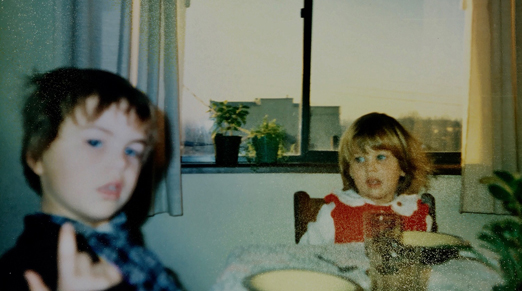
Jude and Megan Tomlin, aged 3 and 16 months, sitting at the kitchen table in 19781978. Jude, at age 3½, and Megan at 2 years of age. At the kitchen table for breakfast.

A couple of weeks ago, when I was extolling the virtues of my Instant Pot to a friend, in a lull in the conversation, she turned to me and said, “You like to cook, don’t you?”
The short answer: I derive pleasure from both cooking and baking.
Here’s the story behind my love for the culinary powers of the kitchen.

1616 Semlin Drive, and East 1st Avenue, in Vancouver. One of the homes I lived in growing up.1616 Semlin Drive, at E. 1st Ave. in Vancouver. One of the homes I lived in growing up.

From my earliest days, I fended for myself. My mother worked three jobs, and my father worked the afternoon shift at the Post Office. When I arrived home, although my father often left a stew bubbling away in the slow cooker, from age seven on, for the most part if I wanted to eat, I’d have to make breakfast, lunch and dinner for myself and for my sister.
So, being somewhat industrious, I learned to cook — well, make sandwiches and, for dessert, Jello, at least for the first few years. I loved turkey growing up (all that triptiphan), so with the help of my mother, I learned to make her delicious turkey, stuffing, gravy, mashed potatoes and vegetables. For the most part, though, my cooking skills were rudimentary — but I didn’t starve, and more often than not there was food in my belly.
When in 1970 Cathy and I moved in together, marrying soon after, I was responsible for most of the cooking. Cathy’s mom sent her out $1000 a month (she didn’t know we were living together), visiting every three months, taking us to the local Woodward’s grocery floor, where she dropped in excess of $300 at each visit. With Cathy’s mother money, we ate a fairly staple diet of generously thick T-bone steaks and baked potatoes.

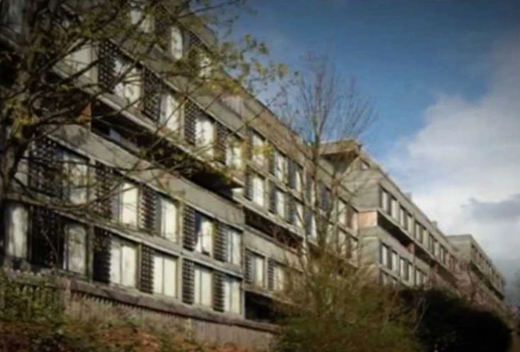
Simon Fraser University's Louis Riel House, a student family one-and-two-bedroom apartmentSimon Fraser University’s Louis Riel House, student family 1 + 2 bedroom residence.

Soon after moving into the Louis Riel Student Residence at Simon Fraser University in 1971, Cathy joined a women’s group, who met every Wednesday evening. Among the decisions that were taken by the women’s group was this: men shall participate in all household chores, and share in all food preparation. As we often ate together with other of the students in the residence, my specialty became salads — all different kinds of healthy, nutritious salads, chock full of vegetables, nuts, sunflower seeds, and more.
At this point, Cathy still hated to cook — there was immense pressure placed on Cathy by her peers to develop culinary skills, but she refused. All that changed in the summer of 1973, which is a story for another day.

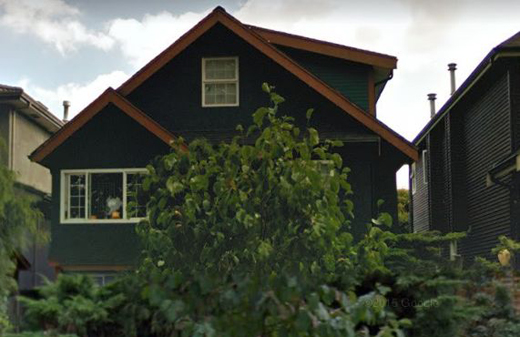
2182 East 2nd Avenue, in the Grandview Woodland neighbourhood of Vancouver2182 East 2nd Avenue, in the Grandview Woodland neighbourhood of Vancouver.

When Cathy and I separated in 1978 — Jude and I lived in the home above, before Jude, Megan and I moved to Simon Fraser University and Louis Riel House, when I began work on my Masters degree — the thought occurred to me one morning when making breakfast that I was now the lone parent, and the sole person responsible for ensuring the children ate nutritious foods at each meal in order that they might grow up into healthy adults. I took on the task of learning the art of cooking (and baking), in earnest.
There was, however, a quid pro quo involved.
After returning from a day of larnin’ and T.A.’ing at SFU, after picking up the children at daycare at 4:30pm, and walking the relatively short distance to our two-bedroom apartment at Louis Riel House, while the children played with their friends on the lawn in front of our apartment, I prepared dinner, calling them in about 45 minutes after dinner preparation had begun. The kids were famished, and so was I.
Here’s where the quid pro quo came in: at the end of each meal, each of the children had to turn and say to me some version of, “Daddy that was a good dinner. It was mmmm, delicious. Thank you for making dinner for all of us, and all the work you put in to feeding us healthy and nutritious breakfasts, lunches and dinners, and all those wonderful desserts we love!”
I needed the incentive provided to me by both children, so their gratitude — which, in time, they came to acknowledge as their own — and the kids felt good about encouraging me, as I encouraged them in all of their endeavours. We were a happy family & all was well with the world for us.
Now, I was an adventuresome cook, and not everything I made turned out to the liking of each one of us.
Being a dedicated democrat, Jude, Megan and I made a deal with one another in respect of dinner. Both children had to eat at least two bites of each food item I prepared: after all the work I put into preparing a dish, the least they could do was try out the dish to see whether they might like it. Most of the time they did, but sometimes not.
One night, I made cream of escargot soup. Honestly, it wasn’t bad. But at the end of the soup entrée, I turned to the children and asked them what they thought, to which they replied almost in unison, “It was all right, tasty enough I suppose, but I’m not sure if I’d ever want to have it again.” I agreed with them. We never ate cream of escargot soup ever again.
Each of us were allowed to have three foods on a list of our creation, foods we did not have to eat, no matter what. Megan had three foods, Jude had three foods, and I had three foods — those foods changed over a period of time. In order to add a food to our individual “nah, I don’t want to eat that food” list, some food on each of our lists had to come off. Took some thought on the part of the children as to whether they wanted to remove a food. Megan, for a great long while didn’t like avocados — but one day, while placing a new food she didn’t like onto her “don’t eat” list, she took out avocados, eventually coming to love avocados, as she does to this day.
Watching me prepare meals all the time he was growing up caused Jude to want to become a chef — he worked in the food industry throughout his late teens and twenties, before getting into teaching, which paid better, and was overall less stressful, with “more honourable people”, he’d say to me.
In her teens, Megan became a vegan — there’s a story there, too, which I’ll leave for another day — and, for the most part, took on the preparation of her own meals, as did Jude over a period of time. After the summer of 1973, Cathy became a great cook — there’s not much I miss about that tumultuous marriage, but I sure miss Cathy’s avant-garde cooking, her culinary craftsmanship, spicing & phenomenally delicious cooking. Ah well.

Netflix | Central Park Five | Rise of a Racially Charged Demagogue

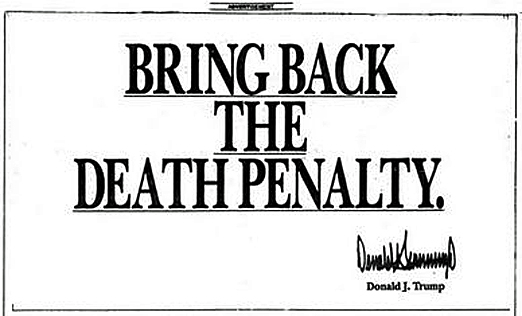
In the 1980s, Donald Trump called for the death penalty to be brought back for the Central Park Five

In 1989 five young black men were wrongfully convicted of raping a woman jogging in New York City. Leading the charge against them was a real estate mogul whose divisive rhetoric can be found in his Presidency today.
Nearly three decades before the sociopathic pseudo-billionaire began his run for Presidency of the United States — before Donald Trump called for a ban on Muslims entering the U.S., for the expulsion of all undocumented migrants, before he branded Mexicans as “rapists” and mocked the disabled — Trump called for the reinstatement of the death penalty in New York following a rape case in which the five teenagers were wrongfully convicted.
The miscarriage of justice is widely remembered as a definitive moment in New York’s fractured race relations.
But Trump’s intervention — he signed full-page newspaper advertisements implicitly calling for the boys to die — has been gradually overlooked. Now those involved in the case of the so-called Central Park Five and its aftermath say Trump’s rhetoric served as an unlikely precursor to a unique brand of divisive populism that powered his rise to political prominence.

Donald Trump ‘was the firestarter’ when he called for the death penalty in the 1989 Central Park jogger case, says Yusef Salaam, one of the wrongfully convicted Central Park Five: “To see that he has not changed his position of being a hateful person … what has become of the country with a person like Donald Trump as President?”

Why is this raising of the case of the Central Park Five relevant now?

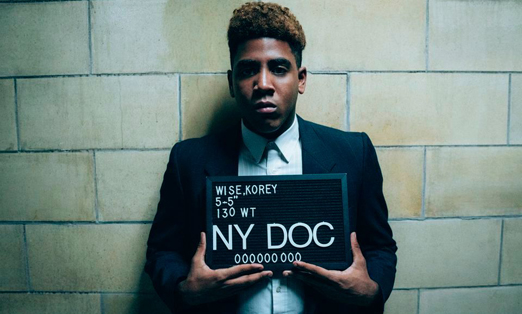
when-they-see-us-line.jpgJharrel Jerome, in Ava Duvernay’s new Netflix mini-series, When They See Us.

Today on Netflix, acclaimed director Ava DuVernay sets about to restore the good names of the five Harlem teens who were arrested, convicted and imprisoned in the 1989 rape of a jogger, only to have those convictions vacated in 2002. They’re more commonly known as the Central Park Five, but that’s a pejorative creator DuVernay excludes almost entirely from her riveting four-episode documentary dramatization, When They See Us.

Here’s a brief survey of critical reviews of Duvernay’s narrative drama …

It is unsettling to realize that many people looking for something new to watch on Netflix this week will actually be unfamiliar with what happened in Central Park, New York, on an April night in 1989. What happened was the rape and attempted murder of a young woman who was jogging there, Trisha Meili. The 28-year-old Meili was doing her usual evening run after a long day at work on Wall Street.

And while there are many unsettling scenes in the first hour of When They See Us (streams today on Netflix), nothing is more disconcerting than the realization, an hour into the drama, that we know very little about Trisha Meili. She is not the focus of the story. The five boys charged with the attack on her are the point. The way in which they were coerced into confessions, threatened and intimidated, is the point.

When They See Us is superbly made and startling in its invective. That invective is aimed with blistering intensity, not just at a justice system that allowed a miscarriage of justice, but at all of American society. The point of the title is that nobody actually saw the boys, who became known as the Central Park Five, as who they were. They saw black youths and wanted to convict them.

Donald Trump took out ads in New York newspapers calling for the restoration of the death penalty so that the boys would be executed. Now, he runs the country. And the state of the country is the real point of When They See Us. As such, it’s a heightened, fraught series, the most unsettling drama so far in 2019, and meant to be.

John Doyle, The Globe and Mail

A searing portrait of injustice and innocence lost
Matthew Gilbert, Boston Globe

Ava Duvernay’s mini-series will break any heart, except, perhaps, that of our president, who maintains their guilt despite the confession and DNA evidence that exonerated them in 2002 and led to a $41 million legal settlement from New York City. Knowing with certainty that the boys are innocent makes watching each step of their descent into hell — from the manipulated false confessions that open the miniseries and the damning group-think media coverage that follows, to the way their young promise is squashed by prison and the stigma that trails them once they’re released — into an unnervingly doom-ridden tragedy.

The Vindication of the Central Park Five
Judy Berman, Time magazine

Nearly an hour into the premiere episode of Ava DuVernay’s Netflix miniseries When They See Us, four of the boys who will soon be known as the Central Park Five are left alone together in a holding cell. (The fifth, Korey Wise, is locked in with adults because he’s all of 16 years old.) They’ve just spent hours being interrogated — and intimidated — by police seeking confessions to support the theory that they gang-raped a woman in the park and left her for dead. In fact, most of them don’t even know each other. There’s a long silence before they start talking. The camera alternates between closeups of these scared, exhausted, beaten-up kids’ faces. They see each other. Hopefully, we see them, too.

As the title suggests, the idea of seeing is crucial to this elegant, wrenching four-part reenactment of the Central Park Five saga. DuVernay, who wrote, directed and (along with collaborators including Oprah and Robert De Niro) executive produced the miniseries, has a gift for framing a familiar historical moment so that you can really see it for the first time. In this case, the Selma director’s simplest but most profound decision is to portray these five black and Latino boys, ages 14 to 16, as the scared children they are, rather than as the gangsters or delinquents they were made out to be.

All four episodes of When They See Us are now available on Netflix.